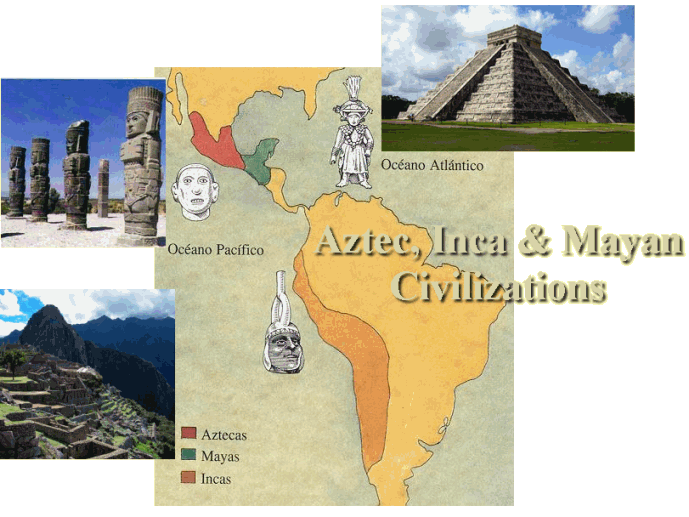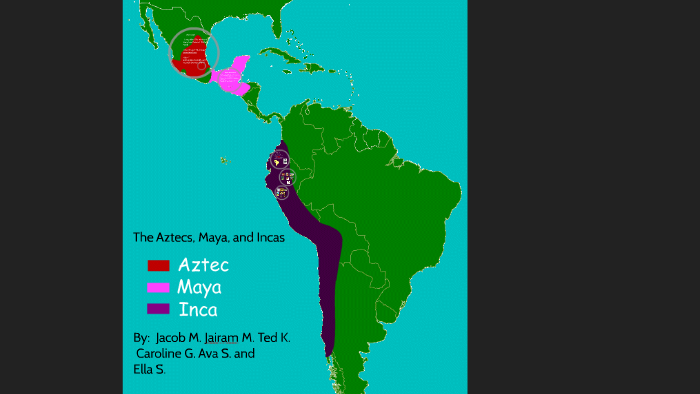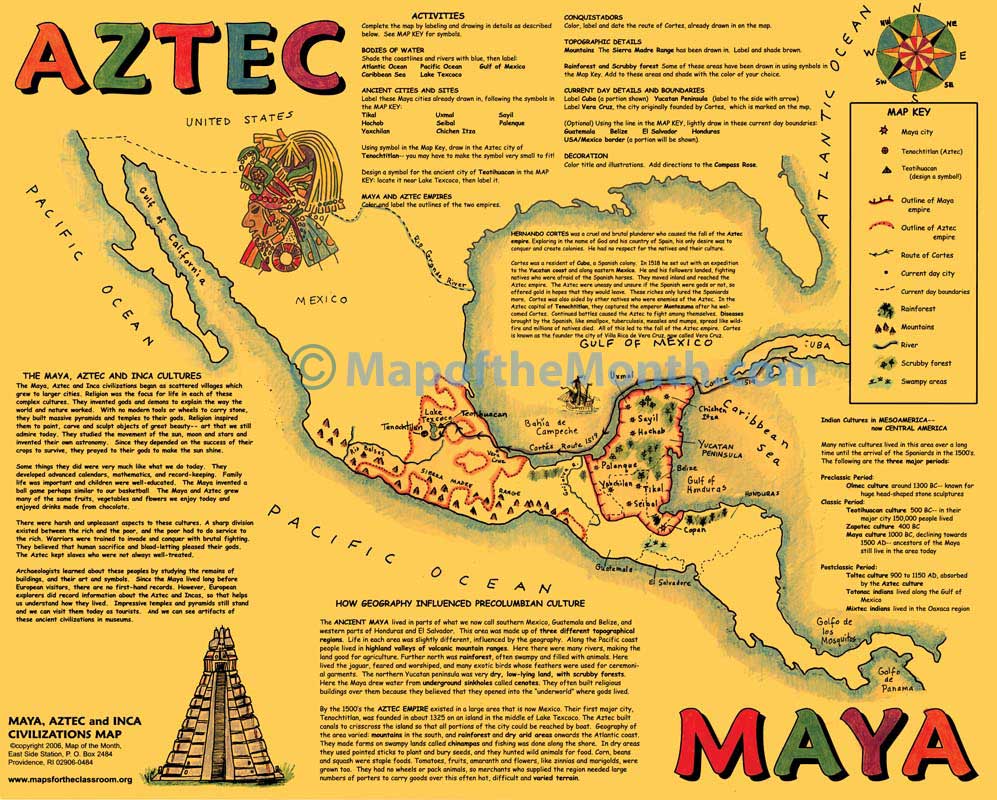
Many curious minds search for an ‘Inca Aztec Maya map,’ hoping to visualize the simultaneous presence of these empires. However, it’s important to clarify from the outset that these three civilizations occupied distinct geographical regions and timeframes, with minimal direct interaction. Modern maps, therefore, serve as invaluable tools to delineate their respective territories and understand their vastness.
This comprehensive guide will delve into the geographical heartlands of each civilization, detailing their core territories, key cities, and the natural landscapes that shaped their development. We will explore how modern cartography helps us piece together their ancient worlds and answer common questions about their locations and potential interactions.
The Maya Civilization: Masters of Mesoamerica
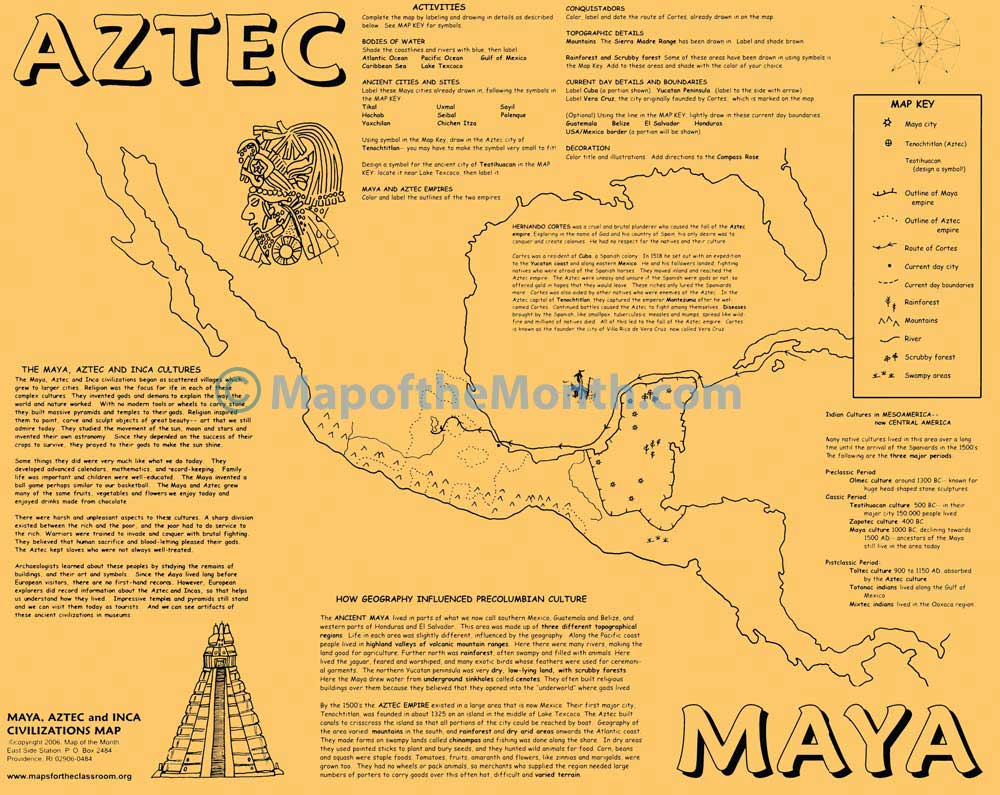
The Maya civilization flourished in a vast region known as Mesoamerica, specifically encompassing the Yucatán Peninsula (modern-day Mexico), Guatemala, Belize, and parts of Honduras and El Salvador. Their territory was characterized by diverse environments, from the low-lying limestone plains of the Yucatán to the volcanic highlands of Guatemala.
Unlike the centralized empires of the Aztecs or Incas, the Maya were a collection of independent city-states, each with its own ruler and distinct cultural nuances, yet bound by a shared language family, religious beliefs, and artistic styles. This decentralized structure meant their ’empire’ was more a cultural sphere of influence than a unified political entity.
Key Maya sites demonstrate their widespread presence and architectural prowess. Tikal, located in present-day Guatemala, was one of the largest and most powerful Maya cities, boasting towering temples and intricate residential complexes. Chichen Itza in the Yucatán is famous for its Kukulcan Pyramid, an astronomical marvel.
Other significant sites include Palenque (Mexico), known for its elegant architecture and detailed inscriptions, and Copan (Honduras), celebrated for its stelae and hieroglyphic staircase. These cities were often interconnected by sacbeob (raised causeways) and engaged in complex trade networks across their region.
The Maya’s geographical position, nestled between two oceans and within tropical rainforests and highlands, influenced their agricultural practices, reliance on cenotes (natural sinkholes) for water, and sophisticated understanding of their environment, which was critical for their calendar systems and astronomical observations.
The Aztec Empire: Dominators of the Valley of Mexico
The Aztec Empire, more accurately known as the Triple Alliance (comprising Tenochtitlan, Texcoco, and Tlacopan), rose to prominence in the central highlands of Mexico. Its heartland was the Valley of Mexico, a fertile basin surrounded by mountains and dotted with interconnected lakes, notably Lake Texcoco.
The capital city, Tenochtitlan, was a marvel of urban planning, built on an island in Lake Texcoco. This strategic location provided both defense and access to vast trade and transport routes across the lake system. Modern-day Mexico City now stands atop the ruins of this once-magnificent metropolis.
From their base in the Valley of Mexico, the Aztecs expanded their influence through military conquest and alliances, creating a vast tributary empire that stretched from the Gulf Coast to the Pacific Ocean, encompassing much of central and southern Mexico. However, unlike the Inca, they did not directly govern all conquered territories but demanded tribute in goods and labor.
The geography of their empire, characterized by volcanic mountains, fertile valleys, and a temperate climate, allowed for diverse agricultural production, including maize, beans, squash, and chili peppers. Their sophisticated chinampa (floating garden) system in the lakes was a testament to their innovative adaptation to their environment.
The Aztec road system, though not as extensive or centralized as the Inca’s, facilitated rapid communication and the movement of goods and armies across their domain, connecting Tenochtitlan with its numerous tributary states and ensuring the flow of resources to the imperial center.
The Inca Empire: Rulers of the Andes
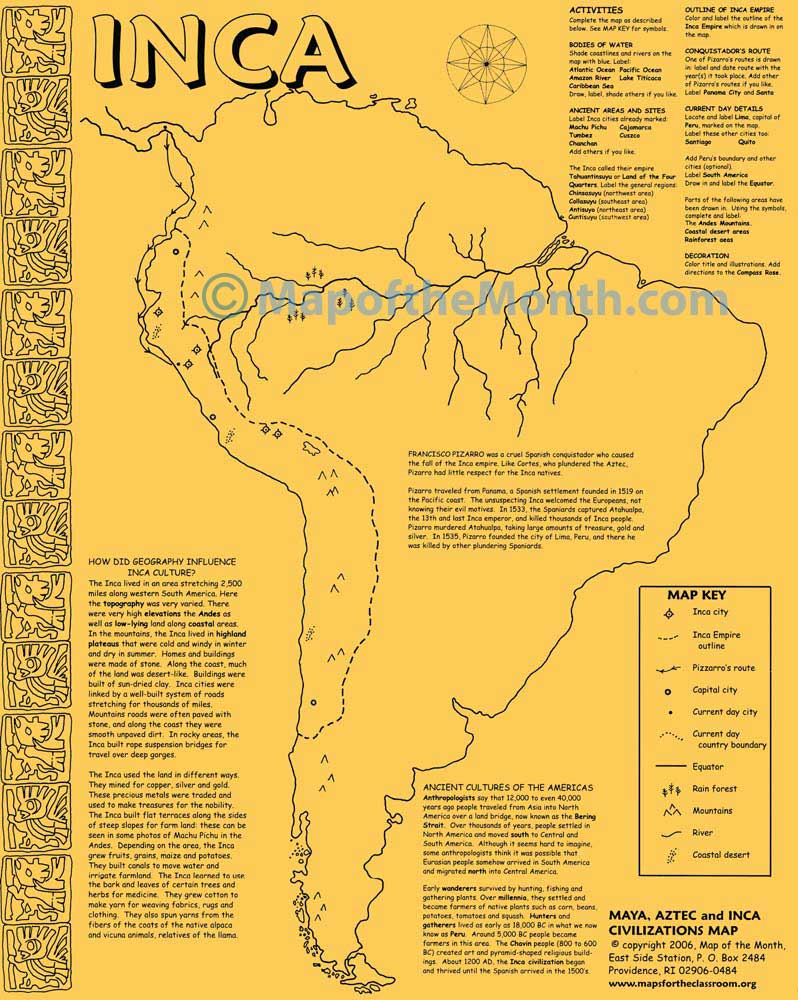
The Inca Empire, known as Tawantinsuyu (meaning ‘Land of the Four Quarters’), was the largest empire in pre-Columbian America. It stretched for thousands of kilometers along the Andes Mountains, encompassing vast swathes of modern-day Peru, Ecuador, Bolivia, northern Chile, and parts of Argentina and southern Colombia.
The heart of the Inca Empire was Cusco, located in a high mountain valley in present-day Peru. From this central point, the empire expanded rapidly in the 15th century, incorporating a diverse array of ethnic groups and ecological zones, from arid coastal deserts to high-altitude Andean peaks and Amazonian rainforest fringes.
The most iconic Inca site, Machu Picchu, nestled high in the Andes, exemplifies their incredible engineering and architectural prowess, built into the challenging mountainous terrain. It showcases their ability to adapt and thrive in extreme environments.
The Inca’s success was largely due to their highly centralized administration and an unparalleled road system, the Qhapaq Ñan. This network of roads, spanning over 40,000 kilometers, connected the entire empire, facilitating communication, trade, and military movements. It was an engineering marvel, traversing mountains, deserts, and valleys with bridges, tunnels, and stairways.
Their sophisticated agricultural terracing systems allowed them to cultivate crops on steep mountain slopes, maximizing food production in a difficult terrain. The diverse geography meant they could access a wide range of resources, from potatoes and quinoa in the highlands to maize and cotton in lower valleys.
Comparing the Geographical Footprints: A Modern Map Perspective
When we talk about an ‘Inca Aztec Maya map,’ it’s crucial to understand that these civilizations occupied distinct, non-overlapping geographical regions. The Maya were in southern Mexico and Central America, the Aztecs in central Mexico, and the Inca along the western spine of South America.
The vast distances separating them — thousands of kilometers — meant there was no direct contact or interaction between the Inca and either the Maya or the Aztecs. While indirect trade or cultural diffusion over millennia cannot be entirely ruled out, their empires operated independently.
A modern overlay map would clearly illustrate these separations: the Maya in tropical lowlands and highlands of what is now Mesoamerica; the Aztecs in the central Mexican plateau, centered around a lake system; and the Inca dominating the rugged Andean mountain range and its adjacent coastal and jungle zones.
Understanding these geographical distinctions helps us appreciate why each civilization developed unique strategies for governance, agriculture, and infrastructure, tailored to their specific environments. The rainforests challenged the Maya, the lacustrine environment shaped the Aztecs, and the formidable Andes defined the Inca.
Why Search for an ‘Inca Aztec Maya Map’? Answering Common Questions
- Relative Location: It clarifies that while all were ‘ancient American civilizations,’ they were not neighbors. The Maya were furthest north, followed by the Aztecs, with the Inca being the southernmost.
- Scale of Empires: A combined map visually represents the sheer scale of the Inca Empire as the largest, stretching along the Andes, compared to the more concentrated Aztec and Maya territories.
- Environmental Influences: It highlights the distinct ecological zones each civilization inhabited, from tropical rainforests to high-altitude mountains and arid coasts, explaining their diverse adaptations and resource management.
- Absence of Direct Interaction: Such a map underscores the geographical barriers that prevented significant direct contact, debunking common misconceptions about their relationships.
The Legacy and Modern Relevance of Their Geography
The geographical legacies of the Maya, Aztec, and Inca continue to shape the modern nations that now encompass their ancient lands. Indigenous languages, traditions, and agricultural practices persist, often tied to specific regions first settled by these civilizations.
Archaeological sites, like those mentioned earlier, serve as vital testaments to their ingenuity and continue to attract researchers and tourists worldwide. These sites are not just ruins; they are geographical markers of complex societies that mastered their environments.
Understanding the ancient maps — both those they created (like Maya astronomical charts or Inca quipu records of resources) and those modern cartographers construct — provides invaluable insights into human history, adaptation, and the enduring power of geography to shape civilizations.
In conclusion, while no single ancient ‘Inca Aztec Maya map’ existed, modern geographical representations provide crucial clarity on the distinct yet equally magnificent empires of the Maya, Aztec, and Inca. Each civilization, forged in its unique environment, left an indelible mark on its landscape and on the tapestry of human history. By appreciating their separate geographical narratives, we gain a deeper, more accurate understanding of their individual brilliance and the rich diversity of pre-Columbian America.
Their stories remind us that geography is not merely a backdrop but an active participant in the grand narrative of human civilization, shaping cultures, economies, and empires in profound and lasting ways.