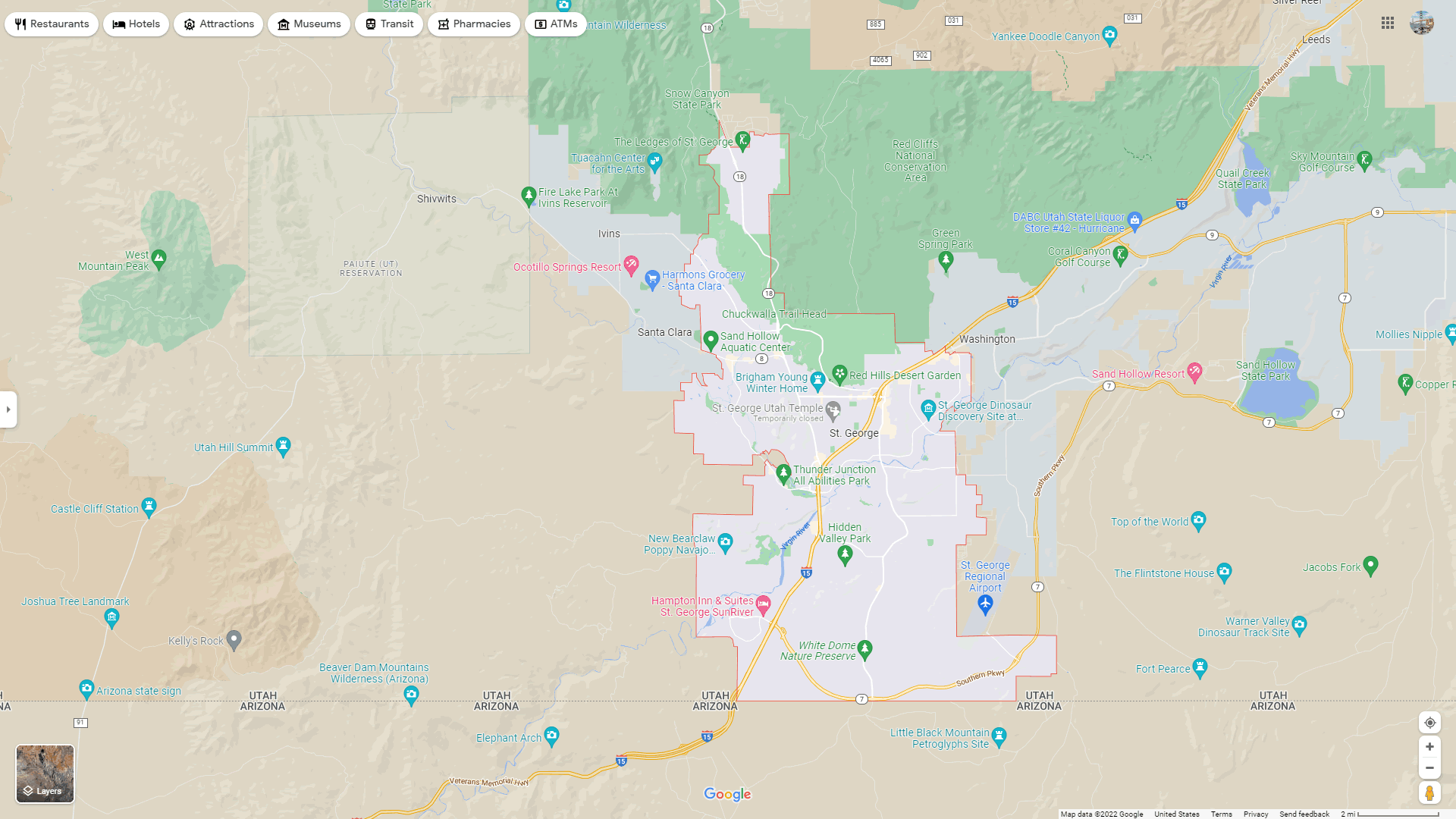
St. George is prominently situated in the southwestern corner of Utah, serving as the county seat of Washington County. It’s a significant urban center in a state largely known for its dramatic natural beauty, acting as a gateway to some of America’s most iconic national parks and recreational areas.
Geographically, St. George lies approximately at 37.10 degrees North latitude and 113.58 degrees West longitude. This position places it within a unique transitional zone, where the Mojave Desert, the Great Basin Desert, and the Colorado Plateau converge. This confluence of geological regions gives St. George its distinctive climate and landscape.
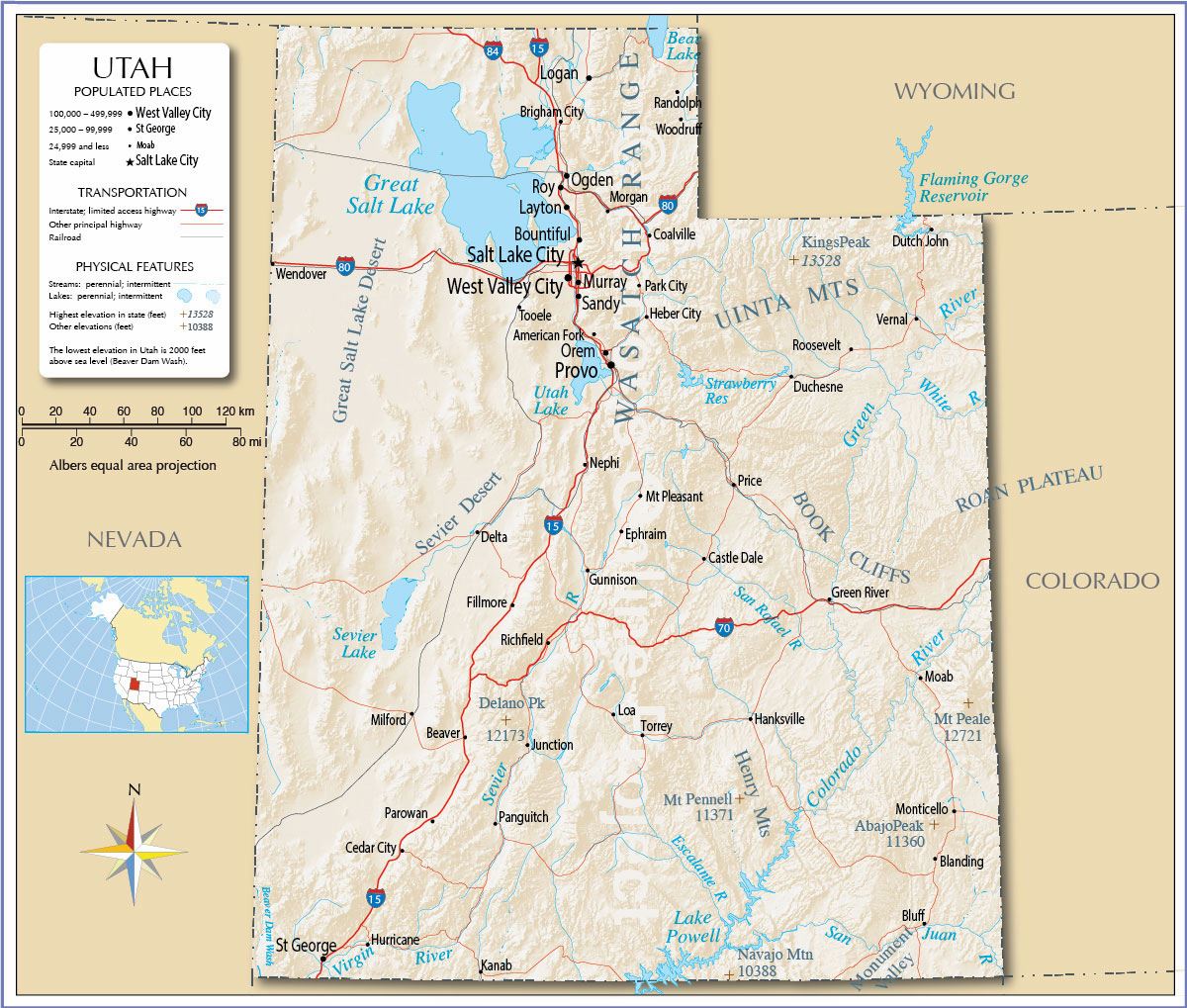
For travelers and residents, St. George’s location is incredibly strategic. It’s roughly 118 miles (190 km) northeast of Las Vegas, Nevada, making it an accessible retreat from the bustling city. To the north, it’s about 300 miles (480 km) south of Utah’s capital, Salt Lake City, connecting it to the larger state infrastructure.
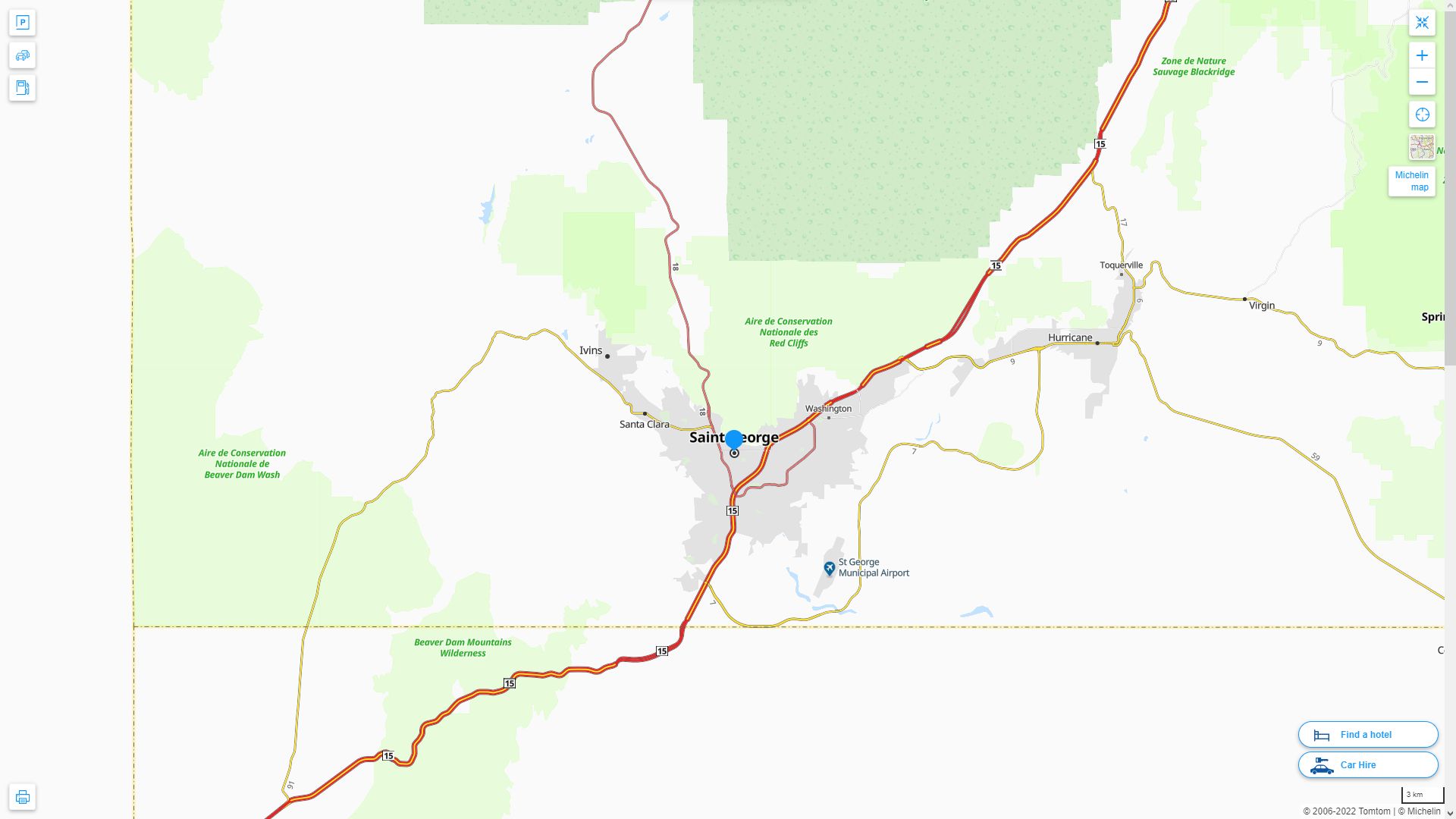
The city’s accessibility is largely defined by Interstate 15 (I-15), a major north-south artery that bisects the United States, running directly through St. George. This highway connects Southern California and Las Vegas to points north like Salt Lake City and beyond, making St. George an unavoidable and convenient stop for many travelers.
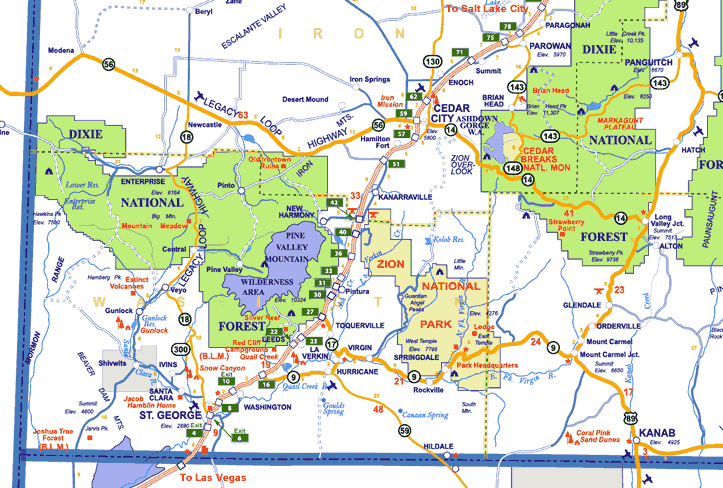
One of the most compelling reasons people search for St. George on a map is its unparalleled proximity to Utah’s ‘Mighty 5’ National Parks. It is often referred to as the gateway to Zion National Park, being just a short drive away.
Zion National Park, with its towering sandstone cliffs and emerald pools, is merely 40 miles (about 64 km) east of St. George. This makes day trips to Zion incredibly convenient, allowing visitors to explore its wonders without extensive travel.
Beyond Zion, St. George offers relatively easy access to other natural marvels. Bryce Canyon National Park is approximately 145 miles (233 km) to the northeast, and the North Rim of the Grand Canyon National Park is about 150 miles (240 km) to the southeast, both offering distinct, awe-inspiring experiences.
Its location also puts it within reach of other significant natural areas, including Snow Canyon State Park, Gunlock State Park, and the vast Dixie National Forest, providing endless opportunities for hiking, biking, rock climbing, and photography.
The climate in St. George is characteristic of a high desert environment, featuring hot summers and mild winters. Its elevation, around 2,868 feet (874 meters) above sea level, contributes to its distinct weather patterns, offering over 300 days of sunshine annually.
This arid landscape, dominated by striking red rock formations, black lava flows, and sparse desert vegetation, is a direct result of its geographical placement. The unique geology provides a stunning backdrop for outdoor activities and contributes to the area’s visual appeal.
For those flying in, the St. George Regional Airport (SGU) provides convenient air access with direct flights to major hubs, further cementing its role as a regional travel destination. Its location on the map is thus supported by robust transportation infrastructure.
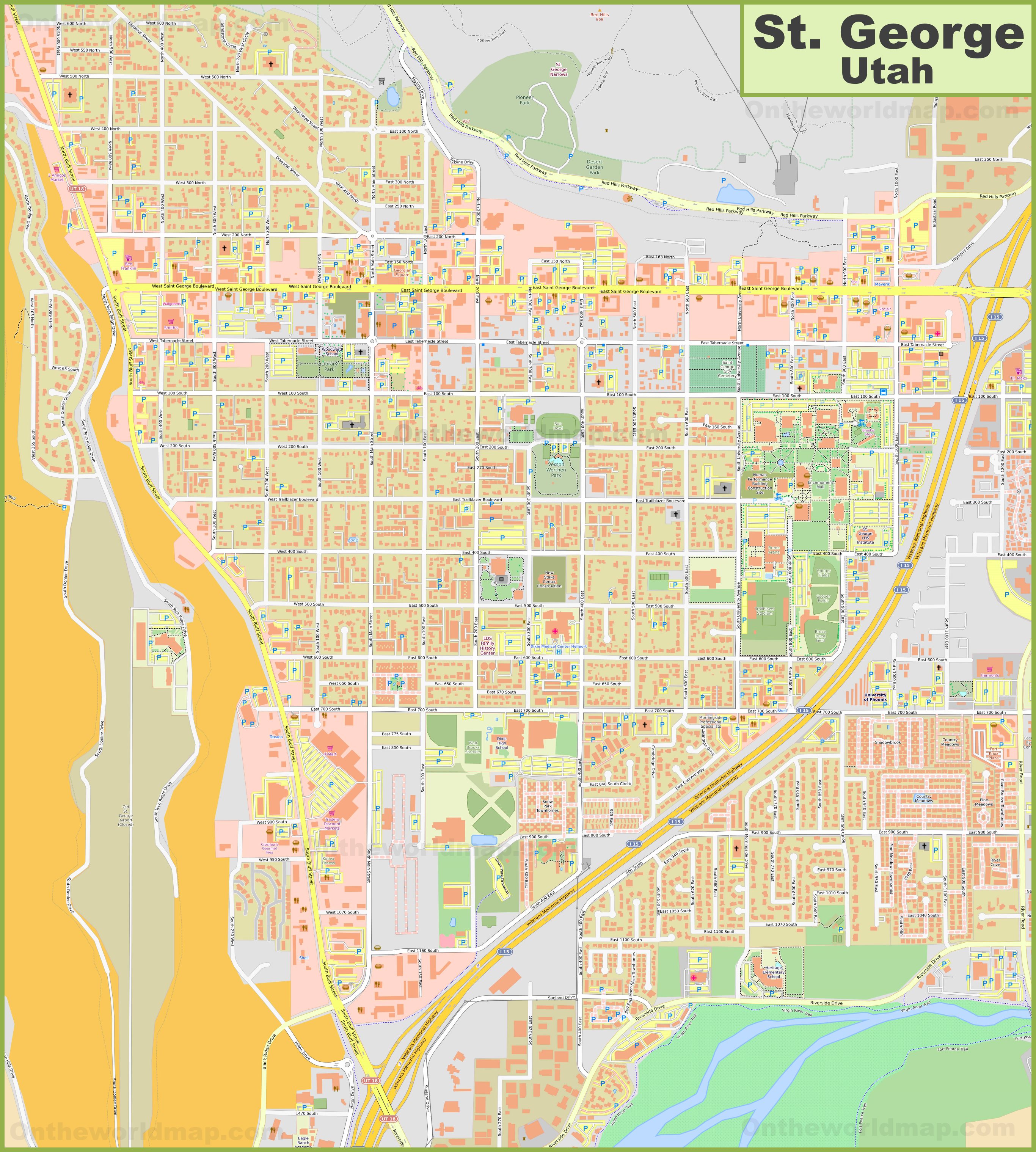
Within the city limits, a map of St. George reveals a well-planned urban sprawl. Key landmarks include the historic St. George Utah Temple, an iconic structure that stands as a testament to the area’s pioneer heritage, and the prominent ‘Dixie Rock’ or Sugarloaf, offering panoramic views of the city.
Another local treasure easily found on any St. George map is Snow Canyon State Park. Located just northwest of the city, this park showcases volcanic cones, lava flows, and sandstone cliffs, providing a microcosm of the larger regional geology and abundant recreational opportunities.
The city also boasts several large reservoirs like Sand Hollow State Park and Quail Creek State Park, which are popular for boating, fishing, and paddleboarding, adding a water-based dimension to the desert experience, all within a short drive from the city center.
Economically, St. George’s location has fostered significant growth. It serves as a regional hub for healthcare, education, and commerce in Southern Utah. Its pleasant climate and scenic beauty have also made it a popular destination for retirees and those seeking a lifestyle focused on outdoor recreation.
The population has seen steady growth over the past few decades, drawn by the combination of affordability, natural beauty, and a strong sense of community. This growth is evident in the expanding infrastructure and amenities visible on any updated map of the area.
When exploring St. George on a map, you’ll notice its close relationship with neighboring communities. Towns like Washington City, Ivins, and Santa Clara are effectively part of the greater St. George metropolitan area, creating a cohesive region with shared resources and attractions.
Washington City, immediately east of St. George, is another rapidly growing community, offering additional housing, shopping centers, and parks that complement St. George’s offerings.
To the west, Ivins and Santa Clara provide a more tranquil, scenic experience, with stunning views of the red mountains and access to unique cultural events and outdoor pursuits, including the Tuacahn Amphitheatre.
For those planning a visit, understanding St. George, Utah on a map is crucial for efficient trip planning. Utilizing digital maps like Google Maps or Apple Maps can help navigate the city’s streets and plan routes to nearby attractions, providing real-time traffic updates and points of interest.
However, a traditional physical map can also offer a broader perspective, allowing visitors to grasp the scale of the region and the distances between various national parks and cities, which can be invaluable for longer road trips.
The ‘Dixie’ moniker, often associated with St. George, reflects its historical and cultural ties, stemming from early pioneer settlements and a unique microclimate suitable for growing cotton. This historical context is subtly woven into the fabric of the city’s identity and its place on the map.
St. George is not just a point on a map; it’s a vibrant community that thrives on its unique geographical position. It’s a place where desert meets mountains, where historical roots intertwine with modern amenities, and where adventure awaits just beyond the city limits.
From its strategic position on I-15 to its role as a launching pad for exploring the wonders of Zion and the Grand Canyon, St. George’s location is undeniably one of its greatest assets. It is truly a regional gem, easily accessible and rich in experiences.
Whether you’re an outdoor enthusiast, a history buff, a retiree seeking sunshine, or simply a traveler passing through, St. George, Utah, offers a compelling reason to pause and explore. Its place on the map is a beacon for adventure and discovery in the American Southwest.
In conclusion, St. George, Utah, holds a significant and advantageous position on the map, acting as a crucial nexus for travel, tourism, and regional development in the southwestern United States. Its proximity to major highways, national parks, and a unique desert landscape makes it an essential destination to understand and explore.