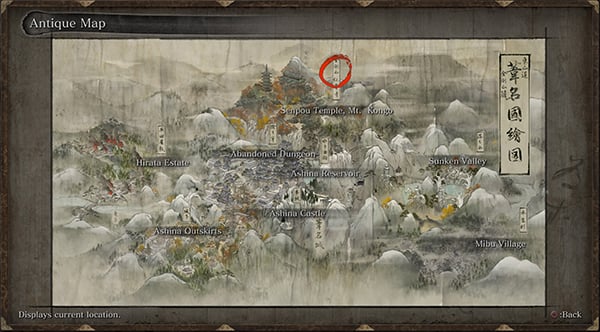
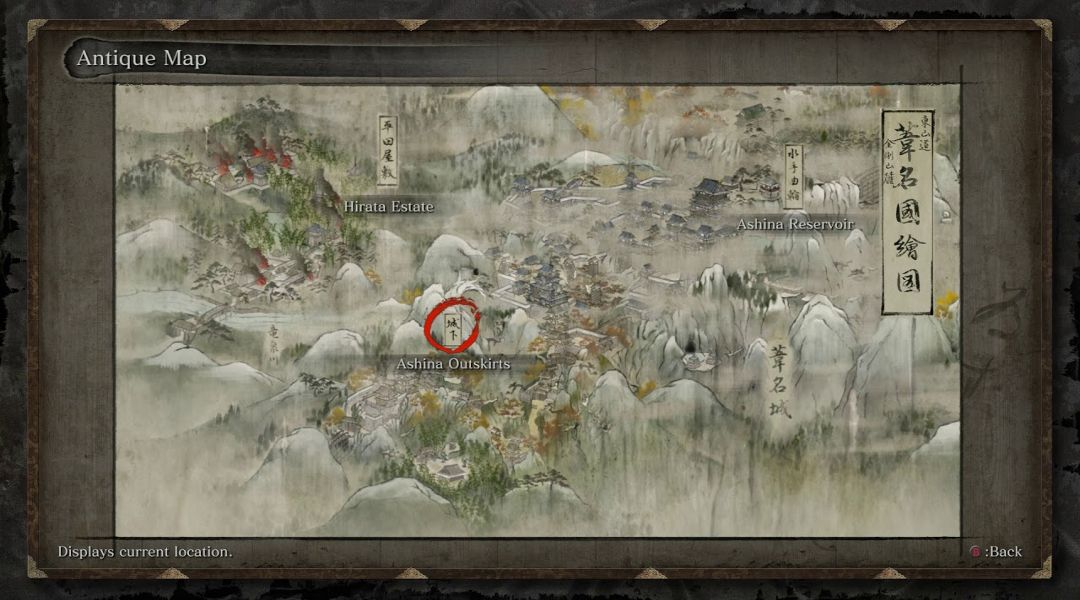
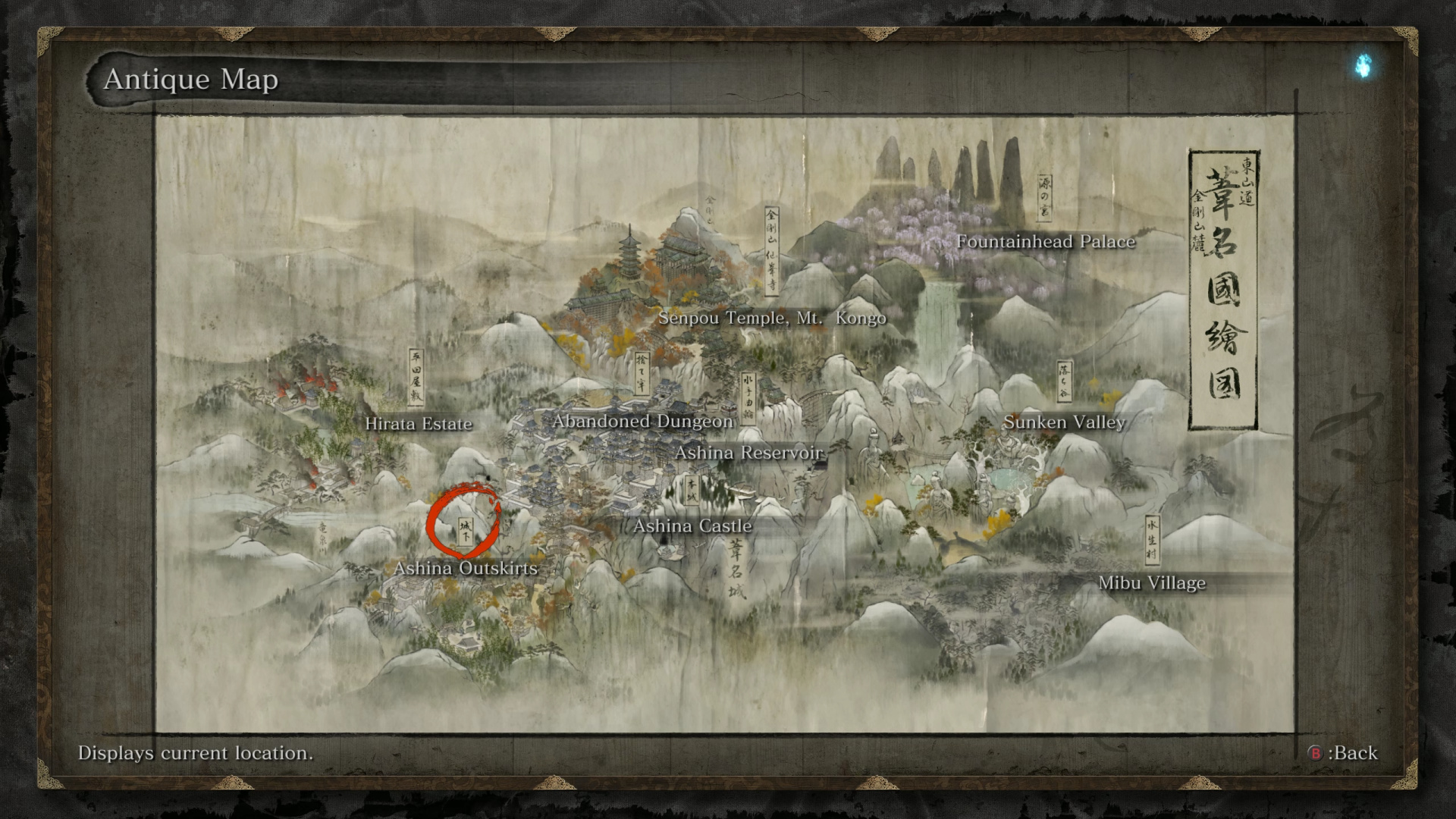
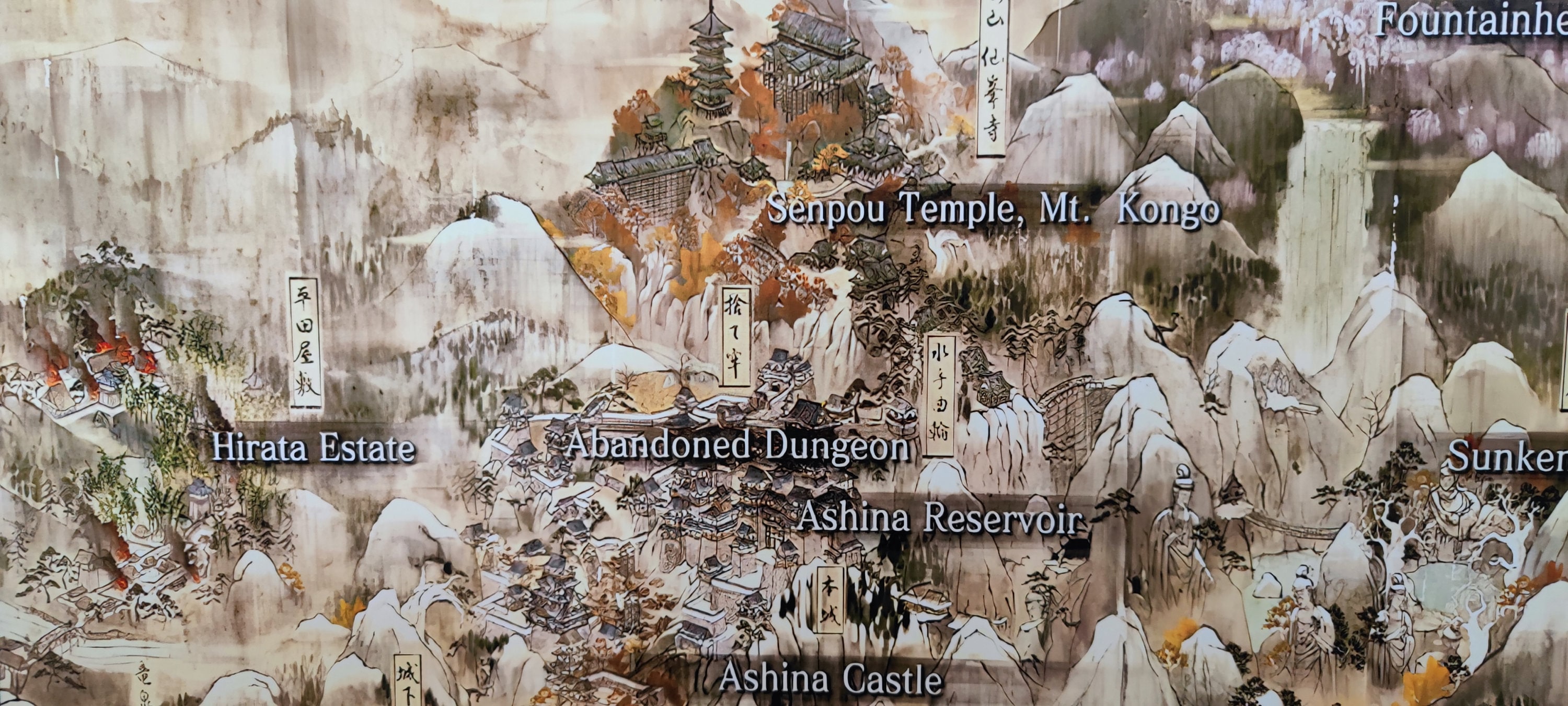
The absence of a conventional map is one of the first things new players notice, and often question. Does Sekiro have a map? The straightforward answer is no, not in the sense of a digital overlay or a scrollable parchment you can bring up on screen. This decision is not an oversight but a fundamental pillar of Sekiro’s immersive philosophy, aligning with FromSoftware’s signature approach to environmental storytelling and player agency.
Instead of relying on a mini-map or a detailed world map, players are encouraged to internalize the layout of Ashina. This requires a different kind of engagement, one that rewards spatial awareness and attention to detail. Every landmark, every distinctive tree, every crumbling wall becomes a breadcrumb in your mental map, guiding your path through the war-torn landscape.
Your primary navigational tools are not found in an inventory, but within the world itself: the omnipresent Sculptor’s Idols. These glowing statues serve as both checkpoints and fast travel points, allowing you to warp between discovered locations. Understanding their placement and the paths connecting them is crucial for efficient traversal and resource management.
Sekiro’s level design philosophy is characterized by its remarkable interconnectedness and emphasis on verticality. Areas often loop back on themselves, revealing shortcuts and alternative routes that deepen your understanding of the world’s geography. The grappling hook, a core mechanic, transforms the environment into a three-dimensional puzzle, opening up pathways that would be inaccessible in other games.
The journey through Ashina begins in the Ashina Outskirts, a sprawling, war-torn region that serves as your initial training ground. Here, you learn the basics of combat and stealth, while also getting a taste of the world’s interconnectedness. Key landmarks like the Outskirts Wall – Stairway and the dilapidated Gate Path become etched into your memory as you navigate towards Ashina Castle.
From the Outskirts, players are often presented with branching paths. One early diversion leads to the Hirata Estate, a memory accessed via the Young Lord’s Bell Charm. This ethereal, dream-like realm offers a stark contrast to the present-day Ashina, providing crucial lore and combat experience, and presenting its own distinct, yet interconnected, layout.
The majestic Ashina Castle stands as the central hub of Sekiro’s world. Its multi-layered structure, replete with rooftops, hidden passages, and multiple entry points, can be initially daunting. Mastering its layout is essential, as it branches out to almost every other major region, including the Abandoned Dungeon, Senpou Temple, and the Sunken Valley.
Within Ashina Castle, specific areas like the Upper Tower – Ashina Dojo and the various rooftops demand precise platforming and stealth. The castle’s design cleverly funnels players through different sections, gradually revealing its depth and the strategic importance of its many vantage points.
Beyond the castle walls lies the serene yet treacherous Senpou Temple, Mt. Kongo. This region is a masterclass in vertical exploration, with pathways winding up mountainsides, through caves, and across rickety bridges. The temple grounds themselves are intricate, featuring multiple shrines, pagodas, and hidden passages leading to powerful items and optional encounters.
The perilous Sunken Valley presents a more linear, yet equally challenging, progression. Characterized by vast chasms, sheer cliffs, and the constant threat of rifle-wielding enemies, this area tests your grappling hook skills and nerve. It eventually leads to the infamous Gun Fort and the Bodhisattva Valley, home to one of the game’s most memorable boss encounters.
Deep within the Sunken Valley’s depths, or through a secret path from Ashina Castle, lies Mibu Village. This eerie, fog-shrouded swamp land is a stark departure from the previous regions, with its unique atmosphere, distinct enemy types, and a sense of pervasive dread. Its winding paths and obscured visibility force players to rely heavily on sound and close-range observation.
Finally, the ethereal Fountainhead Palace represents the culmination of your journey. A breathtakingly beautiful, yet incredibly dangerous, high-altitude domain, it features sprawling water bodies, grand structures, and some of the game’s most challenging foes. Its layout is complex, requiring careful navigation and often presenting multiple routes to key objectives.
The true ‘map’ in Sekiro is therefore built within the player’s mind. You learn to recognize recurring architectural styles, the unique flora of each region, and the distinct soundscapes that signal a change in environment. This fosters a much deeper connection to the game world than a static minimap ever could.
Environmental storytelling plays a crucial role in guiding exploration. Subtle visual cues, such as a distant smoke plume, a flickering light, or a strategically placed item, often hint at the correct path or a hidden secret. The world itself is designed to be read, interpreted, and memorized.
Verticality is not just a feature; it’s a core design principle. The grappling hook transforms every building, cliff face, and tree into a potential pathway. This allows for unparalleled freedom of movement and encourages players to look up and around, not just straight ahead, when trying to orient themselves.
Exploring for secrets is an integral part of the Sekiro experience. Hidden passages, illusory walls, and cleverly concealed ledges often lead to valuable items, optional bosses, or alternative routes. The game rewards meticulous exploration and a willingness to deviate from the obvious path.
While there’s no traditional map, Sekiro’s fast travel system via Sculptor’s Idols is highly efficient. Knowing which idols connect to which major areas, and how to quickly reach specific points of interest from them, is a skill honed over many hours of play. This system mitigates the frustration of backtracking without diminishing the sense of exploration.
Understanding the game’s progression is key. Sekiro features a relatively linear main path interspersed with significant optional areas. Players must often make choices about which region to explore next, and these choices can sometimes lock or unlock certain pathways, adding to the dynamic nature of the world.
One of Sekiro’s most impactful design elements is how the world itself can change. After significant story events or boss victories, certain areas of Ashina may transform. New enemies might appear, previously accessible paths could be blocked, and entirely new routes might open up, reflecting the ongoing war and the consequences of your actions.
These dynamic world changes force players to re-evaluate their mental map and adapt. An area you thought you knew intimately might present new challenges or opportunities, encouraging further exploration and reinforcing the idea that Ashina is a living, breathing, and evolving entity.
- Pay attention to visual cues: Look for distinctive architecture, lighting, and environmental details.
- Use the grappling hook creatively: Always look up for potential grapple points.
- Check dead ends thoroughly: Often, valuable items or hidden paths are tucked away.
- Don’t be afraid to backtrack: Sometimes the path forward is behind you, or a new route has opened up.
- Memorize Sculptor’s Idols: Understand their connections and strategic importance.
- Eavesdrop: NPC conversations often provide hints about routes or secrets.
While Sekiro deliberately omits an in-game map, the dedicated community has created numerous fan-made resources. Detailed online maps, walkthroughs, and interactive guides are readily available, serving as invaluable tools for those who prefer a more guided approach or wish to ensure they haven’t missed any secrets.
The debate over the absence of a map often centers on immersion versus convenience. For many, Sekiro’s mapless design enhances the sense of being lost in a hostile, unknown world, making every discovery feel earned and every successful navigation a triumph.
The benefits of this ‘mapless’ design extend to fostering a deeper appreciation for the intricate level design. Players are forced to truly learn and understand the world, rather than simply following a marker. This results in a more memorable and personal journey through Ashina.
Compared to other FromSoftware titles, Sekiro’s world feels slightly more focused and less sprawling than the interconnected labyrinths of Dark Souls, yet more vertically complex than Bloodborne’s gothic streets. The grappling hook fundamentally alters how space is perceived and traversed.
The lore embedded within the environment also serves as a subtle guide. Understanding the history of Ashina, the factions at play, and the motivations of its inhabitants can often provide context for why certain areas are designed the way they are, or where key objectives might be located.
Navigating tricky sections, such as the multiple paths through Ashina Depths or the complex rooftops of Ashina Castle, truly tests a player’s spatial reasoning. These moments, initially frustrating, eventually lead to rewarding ‘aha!’ moments when the connections finally click.
The game actively encourages repeated exploration, not just for missed items, but to truly internalize the world’s structure. New Game+ runs often reveal nuances in the level design that were overlooked during a frantic first playthrough.
In conclusion, the ‘Sekiro map’ is not a physical item but an experience, an internal compass forged through observation, memory, and perseverance. FromSoftware’s bold decision to omit a traditional map fundamentally shapes the game, transforming navigation from a mere means to an end into an integral part of the challenge and the reward.
Mastering Ashina means more than just defeating its formidable bosses; it means understanding its contours, its secrets, and its interconnected heart. This unique approach to world design is a testament to Sekiro’s commitment to immersion, creating a deeply personal and unforgettable journey through a truly remarkable world.