This comprehensive guide will delve into the complexities of Florida’s political geography, exploring how district lines are drawn, the demographic shifts that influence voting patterns, and the historical context that has made Florida one of the most closely watched states in every election cycle.
At its core, a political map illustrates the geographical boundaries of electoral districts, indicating how citizens are grouped for the purpose of electing representatives. In Florida, this includes federal congressional districts, state legislative districts (for both the House and Senate), and local county and municipal boundaries. These maps are not static; they are redrawn periodically, often sparking intense debate and legal challenges.
Florida’s substantial and diverse population grants it a significant number of electoral votes in presidential elections. With 30 electoral votes as of the 2020 Census (an increase from 29), Florida is the third-largest prize in the Electoral College, trailing only California and Texas. This makes it a perennial ‘swing state’ or ‘battleground state,’ where both major parties invest heavily in campaigning and voter mobilization.
The way these electoral votes are cast is determined by the outcome within the state’s boundaries, making the overall political leanings of the state crucial. However, the internal composition of its political map—the specific districts—plays a more direct role in determining representation at the congressional and state levels.
Congressional Districts: Shaping Federal Representation
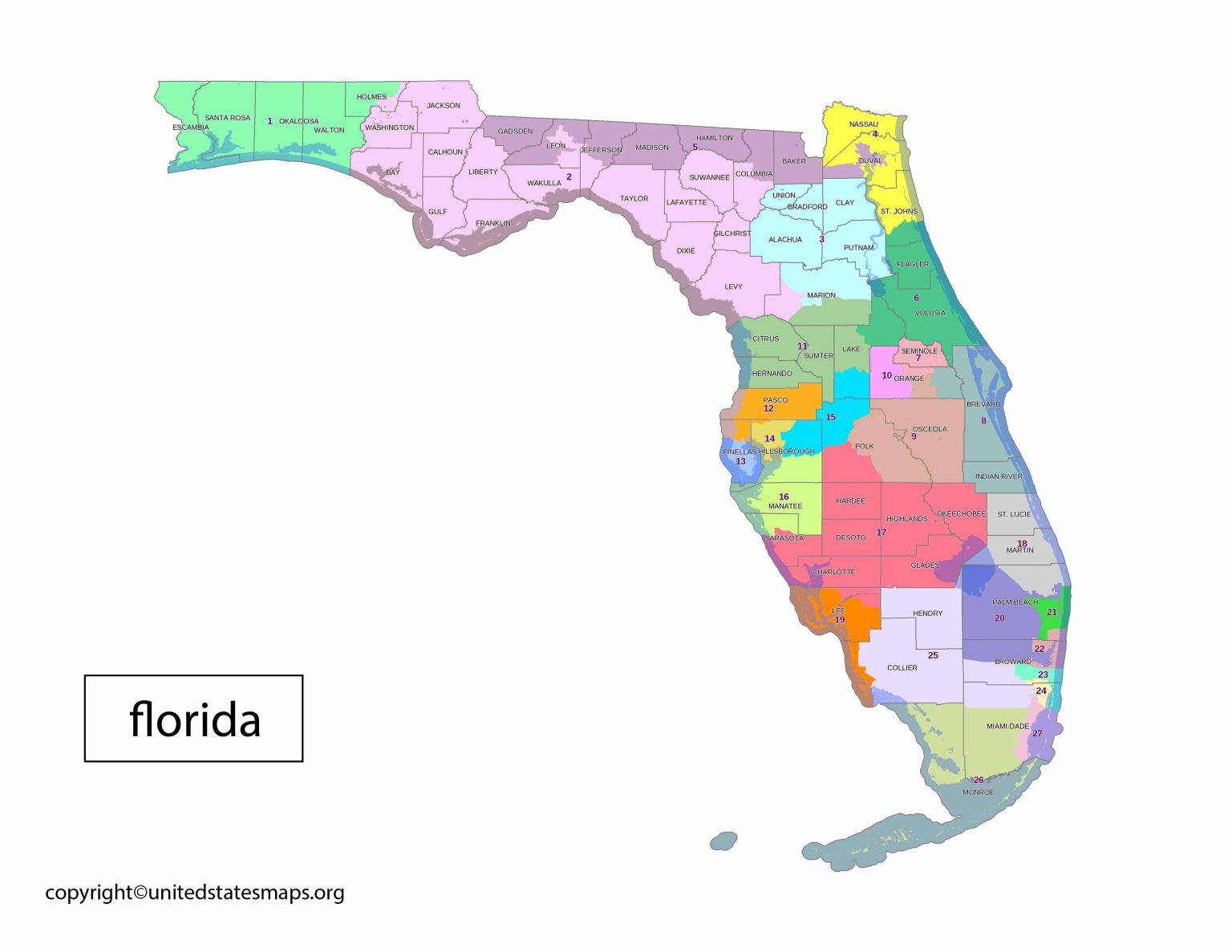
Florida is divided into 28 congressional districts, each represented by a member of the U.S. House of Representatives. These districts are designed to be roughly equal in population, ensuring fair representation based on the ‘one person, one vote’ principle. The drawing of these lines, known as redistricting, occurs every ten years following the decennial U.S. Census.
The boundaries of these districts directly impact who can be elected to Congress and, consequently, the balance of power in Washington D.C. A district’s demographic makeup, including factors like ethnicity, income, and political affiliation, can heavily influence its electoral outcomes.
State Legislative Districts: The Florida House and Senate
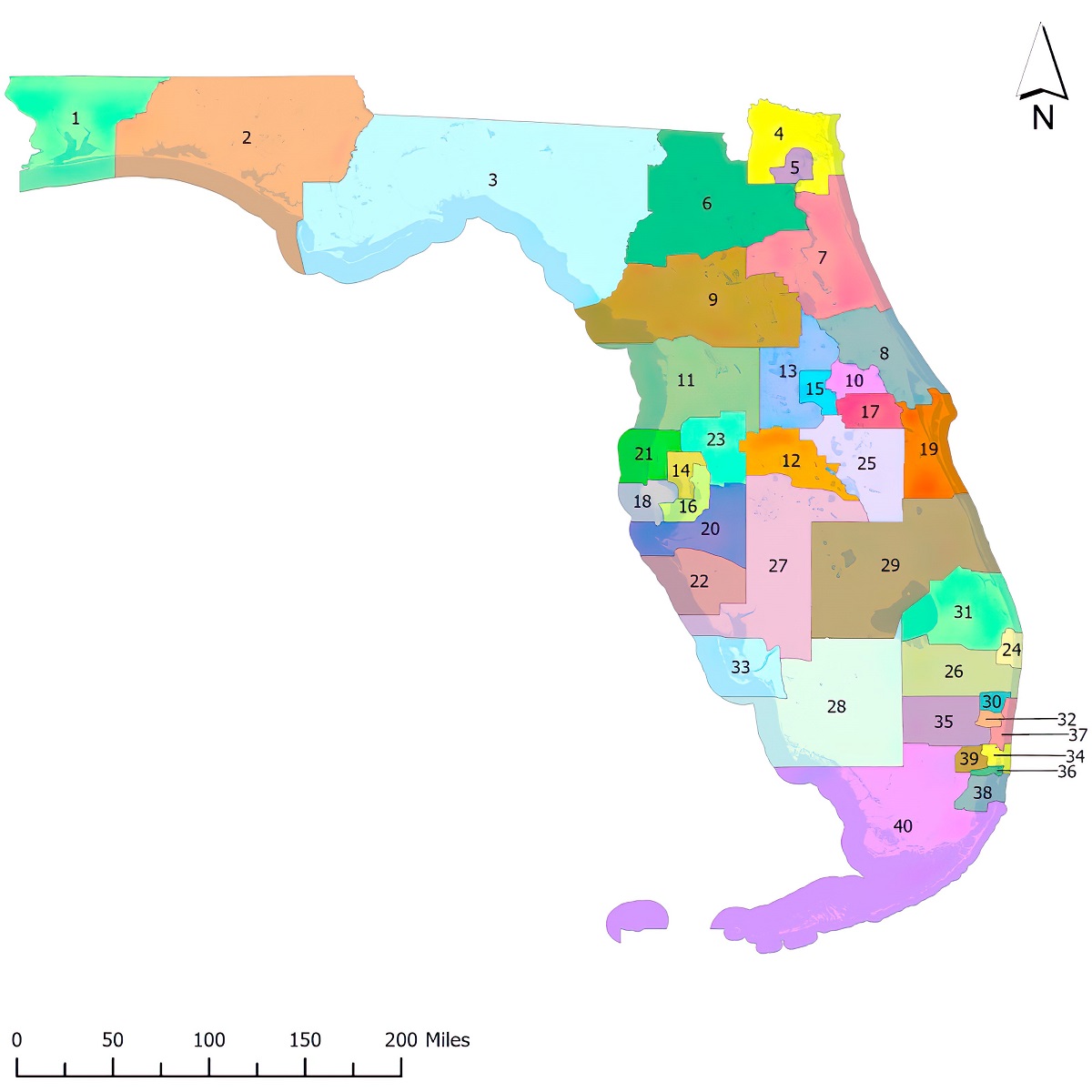
Beyond federal representation, Florida’s political map also delineates districts for its state legislature, which is bicameral: the Florida Senate and the Florida House of Representatives. There are 40 State Senate districts and 120 State House districts.
Members of the state legislature are responsible for creating laws that directly affect Floridians, from education policy and environmental protection to taxation and healthcare. Understanding the boundaries of these districts helps citizens identify their local representatives and participate effectively in state governance.
The Power of Local Government: County and Municipal Maps
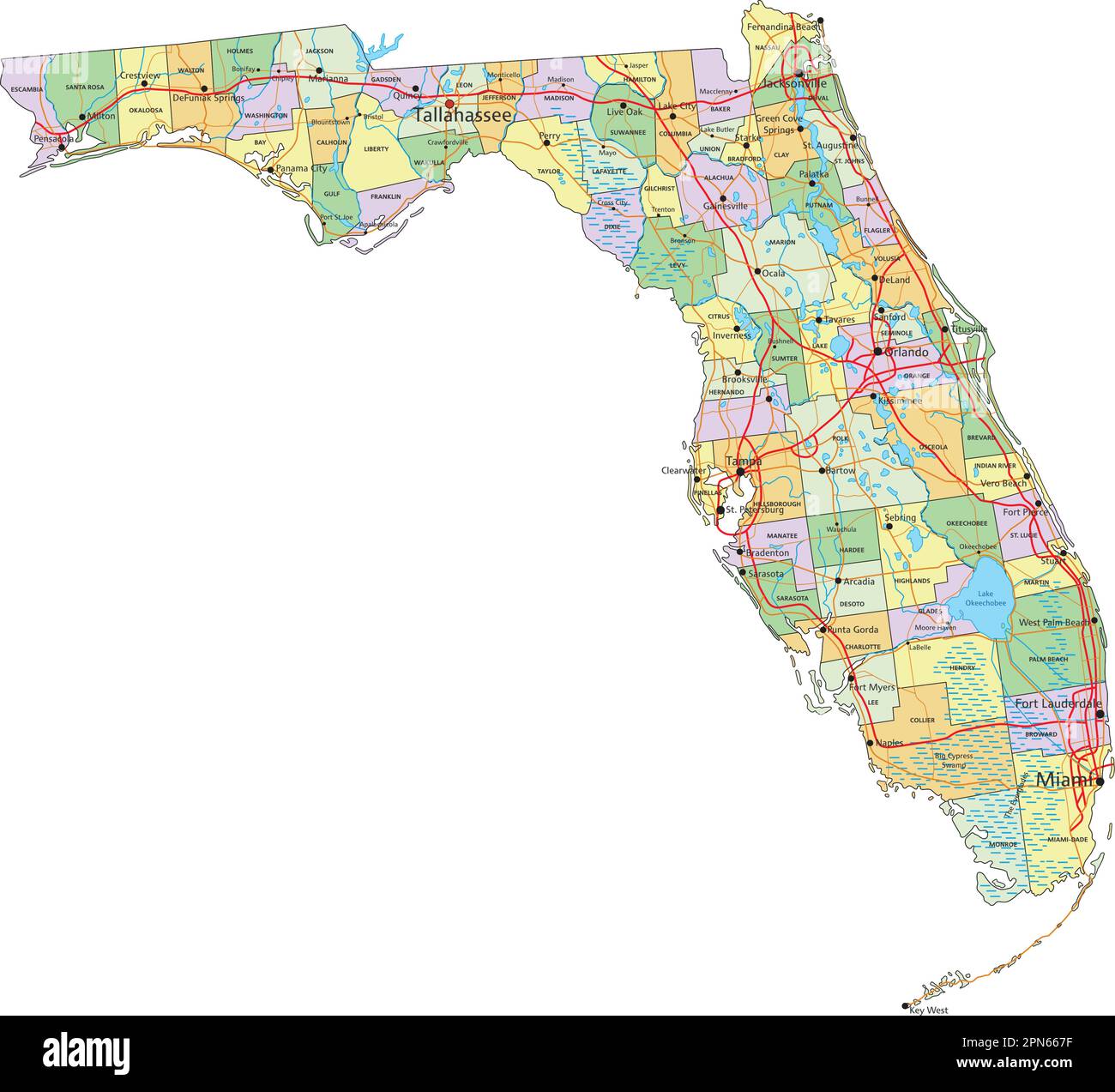
While federal and state maps often grab headlines, local political maps are equally vital. Florida is comprised of 67 counties, each with its own county commission or council, and numerous municipalities with city councils and mayors. These local bodies make decisions on zoning, local infrastructure, public safety, and other services that directly impact daily life.
The political map at the local level dictates who represents communities in these crucial roles, and understanding these boundaries is key to engaging with local governance. For instance, a voter in Miami-Dade County will have different local representatives than a voter in Hillsborough County, even if both vote in the same state or federal districts.
Key Demographic Factors Influencing Florida’s Political Map
- Population Growth and Migration: Florida is one of the fastest-growing states, attracting residents from other U.S. states and internationally. These new residents bring diverse political leanings, often altering the balance in existing districts.
- Age Demographics: The state has a large retiree population, traditionally leaning conservative, alongside a growing younger population in urban centers, often more liberal. This creates a dynamic tension in electoral outcomes.
- Ethnic Diversity: Florida’s significant Hispanic population, particularly the Cuban-American community in South Florida, holds considerable political sway. Other groups, including Puerto Ricans, Venezuelans, and various Caribbean communities, also contribute to the state’s complex political mosaic.
- Urban vs. Rural Divide: Like many states, Florida exhibits a clear political divide between its densely populated urban cores (e.g., Miami, Orlando, Tampa, Jacksonville), which tend to lean Democratic, and its more rural areas, which are typically Republican strongholds.
Historical Context: How Florida’s Map Evolved
Historically, Florida was a reliably Democratic state for much of the 20th century. However, starting in the latter half of the century, a significant influx of retirees from the Midwest and Northeast, coupled with shifting political allegiances among native Floridians, began to transform the state into a competitive swing state. In recent election cycles, particularly from 2016 onwards, Florida has shown a discernible shift towards the Republican Party, though its ‘swing state’ reputation persists due to its unpredictable nature.
Redistricting in Florida: A Contentious Process
The process of drawing new district lines is often the most contentious aspect of Florida’s political map. After each decennial census, the Florida Legislature is tasked with redrawing congressional and state legislative districts. This process is governed by the state constitution and, crucially, by the ‘Fair Districts Amendments,’ passed by voters in 2010.
These amendments aim to prevent political gerrymandering by requiring that districts be compact, contiguous, and, to the extent possible, follow existing geographical and political boundaries. They also prohibit drawing lines that favor or disfavor an incumbent or a political party, or that diminish the ability of racial or language minorities to elect representatives of their choice.
Despite these amendments, redistricting remains a highly politicized process, often leading to court challenges. The most recent redistricting cycle following the 2020 Census saw significant debate and legal action, ultimately resulting in new maps that reshaped many districts and solidified the state’s current political trajectory.
Swing States and Battleground Counties: Where Every Vote Counts
While Florida as a whole has shifted, certain counties remain perpetual battlegrounds, often determining statewide election outcomes. These ‘swing counties’ are characterized by a relatively even split between registered Democrats and Republicans, or a significant number of No Party Affiliation (NPA) voters who swing elections.
Historically, counties like Pinellas, Hillsborough, Orange, Duval, and Seminole have been closely watched due to their ability to swing between parties. Understanding the political map at this granular county level provides insight into the strategies employed by campaigns.
Voter Registration Trends and Political Affiliation
Examining voter registration data offers another layer of understanding to Florida’s political map. While Democrats historically held a registration advantage, Republicans surpassed them in registered voters in late 2021. The fastest-growing segment, however, is ‘No Party Affiliation’ (NPA) voters, who now constitute a significant portion of the electorate and often decide close races.
This growing independence among voters means that the traditional ‘red vs. blue’ map is becoming increasingly nuanced, with NPA voters holding considerable sway and requiring candidates to appeal across party lines.
Impact of Major Policy Issues on Florida’s Political Map
- Environmental Concerns: Issues like climate change, sea-level rise, red tide, and Everglades restoration resonate deeply, particularly in coastal and environmentally sensitive areas, often shaping local and state elections.
- Economic Factors: Florida’s economy, heavily reliant on tourism, agriculture, and real estate, means economic policies, taxes, and job growth are always front and center for voters.
- Healthcare and Education: Access to affordable healthcare and the quality of public education are perennial concerns that drive voter engagement and can shift district-level outcomes.
How to Interpret a Florida Political Map
- District Shape: Are they compact or sprawling? This can indicate gerrymandering efforts.
- Population Density: Urban areas (often blue) versus rural areas (often red).
- Demographic Overlays: How do racial, ethnic, or age group concentrations align with district lines?
- Historical Trends: Has a district consistently voted one way, or is it a swing district?
Future Outlook: What’s Next for Florida’s Political Landscape?
Florida’s political map is a living document, constantly evolving. Continued population growth, particularly from diverse backgrounds, will ensure its dynamic nature. The ongoing debate around redistricting, the influence of independent voters, and the impact of national political trends will all continue to shape the Sunshine State’s electoral future. Observing how these factors interact will be key to understanding the next chapter of Florida’s political journey.
In conclusion, the Florida political map is a complex, multi-layered representation of the state’s diverse population, historical shifts, and ongoing political battles. From federal congressional districts to local municipal boundaries, each line on the map tells a story of representation, power, and the democratic process. Understanding its intricacies is not just an academic exercise; it’s essential for any engaged citizen or political observer hoping to comprehend the critical role Florida plays in the nation’s political narrative.