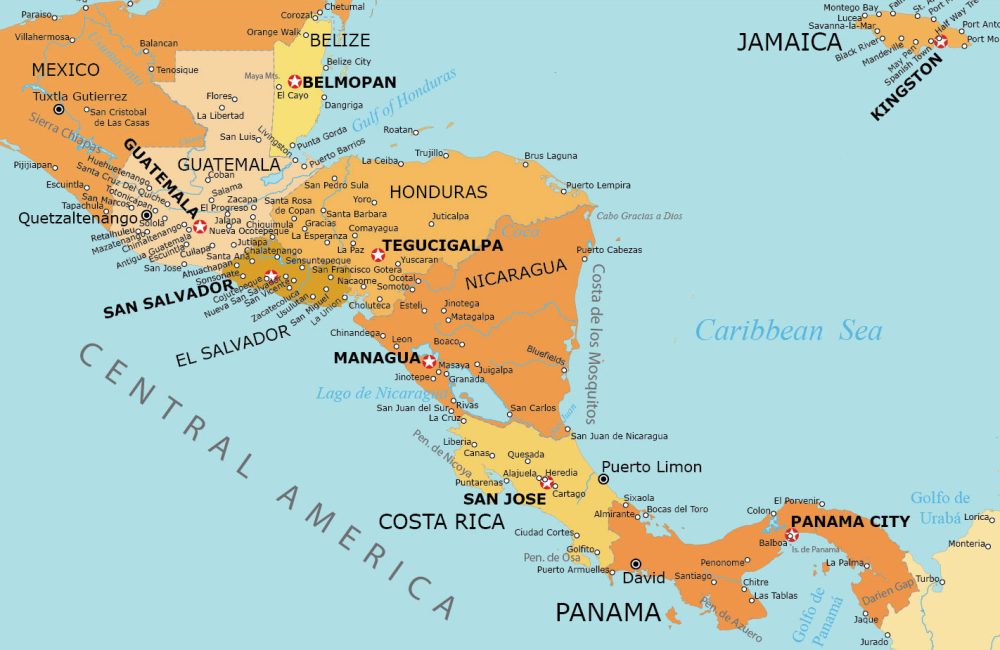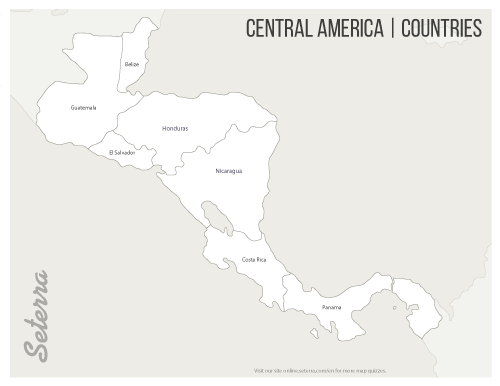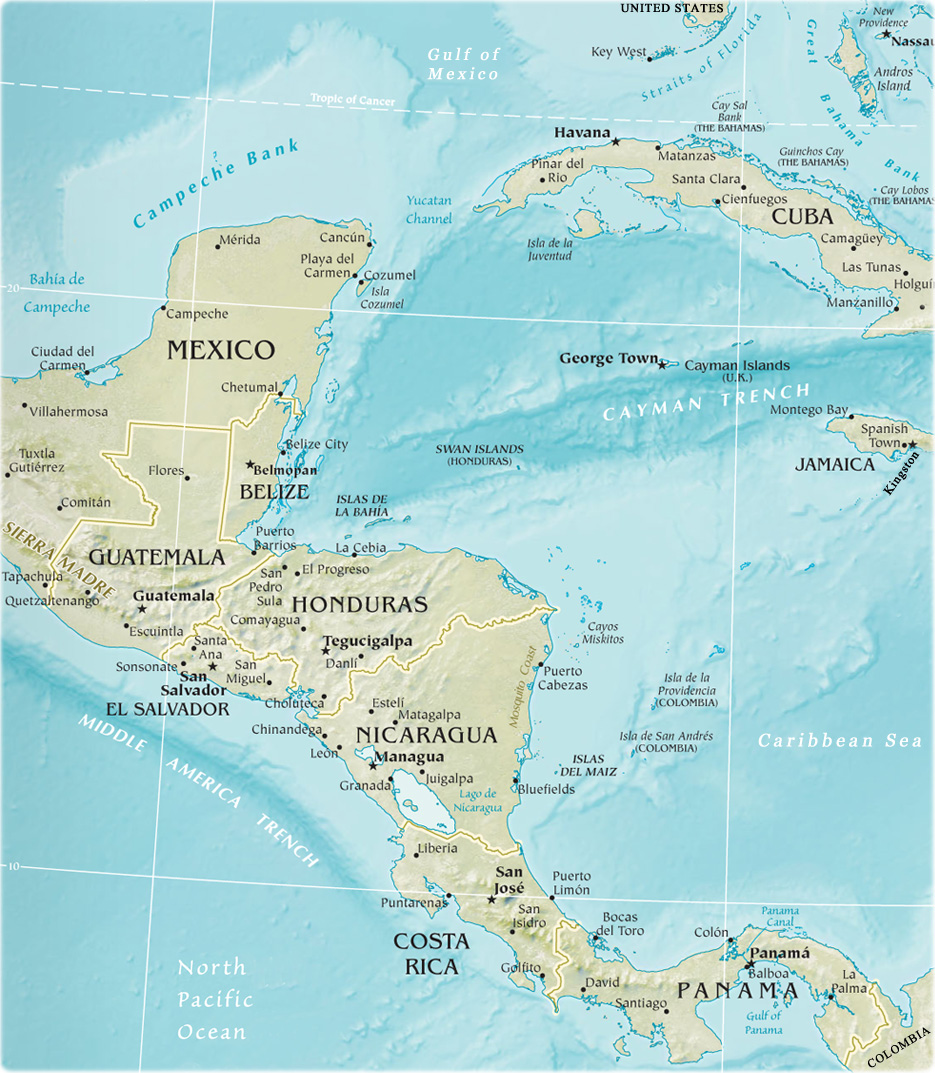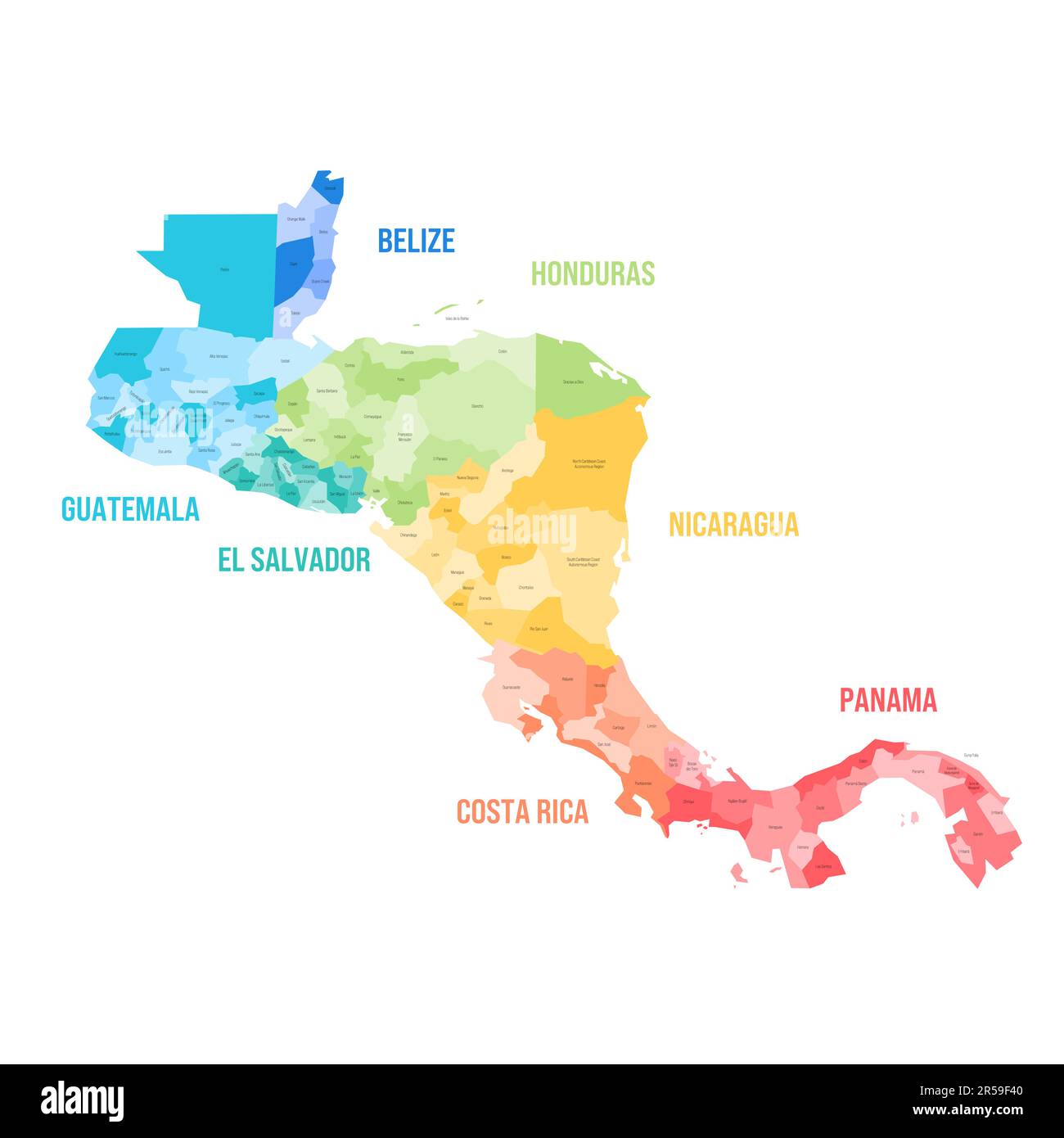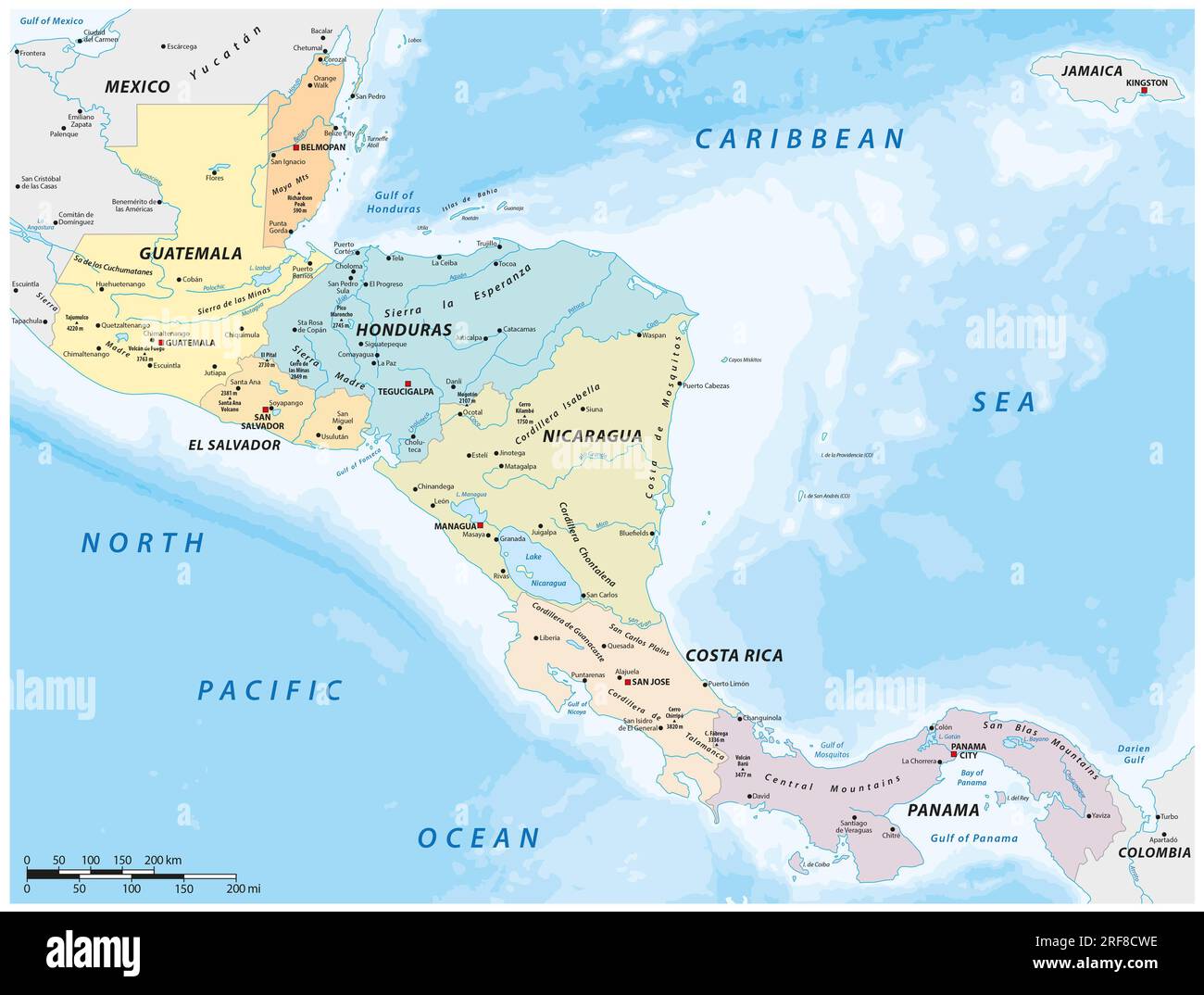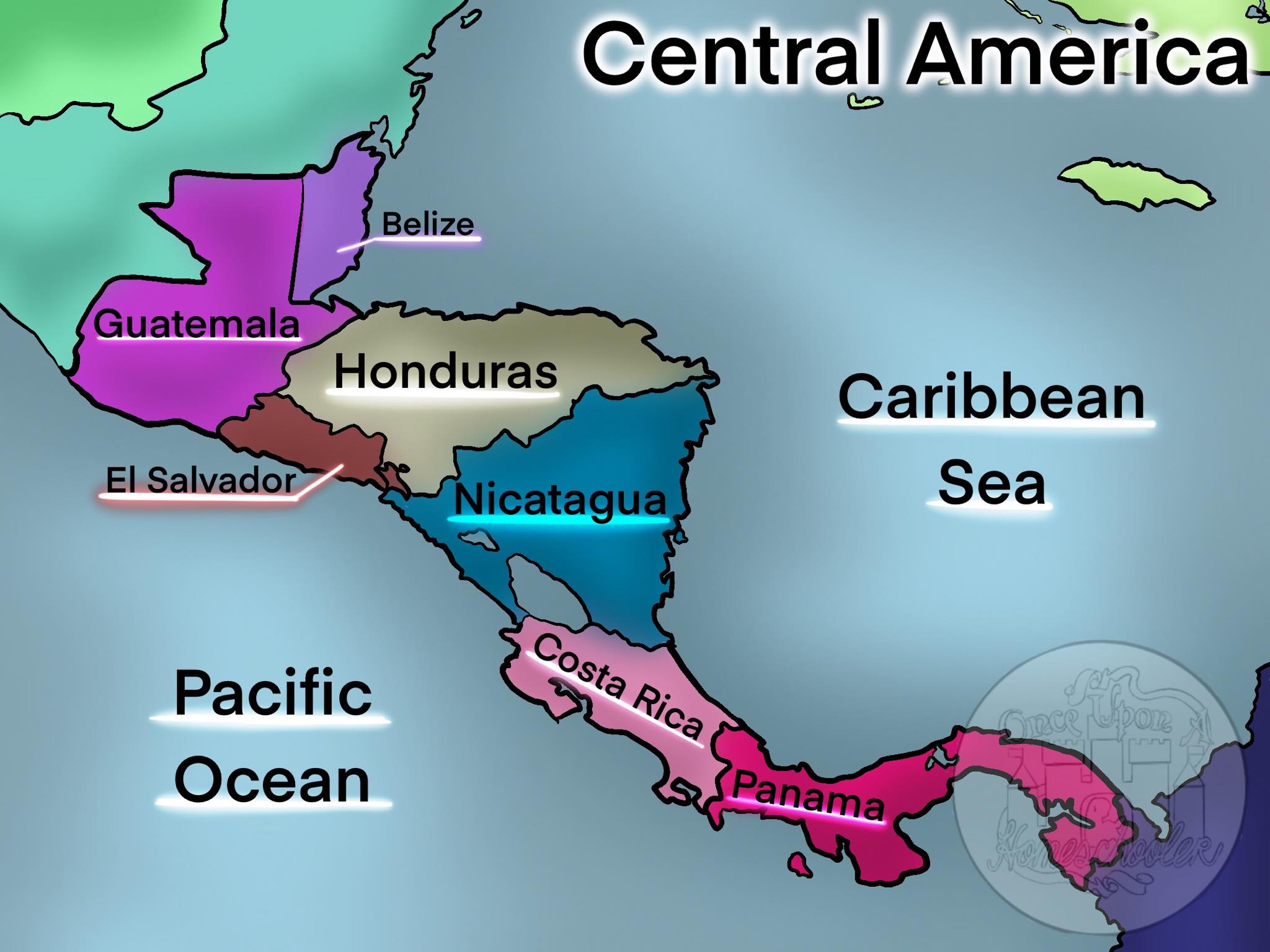
This comprehensive guide will walk you through the essential elements of a labeled map of Central America, highlighting its distinct countries, their capital cities, significant geographical features, and the surrounding bodies of water. We’ll explore why having such a map is crucial for various purposes and answer common questions that arise when studying this dynamic part of the world.
What Defines Central America? A Geographical Overview
Geographically, Central America is an isthmus, a narrow strip of land connecting two larger landmasses and bordered by water on two sides. It acts as a vital corridor, both physically and biologically, linking the continents. To its east lies the vast Caribbean Sea, an arm of the Atlantic Ocean, while its western shores are met by the immense Pacific Ocean. This unique position contributes significantly to its diverse climates and ecosystems.
Politically, Central America is typically recognized as comprising seven independent nations. However, it’s important to note that sometimes Mexico’s southernmost states, particularly those in the Yucatán Peninsula and Chiapas, are culturally and historically linked to the region, leading to occasional confusion regarding its precise boundaries.
The Seven Nations of Central America: A Labeled Map Perspective
A labeled map clearly delineates the national borders and identifies each of the seven countries that form the core of Central America. Understanding these individual entities is fundamental to grasping the region’s overall character. Let’s delve into each one, noting their capitals and a brief geographical context.
- Belize: Located on the Caribbean coast, Belize is unique as the only Central American country where English is the official language. Its capital is Belmopan, though its largest city, Belize City, is more widely known. Belize is famed for its stunning barrier reef, a UNESCO World Heritage site.
- Guatemala: The most populous country in the region, Guatemala is home to a rich Maya heritage. Its capital, Guatemala City, is the largest urban center in Central America. The country boasts dramatic volcanic landscapes and ancient Mayan ruins.
- El Salvador: The smallest and most densely populated country in mainland Central America, El Salvador is known as the ‘Land of Volcanoes.’ Its capital is San Salvador. It’s the only Central American nation without a Caribbean coastline.
- Honduras: With extensive Caribbean and Pacific coastlines, Honduras features diverse geography, from mountainous interiors to lowland coastal plains. Tegucigalpa serves as its capital. The Bay Islands are a popular tourist destination.
- Nicaragua: The largest country in Central America by land area, Nicaragua is often called the ‘Land of Lakes and Volcanoes.’ Its capital is Managua. Lake Nicaragua, the largest lake in Central America, is a prominent feature.
- Costa Rica: Renowned for its commitment to ecotourism and conservation, Costa Rica is a biodiversity hotspot. San José is its capital. It’s famous for its lush rainforests, pristine beaches, and numerous national parks.
- Panama: The southernmost country, Panama is globally recognized for the Panama Canal, an engineering marvel connecting the Atlantic and Pacific oceans. Panama City is its vibrant capital. Its strategic location has made it a global trade hub.
Major Geographical Features on a Labeled Map
Beyond political boundaries, a comprehensive labeled map will also highlight significant physical features that shape the region. These include mountain ranges, major bodies of water, and prominent landforms.
Central America is characterized by a spine of mountains, part of the larger Cordillera system that extends from North to South America. The Sierra Madre mountain range dominates much of Guatemala and extends into Mexico. This region lies within the Pacific Ring of Fire, leading to a high concentration of active and dormant volcanoes across El Salvador, Guatemala, Nicaragua, and Costa Rica. These volcanoes not only define the landscape but also contribute to fertile soils.
The Caribbean Sea to the east and the Pacific Ocean to the west are the most significant water bodies. The narrowest point of the Isthmus of Panama is where the Panama Canal was constructed, revolutionizing global maritime trade. Internally, large lakes like Lake Nicaragua (Cocibolca) and Lake Managua in Nicaragua, and Lake Atitlán in Guatemala, are crucial for freshwater resources and local ecosystems.
This incredibly narrow land bridge is arguably Central America’s most famous geographical feature. Its strategic importance cannot be overstated, historically serving as a natural barrier and, since the early 20th century, as a gateway for global shipping through the Panama Canal.
Why is a Labeled Map of Central America Indispensable?
The utility of a detailed, labeled map extends across numerous disciplines and personal interests. It serves as a fundamental resource for education, travel, business, and geopolitical understanding.
Students of geography, history, and international relations rely on labeled maps to visualize political boundaries, understand topographical features, and trace historical events. It aids in comprehending regional dynamics, population distributions, and environmental factors.
Travelers planning adventures through Central America, whether backpacking through rainforests, exploring ancient ruins, or relaxing on pristine beaches, find labeled maps essential. They help in route planning, identifying points of interest, understanding distances, and navigating between countries and cities.
Businesses involved in import/export, supply chain management, or regional development projects depend on accurate maps to understand infrastructure, trade routes, and logistical challenges. The Panama Canal, for instance, is a critical component of global shipping, and its location is paramount for international commerce.
Researchers and policymakers use labeled maps to study regional conflicts, migration patterns, natural resource distribution, and the impacts of climate change. Central America’s unique biodiversity and vulnerability to natural disasters make these maps vital for environmental conservation efforts.
Common Questions About Central America’s Geography (People Also Ask)
Let’s address some frequently asked questions that often arise when exploring the geography of Central America, further enhancing our understanding of its labeled map.
Is Mexico part of Central America?
While culturally and historically linked to Mesoamerica, and sharing a border with Guatemala and Belize, Mexico is generally considered part of North America. Its sheer size and distinct historical trajectory often separate it from the smaller Central American nations in geographical classifications, though its southern states share many characteristics with the region.
What is the largest country in Central America by area?
Nicaragua holds the distinction of being the largest country in Central America by land area, encompassing a diverse landscape of volcanoes, lakes, and coastal plains.
What is the smallest country in Central America by area?
El Salvador is the smallest country in mainland Central America, known for its dense population and volcanic terrain. Belize, though slightly larger than El Salvador, is often considered the smallest in terms of population density among the core seven.
What are some major cities in Central America, besides the capitals?
Beyond the capital cities, other significant urban centers include San Pedro Sula in Honduras (a major industrial hub), Colón in Panama (at the Caribbean entrance of the Panama Canal), León and Granada in Nicaragua (historic colonial cities), and Antigua Guatemala (a UNESCO World Heritage site). These cities often appear on more detailed labeled maps.
Tips for Utilizing a Labeled Map Effectively
- Focus on Specific Details: Depending on your purpose, zoom in on specific countries, coastlines, or mountain ranges.
- Cross-Reference: Use the map in conjunction with travel guides, historical texts, or online resources for a richer understanding.
- Digital vs. Physical: Digital interactive maps offer dynamic layering of information, while physical maps provide a tangible overview, often useful for offline navigation.
- Understand Scale: Pay attention to the map’s scale to accurately gauge distances and sizes of features.
Conclusion: The Enduring Value of a Labeled Central America Map
From its volcanic peaks to its vibrant coastlines, Central America is a region of immense complexity and beauty. A detailed, labeled map serves as an essential key to unlocking its secrets, providing clarity on its political divisions, geographical wonders, and the critical connections that define it. Whether for academic study, adventurous exploration, or strategic planning, the ability to accurately identify countries, capitals, and natural landmarks is invaluable.
We hope this comprehensive guide has illuminated the importance and utility of a labeled map of Central America, empowering you with a deeper appreciation for this extraordinary part of our world. Embrace the journey of discovery that these maps facilitate, revealing the intricate patterns and profound stories embedded within the land and its people.