Understanding the Man Behind the Mission: Saul to Paul
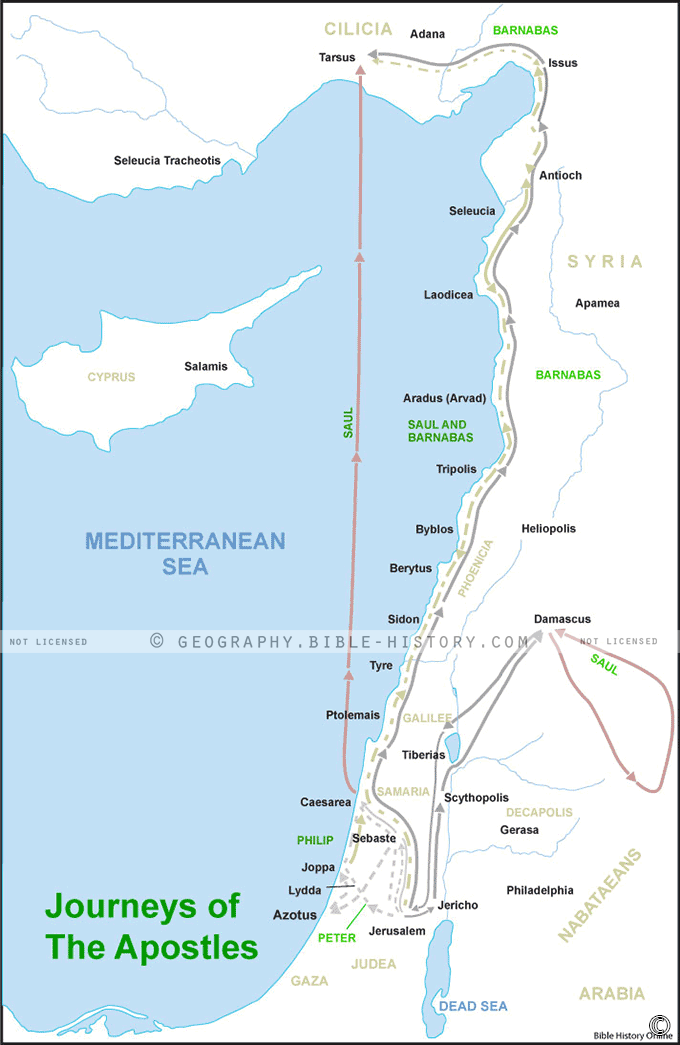
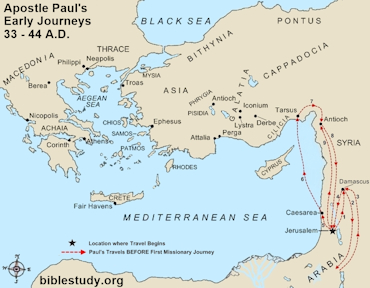
Before embarking on his legendary journeys, Paul was a zealous Pharisee named Saul, who actively persecuted the early followers of Jesus. His dramatic conversion on the road to Damascus, as recorded in the Acts of the Apostles, marked a profound turning point. This event transformed him from a persecutor into a devoted apostle, commissioned to carry the Christian message to the Gentiles (non-Jews). His unique background—a Roman citizen, educated in Jewish law, and fluent in Greek—perfectly positioned him to bridge cultural divides and communicate his message across a diverse empire.
The Significance of Mapping Paul’s Travels
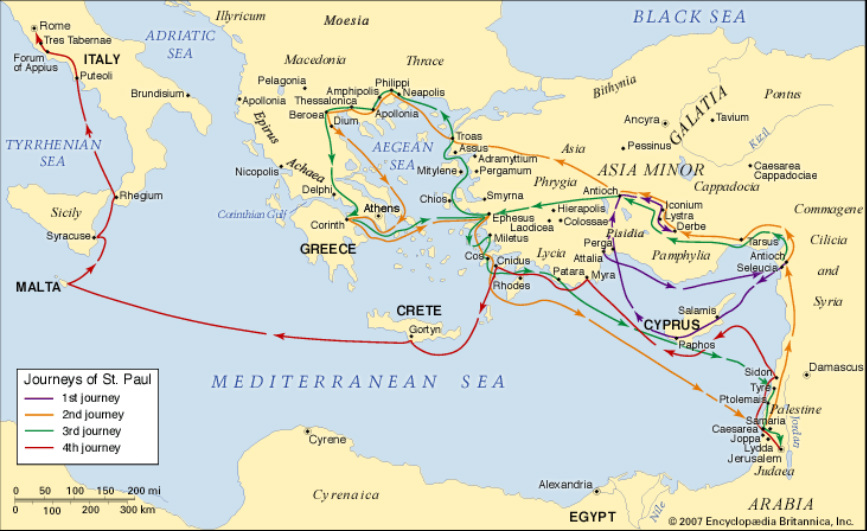
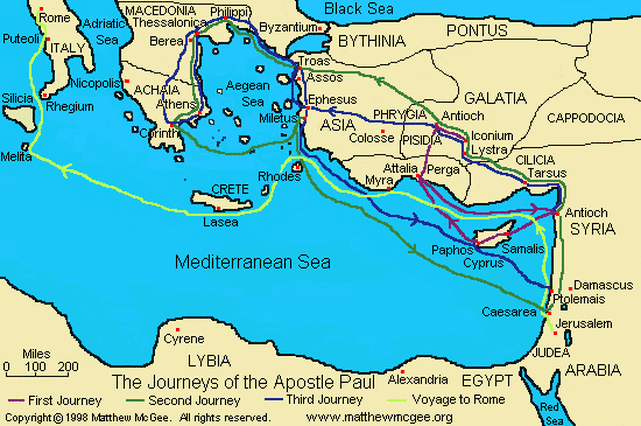
Why is it so important to visualize Paul’s missionary journeys on a map? First, it provides a geographical and historical framework for the New Testament, particularly the book of Acts and Paul’s letters. Seeing the distances he covered—often on foot or by perilous sea voyages—highlights his unwavering dedication. Second, it helps us understand the strategic nature of his ministry. Paul targeted major urban centers, trade routes, and influential cities, knowing that from these hubs, the message would spread outward. Finally, a map connects the abstract theological concepts in his letters to real-world places, people, and challenges.
The First Missionary Journey (Approx. 47-48 AD)
Paul’s first major missionary expedition, undertaken with Barnabas and John Mark, served as a blueprint for his future work. It established a pattern of preaching first in synagogues and then turning to the Gentiles when his message was rejected by Jewish leaders.
Setting Out from Antioch
The journey began from the bustling city of Antioch in Syria, a major center for early Christianity. From its port, Seleucia Pieria, they sailed to the island of Cyprus. Here, they traveled across the island to Paphos, where they confronted a sorcerer named Elymas and converted the Roman proconsul, Sergius Paulus. This was a significant success, demonstrating the gospel’s power in the face of both local magic and Roman authority.
Into Asia Minor
From Cyprus, they sailed to Perga in Pamphylia (modern-day Turkey). It was here that John Mark left the mission and returned to Jerusalem, a point of future contention between Paul and Barnabas. Pressing northward, they journeyed to Antioch of Pisidia. Paul’s sermon in the synagogue there, recorded in Acts 13, is a masterpiece of early Christian preaching, but it also provoked fierce opposition, leading to their expulsion from the city.
Facing Persecution in Iconium, Lystra, and Derbe
Undeterred, Paul and Barnabas traveled to Iconium, Lystra, and Derbe. In each city, they met a mix of acceptance and hostility. In Lystra, after healing a man who had been lame from birth, the local population mistook them for the Greek gods Zeus and Hermes. Shortly after, agitators from Antioch and Iconium arrived and turned the crowd against them, stoning Paul and leaving him for dead. Miraculously, he survived and continued his work before retracing his steps to strengthen the new believers and appoint elders in each church, establishing a structure for these nascent communities before finally returning to Antioch in Syria.
The Second Missionary Journey (Approx. 49-52 AD)
Paul’s second journey was even more ambitious, covering more ground and marking the pivotal moment when Christianity gained a significant foothold in Europe. This time, Paul was accompanied by Silas after a disagreement with Barnabas over John Mark.
Revisiting and Expanding
They began by traveling overland through Syria and Cilicia, strengthening the churches founded on the first journey. In Lystra, they were joined by a young disciple named Timothy, who would become one of Paul’s most trusted companions. They continued through the regions of Phrygia and Galatia.
The Macedonian Call
A crucial moment occurred in the port city of Troas. Here, Paul had a vision of a man from Macedonia pleading, "Come over to Macedonia and help us." Interpreting this as a divine call, Paul and his companions immediately set sail, crossing the Aegean Sea and landing in Europe for the first time. This marked a strategic shift in the westward expansion of the Christian faith.
Founding Churches in Europe: Philippi, Thessalonica, and Berea
Their first major stop was Philippi, a Roman colony. Here, they converted a businesswoman named Lydia, and later, Paul and Silas were flogged and imprisoned after an exorcism. Their miraculous release following an earthquake led to the conversion of their jailer and his family. From Philippi, they traveled to Thessalonica, where they had success but were again forced to flee by a violent mob. In Berea, they found a more receptive audience, who were praised for examining the Scriptures daily to verify Paul’s teachings.
Athens and the Areopagus
Paul’s journey then took him to the intellectual heart of the ancient world: Athens. Distressed by the city’s idolatry, he engaged with philosophers on the Areopagus, or Mars Hill. His famous sermon (Acts 17) is a brilliant example of contextualizing the Christian message for a philosophical audience, starting from their own ‘unknown god’ to introduce the creator of the universe. While he was largely mocked, a few key individuals believed.
The Corinthian Ministry
Paul’s final major stop on this journey was the cosmopolitan and notoriously licentious city of Corinth. He stayed there for a year and a half, working as a tentmaker with fellow believers Aquila and Priscilla. He founded a thriving, albeit problematic, church to which he would later write at least two canonical letters. From Corinth, he briefly stopped at Ephesus before sailing back to Caesarea and reporting to the churches in Jerusalem and Antioch.
The Third Missionary Journey (Approx. 53-57 AD)
The third journey was primarily focused on strengthening existing churches and establishing a long-term ministry hub in the influential city of Ephesus.
The Ephesian Epicenter
Paul spent nearly three years in Ephesus, the capital of the Roman province of Asia. This extended stay allowed him to teach extensively, both publicly and from house to house. His ministry had a profound impact on the entire region. However, his success threatened the local economy, which was heavily dependent on the sale of silver shrines of the goddess Artemis. This culminated in a massive riot instigated by a silversmith named Demetrius, which forced Paul to leave the city.
Journey through Macedonia and Greece
After leaving Ephesus, Paul traveled north into Macedonia to visit the churches in Philippi and Thessalonica. He then continued south into Greece (Achaia), likely spending time in Corinth to address issues within the church there. It was during this period that he wrote some of his most significant letters, including Romans.
A Farewell to the Ephesian Elders
On his return journey towards Jerusalem, Paul stopped at Miletus and summoned the elders from the nearby church of Ephesus for an emotional farewell. His parting speech, recorded in Acts 20, is a poignant summary of his ministry and a warning of future challenges. It reveals his deep pastoral love for the churches he founded.
The Final Journey to Rome (Approx. 59-62 AD)
Paul’s fourth and final journey recorded in Acts is not a missionary tour but the voyage of a prisoner. After arriving in Jerusalem, he was arrested due to false accusations. As a Roman citizen, he eventually exercised his right to appeal his case to Caesar, which necessitated a transfer to Rome.
A Perilous Sea Voyage
The journey to Rome was fraught with danger. The ship carrying Paul and other prisoners encountered a violent storm and was shipwrecked on the island of Malta. Paul’s leadership and faith during the crisis were instrumental in the survival of all on board. They spent three months on Malta, where Paul was unharmed by a viper bite and healed many of the island’s inhabitants, before securing passage on another ship to Italy.
House Arrest in Rome
Upon finally arriving in Rome, Paul was placed under house arrest. Despite his confinement, he was permitted to receive visitors and continued his ministry unabated for two years. From his rented quarters, he preached and wrote several of his ‘Prison Epistles’ (Ephesians, Philippians, Colossians, and Philemon). The book of Acts concludes with Paul boldly proclaiming the gospel in the very heart of the Roman Empire.
Key Cities on Paul’s Map
- Antioch (Syria): The sending church. It was the home base from which his first three journeys were launched.
- Ephesus: The hub of his third journey. A major center of commerce, religion, and culture in Asia Minor.
- Corinth: A key port city in Greece where Paul established a significant church and addressed complex moral and theological issues.
- Philippi: The first church founded on European soil, known for its loyalty and support of Paul’s ministry.
- Rome: The ultimate destination. As the capital of the empire, establishing a Christian presence here was of immense strategic importance.
Frequently Asked Questions About Paul’s Journeys
How many missionary journeys did Paul take?
Traditionally, Paul’s travels are divided into three distinct missionary journeys, followed by a fourth journey to Rome as a prisoner. Each of the first three journeys began and ended in Antioch (or Jerusalem/Antioch).
What was the longest journey Paul took?
The third missionary journey was likely the longest in duration, lasting approximately four to five years, largely due to his extended ministry of nearly three years in Ephesus. The second journey covered more geographical ground, especially with the expansion into Europe.
Where did Paul’s first missionary journey start and end?
Paul’s first missionary journey started in Antioch of Syria. After traveling through Cyprus and several cities in Asia Minor, he and Barnabas returned to Antioch of Syria to report on their work.
Did Paul ever travel alone?
While Paul was the clear leader, he rarely traveled alone. He believed in ministering in teams. His companions included Barnabas, Silas, Timothy, Luke (the traditional author of Acts), John Mark, Aquila, and Priscilla, among others.
Conclusion: The Enduring Legacy of an Apostle’s Travels
The maps of Paul’s journeys are more than just lines on a page; they are a testament to a life poured out in service of a mission. They chart the expansion of a fledgling faith from a regional Jewish sect into a global religion. Paul’s travels, filled with shipwrecks, persecution, and theological debates, laid the foundational grid for the Christian church. By tracing his footsteps, we gain a deeper appreciation for the resilience of the early church, the strategic mind of its greatest missionary, and the incredible story of how the Christian message transformed the ancient world.