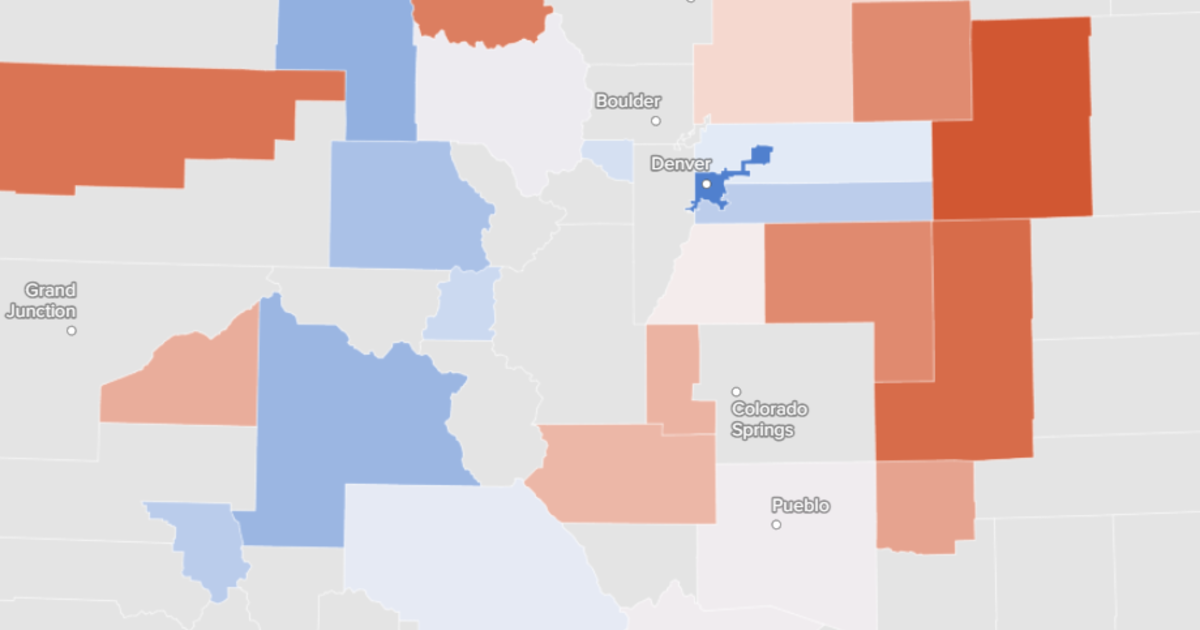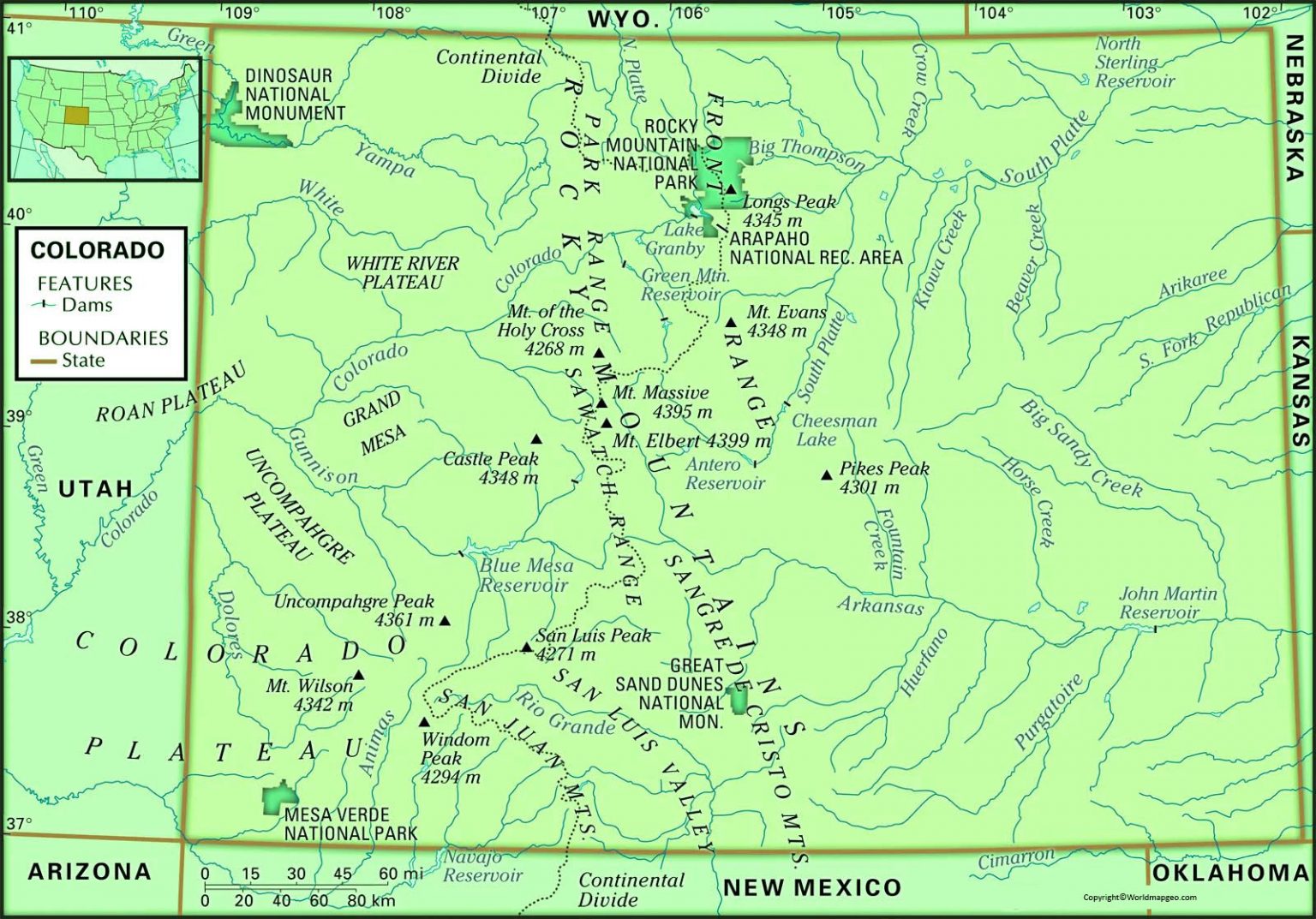
For political analysts, voters, and policymakers, comprehending the nuances of Colorado’s geography is essential. From the dense, liberal corridors of the Front Range to the conservative expanses of the Eastern Plains and the fiercely independent Western Slope, the state represents a microcosm of the broader political divides facing the United States. This article provides a detailed examination of the current Colorado political map, breaking down congressional districts, legislative control, and the voting behaviors that define the Centennial State today.
The Evolution from Purple to Blue
Historically, Colorado was a state characterized by a libertarian streak and a preference for Republican presidential candidates. From 1968 to 2004, the state voted for a Democrat for president only once (Bill Clinton in 1992). However, the political tides began to turn in 2008. Since then, Democratic candidates have won the state in four consecutive presidential elections, with margins widening significantly in 2020.
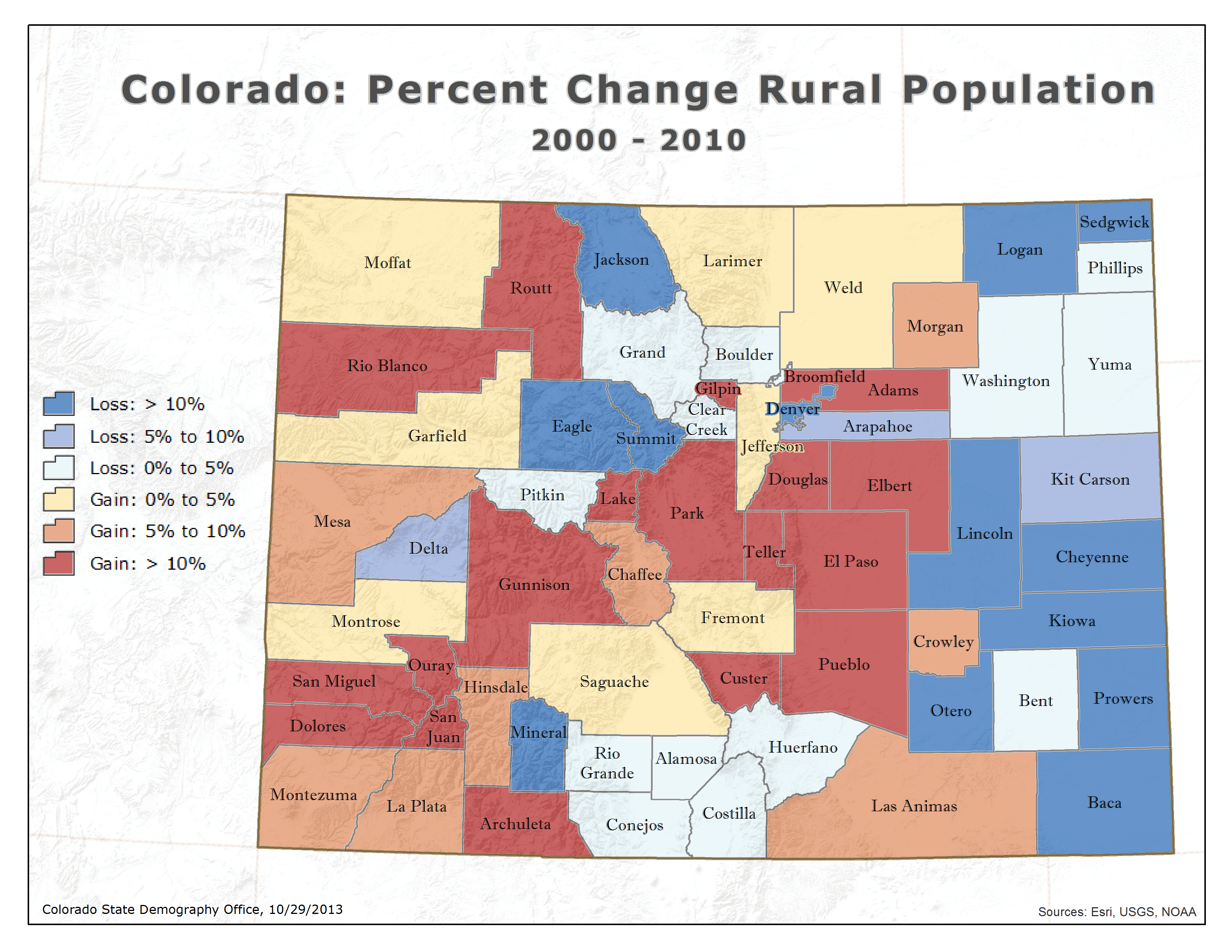
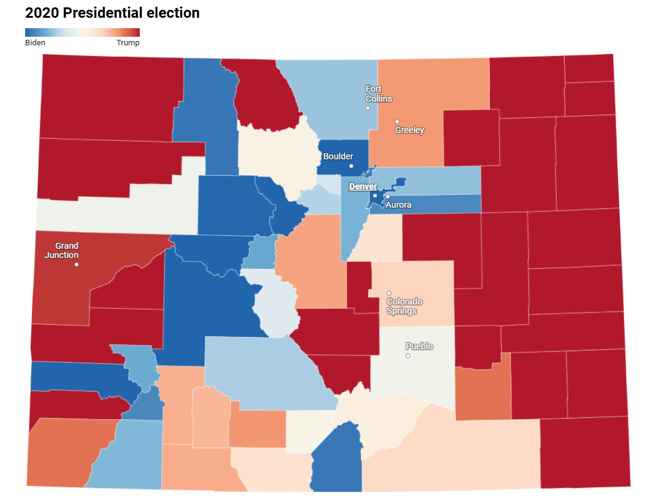
This shift is often attributed to the rapid growth of the Denver metropolitan area and the influx of college-educated voters moving to the state for its booming tech industry and outdoor lifestyle. While the state map by county still appears largely red due to the vast rural areas, the population density in blue areas has tipped the scales of statewide power.
Understanding the Geography: The Urban-Rural Divide
To read the Colorado political map correctly, one must recognize the stark contrast between the urban corridor and rural regions. Approximately 85% of Colorado’s population lives along the Front Range, a stretch of urbanization along Interstate 25 that includes Fort Collins, Denver, Colorado Springs, and Pueblo. This geographic concentration dictates the state’s political outcomes.
The Blue Spine: The core of Democratic power lies in the City and County of Denver, Boulder County, and increasingly, the surrounding suburban counties like Jefferson and Arapahoe. These areas are characterized by high population density, higher education levels, and diverse demographics.
The Red Expanse: Conversely, the Eastern Plains, which resemble the agriculture-heavy politics of Kansas and Nebraska, remain deeply Republican. Similarly, much of the Western Slope (excluding resort towns like Aspen and Telluride) leans conservative, prioritizing issues like land use, water rights, and energy independence.
The New Congressional Map (Post-2020 Census)
Following the 2020 United States Census, Colorado’s population growth earned it an eighth congressional seat. This necessitated a redrawing of the political map, a process that was, for the first time, handled by an Independent Redistricting Commission rather than the state legislature. This change aimed to reduce gerrymandering and create more competitive districts.
The 8th Congressional District
The most significant addition to the map is the new 8th Congressional District. Carved out of the northern suburbs of Denver, stretching into Weld County, this district includes communities like Thornton, Greeley, and Brighton. It was designed to be the state’s most competitive swing district and has the highest percentage of Hispanic residents of any district in the state. Its creation acknowledges the demographic boom in the North Front Range.
District 3: The Battle for the West
Perhaps the most geographically vast and politically contentious area is the 3rd Congressional District. Encompassing the Western Slope and sweeping down to Pueblo in the south, this district covers nearly half the state’s landmass. It has gained national attention due to high-profile elections and the tension between the working-class roots of Pueblo and the rural conservatism of the west.
District 4: The Eastern Plains
The 4th Congressional District dominates the eastern half of the state. It is a stronghold for Republican politics, driven by the agricultural economy. While it includes the rapidly growing and conservative Douglas County (south of Denver), the district’s character is largely defined by rural values.
County-Level Powerhouses
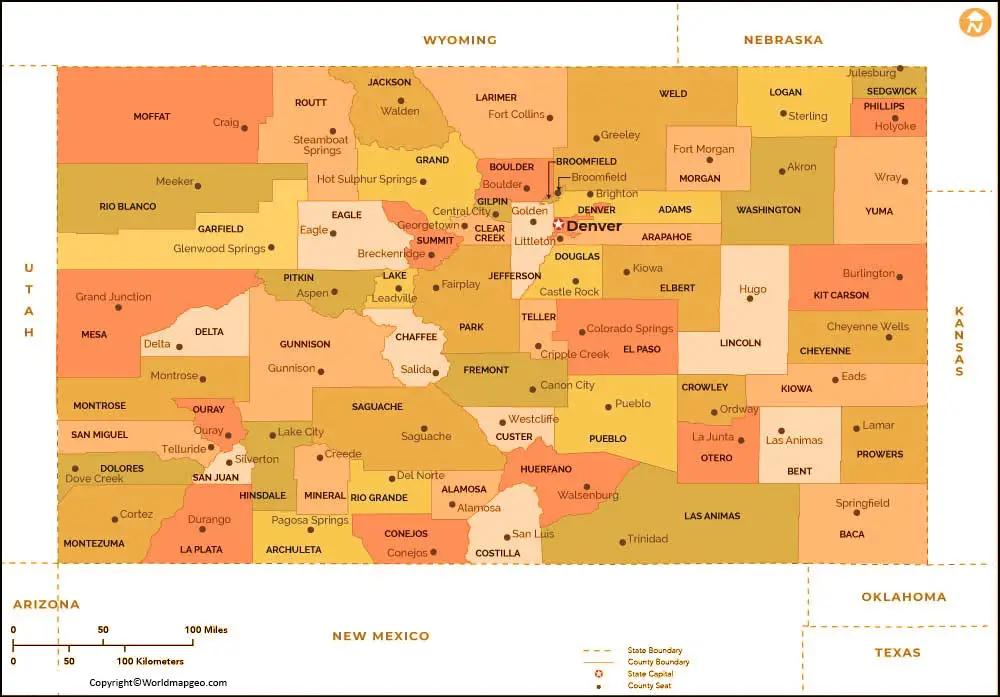
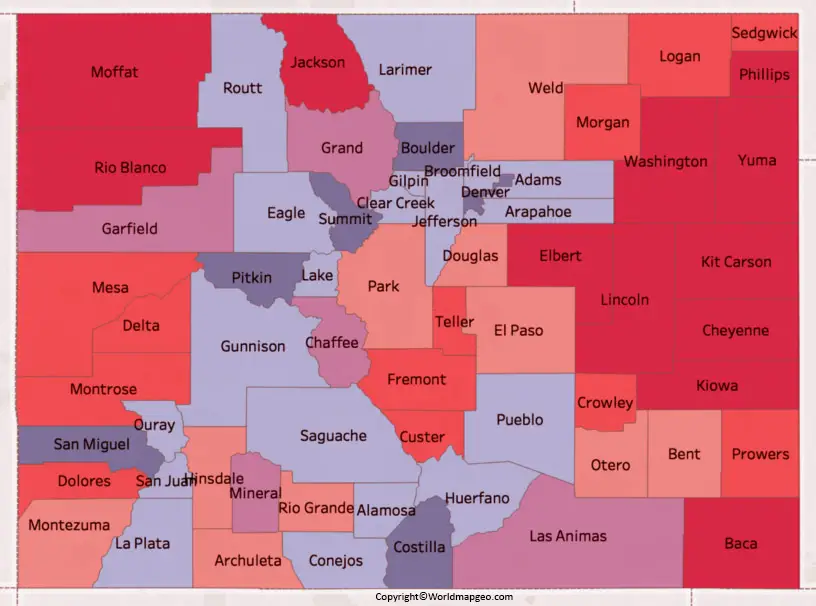
While congressional districts determine federal representation, county-level data offers a granular view of the Colorado political map. A few specific counties serve as bellwethers or anchors for the major parties.
Denver and Boulder: These are the twin engines of the Democratic vote. Margins in these counties are often so large that they can neutralize Republican advantages in dozens of smaller rural counties combined.
El Paso County: Home to Colorado Springs and several military bases, El Paso County has traditionally been the Republican counterweight to Denver. It is the most populous county with a conservative majority. However, recent election cycles have shown the margins narrowing here as the city diversifies.
Douglas County: Once a ruby-red stronghold, Douglas County has become a battleground. While it still leans Republican, the shift of suburban women and college-educated voters away from the GOP in the Trump era has made this area more competitive.
Jefferson and Arapahoe Counties: These suburban counties were once the classic swing areas that decided statewide elections. Today, they have trended reliably blue, solidifying the Democratic hold on the governorship and U.S. Senate seats.
The Rise of Unaffiliated Voters
No analysis of the Colorado political map is complete without discussing the largest voting bloc in the state: Unaffiliated voters. In Colorado, voters not registered with either the Democratic or Republican party outnumber those who are. As of recent data, they comprise nearly 45% of the active electorate.
This demographic is not a monolith; however, they tend to be younger and more pragmatic. Their dominance means that closed-party politics often fail in statewide general elections. Candidates must appeal to the center to win, which explains why successful statewide candidates often frame their platforms around economic stability and personal liberty.
The State Legislature: A Democratic Stronghold
The political map’s shift is most evident in the Colorado General Assembly. Democrats currently hold significant majorities in both the State House and the State Senate. This trifecta (control of the House, Senate, and Governor’s office) has allowed for the passage of progressive legislation regarding gun control, reproductive rights, and renewable energy mandates.
However, the map for state legislative districts differs slightly from congressional ones. The Independent Legislative Redistricting Commission created maps that theoretically offer more competitive seats, yet the concentration of Democratic voters in urban centers makes regaining a majority difficult for Republicans without a significant shift in suburban voting trends.
Demographic Shifts Influencing the Map
- In-Migration: The influx of residents from coastal states like California and New York has contributed to the leftward shift, particularly in housing and environmental policy preferences.
- The Latino Vote: Latinos are a growing demographic force, particularly in the new 8th District and the San Luis Valley. Both parties are aggressively courting this vote, which is not as uniformly Democratic as previously assumed.
- Education Polarization: Colorado has one of the highest percentages of college degree holders in the nation. As the correlation between higher education and Democratic voting strengthens nationally, Colorado’s demographics reinforce its blue status.
Is Colorado Still a Swing State?
This is a common question for political observers. Based on the data from the 2018, 2020, and 2022 elections, most experts now classify Colorado as a Lean Democrat or Safe Democrat state for statewide federal offices. The margins of victory for Democratic candidates have moved from razor-thin in the early 2000s to double digits in recent years.
However, ‘safe’ does not mean static. The volatility of the 3rd District and the competitiveness of the new 8th District suggest that while the statewide map is blue, pockets of intense competition remain. Furthermore, economic headwinds or shifts in national party platforms could eventually reopen the door for Republican competitiveness in the suburbs.
Key Takeaways for Voters and Analysts
When looking at the Colorado political map, remember that land doesn’t vote; people do. The vast red areas on the map represent a distinct and important cultural and economic segment of the state, but they are numerically outweighed by the dense urban corridor.
The future of Colorado politics will likely be decided in the ‘suburban ring’ around Denver and the growing communities in Northern Colorado. As housing prices push populations outward, the political complexion of counties like Weld and Douglas will continue to evolve.
Conclusion
The Colorado political map is a reflection of a changing America. It tells the story of urbanization, the power of independent redistricting, and the rise of the unaffiliated voter. While the state currently leans firmly Democratic in statewide contests, the internal dynamics reveal a complex tapestry of competing interests.
From the liberal strongholds of Boulder to the conservative ranchlands of the Eastern Plains and the swing suburbs in between, Colorado remains a fascinating case study in political geography. For anyone looking to understand the political pulse of the Mountain West, keeping an eye on Colorado’s evolving districts and demographics is essential.