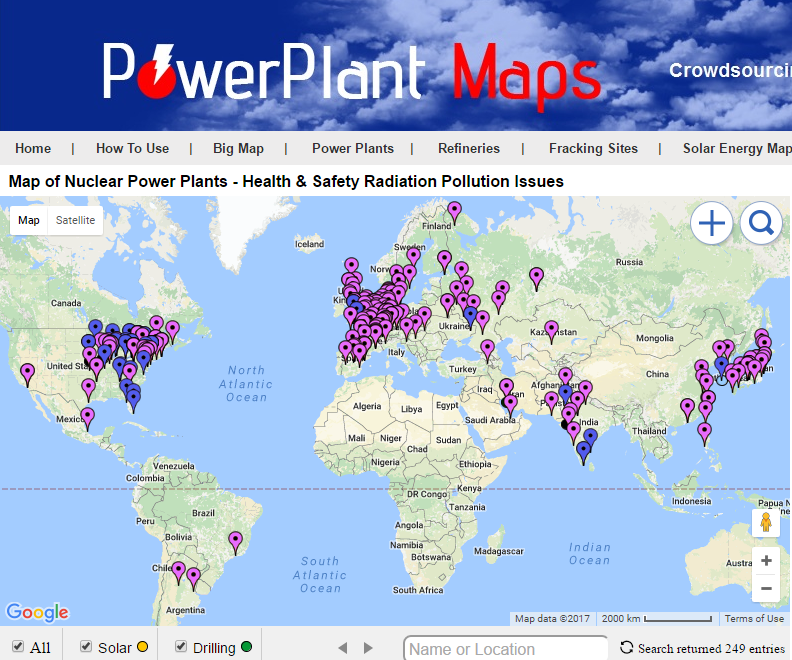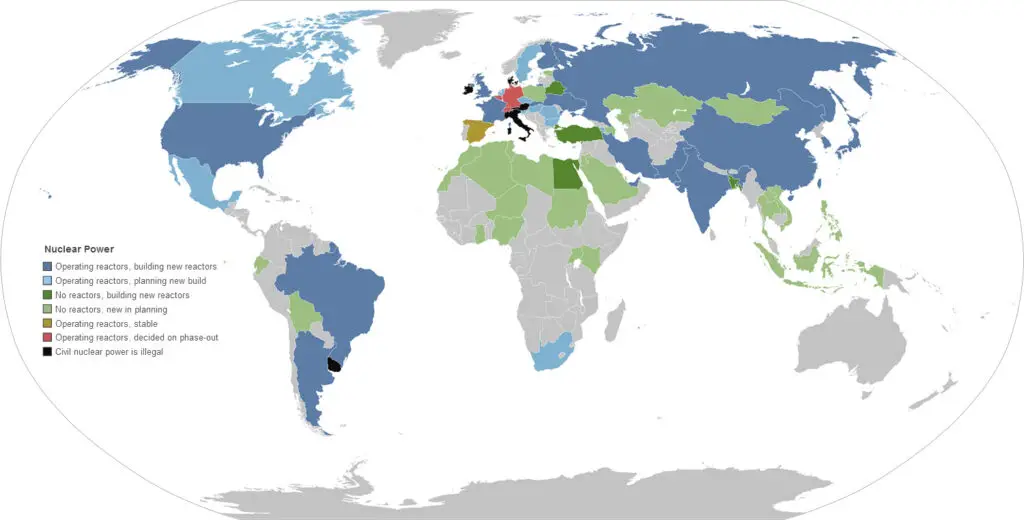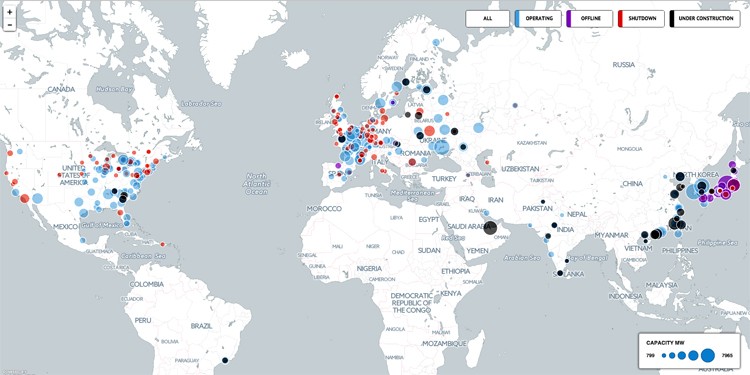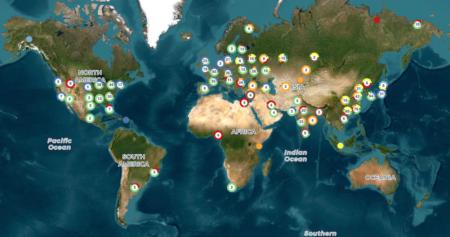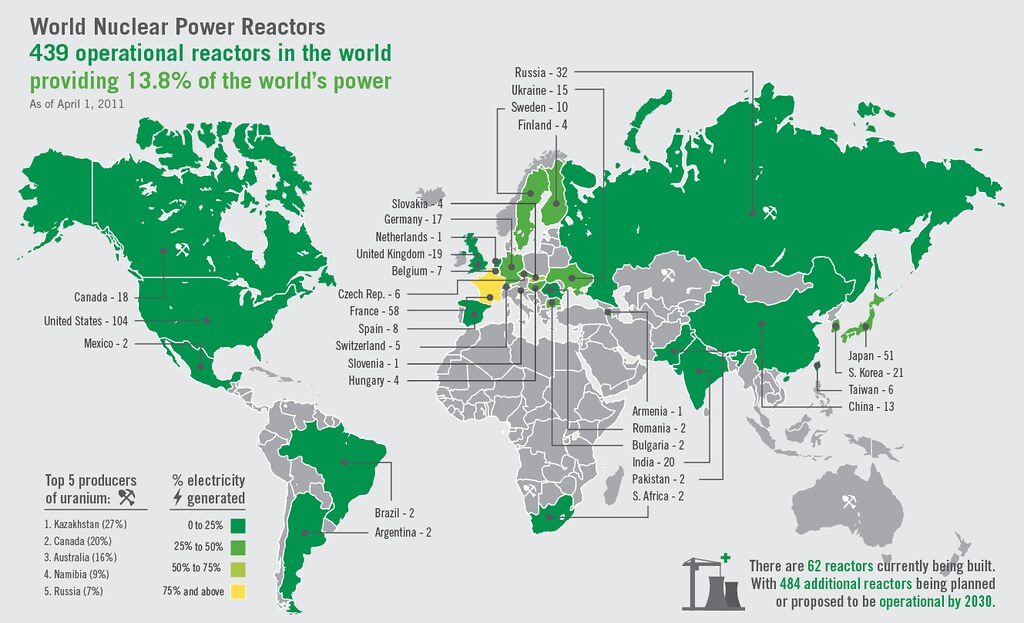
Currently, there are over 400 operable nuclear power reactors worldwide, distributed across more than 30 countries. These facilities generate approximately 10% of the world’s electricity. However, the distribution is far from uniform. A glance at any global nuclear map reveals a heavy concentration in the Northern Hemisphere, specifically within North America, Europe, and East Asia.
Why Mapping Nuclear Facilities Matters
Visualizing nuclear infrastructure serves several key purposes. Firstly, it highlights national energy dependencies. Countries like France and the United States rely heavily on these plants for baseload power. Secondly, it is essential for emergency preparedness. Understanding proximity to active reactors helps in defining Emergency Planning Zones (EPZs).
Furthermore, tracking these locations allows stakeholders to monitor the lifecycle of nuclear technology. From new constructions in emerging economies to decommissioning projects in nations phasing out nuclear power, the map is constantly changing. This dynamic nature reflects the shifting global sentiment towards low-carbon energy solutions.
The North American Nuclear Landscape
When examining a map of nuclear power plants in North America, the United States stands out as the world’s largest producer of nuclear energy. The U.S. Nuclear Regulatory Commission (NRC) oversees nearly 93 commercial nuclear reactors operating at more than 50 sites across the country.
Geographically, the U.S. map shows a distinct divide. The vast majority of these plants are located east of the Mississippi River. This concentration is due to historical industrial demand and population density. Key clusters can be found in the mid-Atlantic, the Midwest, and the Southeast. In contrast, the western United States has significantly fewer facilities, with notable exceptions like the Palo Verde Generating Station in Arizona and the Diablo Canyon Power Plant in California.
Canada also features prominently on the North American map, primarily within the province of Ontario. The Bruce Nuclear Generating Station, located on the shores of Lake Huron, is one of the largest nuclear facilities in the world by net output. This highlights the tendency for plants to be situated near large bodies of water for cooling purposes.
Europe: A Continent Divided
The map of nuclear power plants in Europe tells a story of contrasting energy policies. France is the undeniable leader, with nuclear power generating roughly 70% of its electricity. The French map is densely populated with reactors, ensuring energy independence and allowing the country to export electricity to its neighbors.
Conversely, Germany presents a picture of contraction. Following the Fukushima disaster in 2011, Germany accelerated its phase-out policy, known as ‘Energiewende’. Consequently, a modern map of German energy infrastructure shows fewer active nuclear sites as the country pivots toward renewables, though the debate on this transition remains active.
Eastern Europe and Russia also maintain a significant nuclear footprint. Russia continues to develop its domestic fleet and is a major exporter of nuclear technology. Countries like Ukraine rely heavily on nuclear power, a fact that has brought significant attention to plant locations such as Zaporizhzhia in the context of geopolitical conflict.
Asia: The New Epicenter of Growth
If you look for the areas of most rapid change on a nuclear power plant map, you must look to Asia. China is currently leading the world in new reactor construction. Driven by a need to reduce air pollution and sustain massive economic growth, China’s coastal regions are becoming dotted with state-of-the-art nuclear facilities.
Japan’s nuclear map is in a state of flux. Prior to 2011, Japan was a nuclear heavyweight. Today, the map shows a mix of idle reactors, those undergoing rigorous safety upgrades, and a few that have been restarted. The restart process is slow and politically sensitive, reflecting deep public caution.
South Korea and India are also key players. South Korea has a high density of reactors and is a major exporter of nuclear technology. India is pursuing an ambitious three-stage nuclear power program to utilize its vast thorium reserves, which could eventually alter the types of reactors seen on future maps.
Understanding Safety Zones and EPZs
For residents living near these facilities, the map represents safety zones. In the United States, the NRC defines two specific Emergency Planning Zones around each nuclear power plant. Understanding these zones is critical for local preparedness.
The Plume Exposure Pathway EPZ: This zone covers a radius of about 10 miles (16 km) around the plant. In this area, the primary concern is exposure to radioactive materials that could be transported by the wind. Emergency plans here are detailed, involving evacuation routes and siren systems.
Types of Reactors on the Map
Not all dots on the map represent the same technology. The majority of the world’s active fleet consists of Pressurized Water Reactors (PWRs) and Boiling Water Reactors (BWRs). These are light-water reactors that use ordinary water as both a coolant and a neutron moderator.
However, the map is diversifying. Canada utilizes CANDU (Canada Deuterium Uranium) reactors, which use heavy water. The UK has a history with Advanced Gas-cooled Reactors (AGRs). Furthermore, the future map will likely include Small Modular Reactors (SMRs). These compact units are designed to be built in factories and shipped to sites, potentially bringing nuclear power to remote locations previously unsuitable for traditional large-scale plants.
How to Read Official Nuclear Maps
- Operational: Connected to the grid and generating electricity.
- Under Construction: Civil engineering works have commenced.
- Suspended Operation: Reactors that are technically capable but currently idle (common in Japan).
- Permanent Shutdown: Facilities that have ceased operation and are in decommissioning.
Environmental and Economic Implications
Overlaying a map of nuclear power plants with carbon emission maps reveals a stark correlation. Regions with high nuclear density often display lower carbon intensity in their electricity generation. This makes nuclear power a pivotal component in global decarbonization strategies.
Economically, these plants are anchors. A single facility employs hundreds of highly skilled workers and contributes significantly to the local tax base. Consequently, the closure of a plant can have profound economic ripple effects on the surrounding community, altering the socio-economic map of the region.
The Future of the Nuclear Map
What will the map of nuclear power plants look like in 2050? We can expect a shift in the center of gravity towards the developing world. Nations in the Middle East, such as the UAE (which recently brought the Barakah plant online), and potentially countries in Africa, are exploring nuclear energy to meet rising demand.
Additionally, the rise of advanced nuclear technologies, including Generation IV reactors and potentially nuclear fusion pilot plants, may introduce new locations to the map. These technologies promise higher safety standards and less waste, potentially allowing plants to be located closer to population centers or industrial hubs.
Conclusion
A map of nuclear power plant locations is a snapshot of global energy priorities, technological capability, and geopolitical strategy. From the dense clusters of reactors in the United States and France to the rapid expansion in China, these facilities form the backbone of low-carbon electricity generation for much of the world.
Whether for assessing safety risks, understanding energy markets, or tracking environmental progress, keeping an eye on the changing nuclear map is essential. As technology evolves and energy needs grow, this map will continue to be a dynamic document of human innovation and industrial scale.