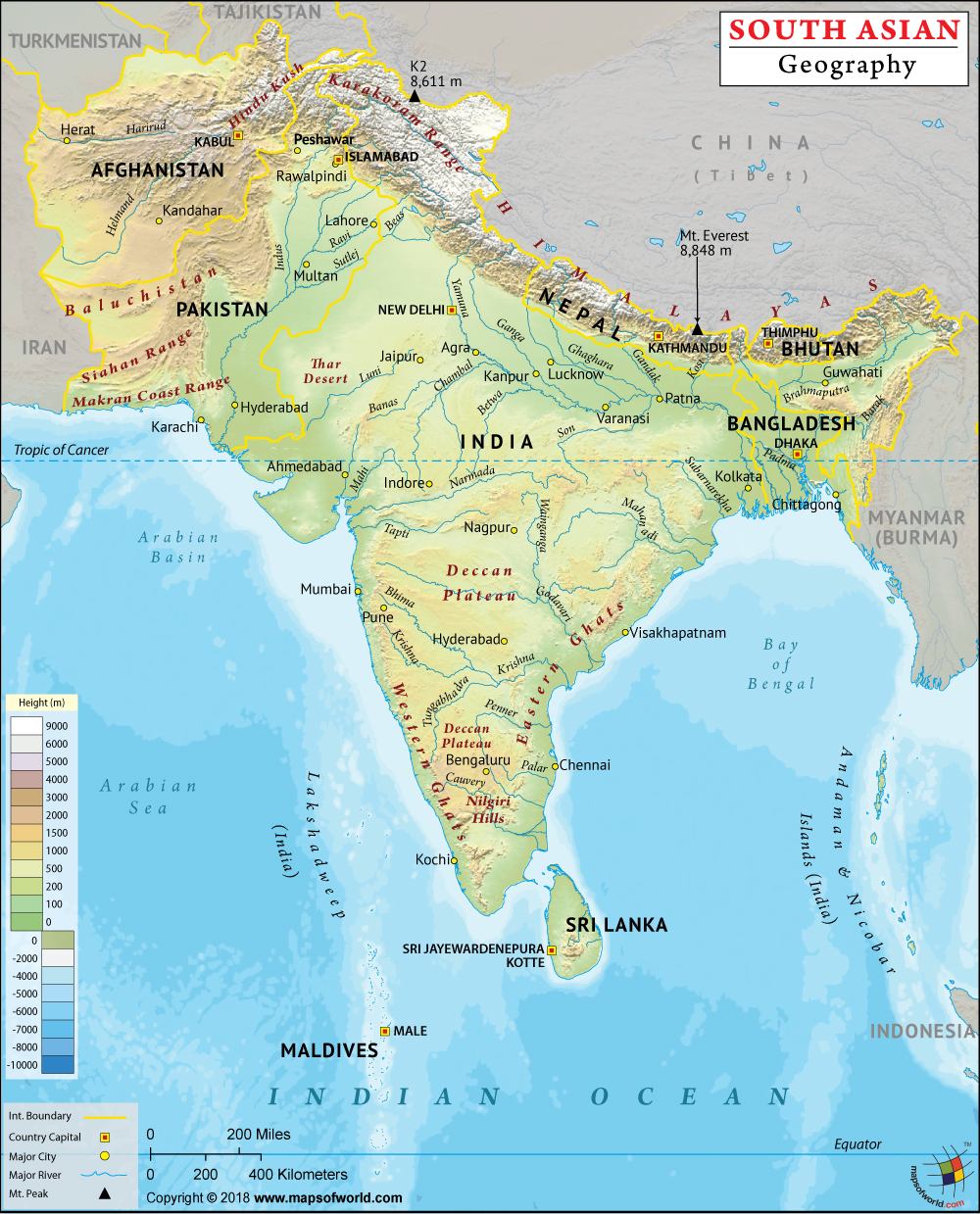
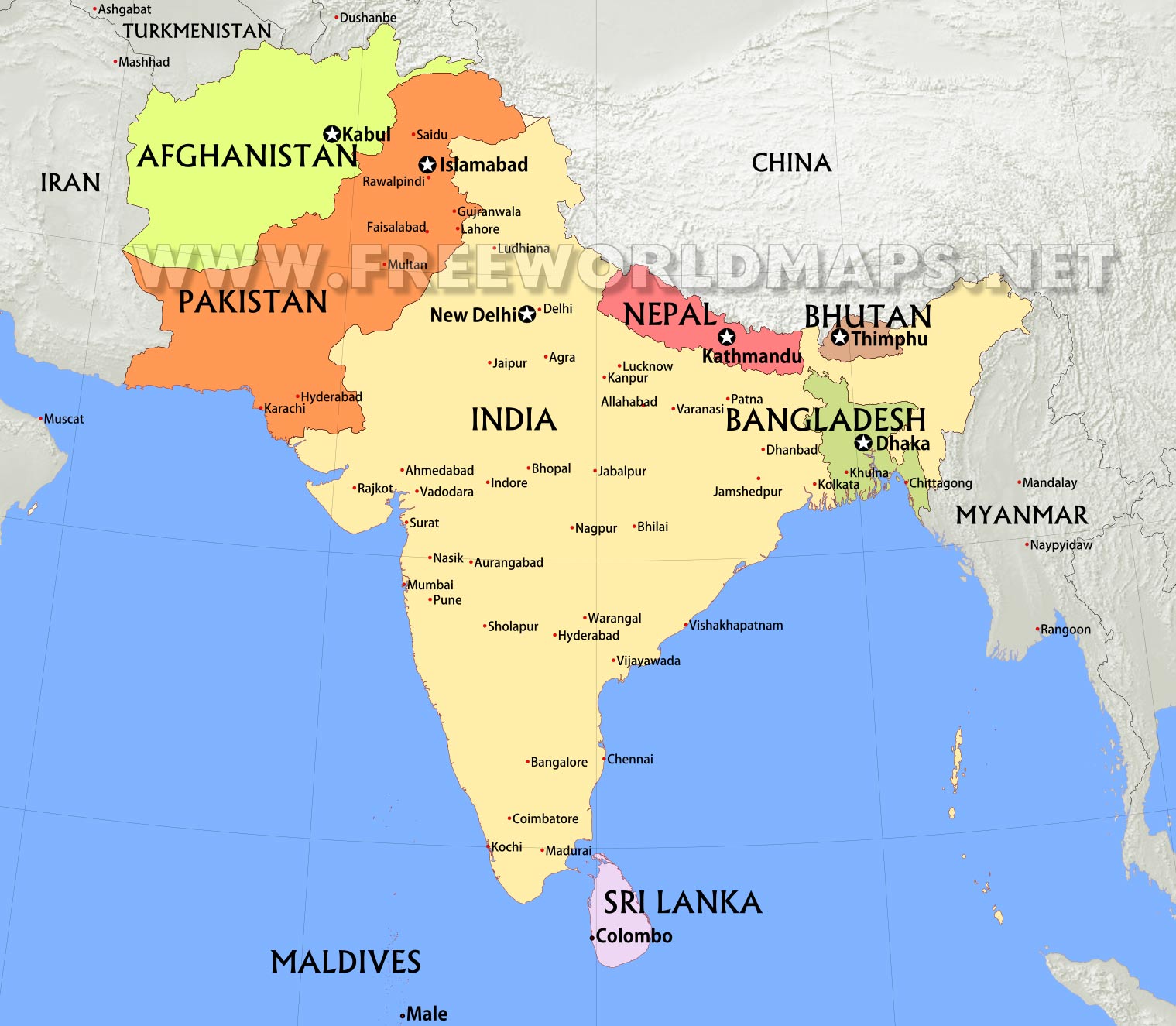
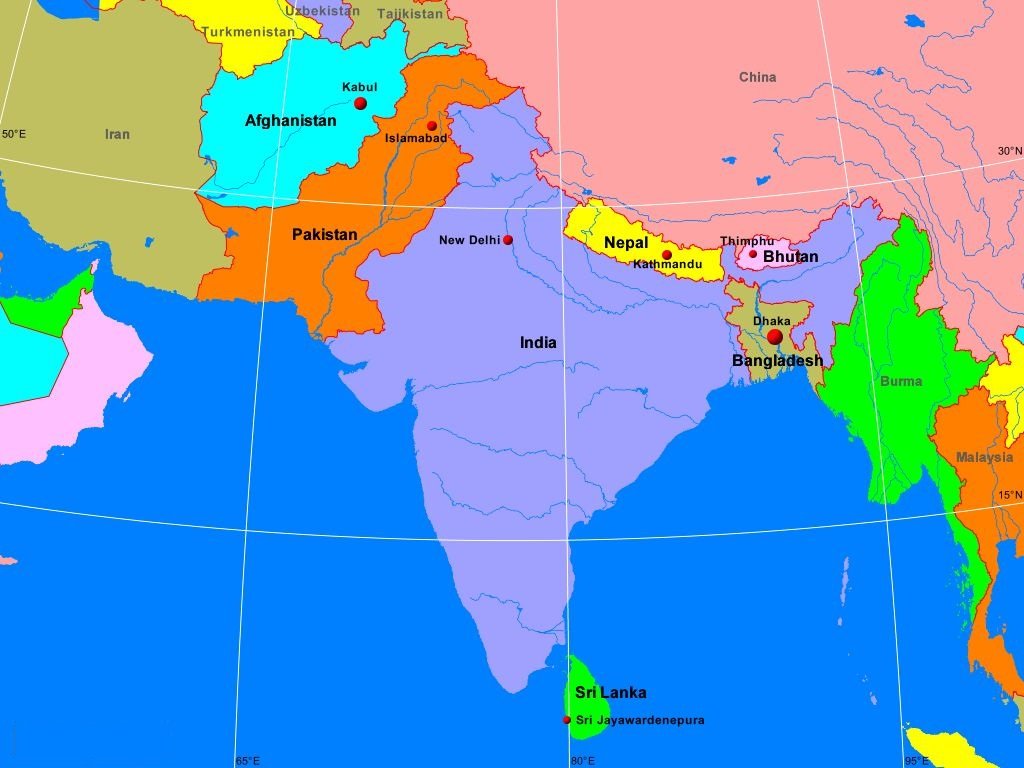
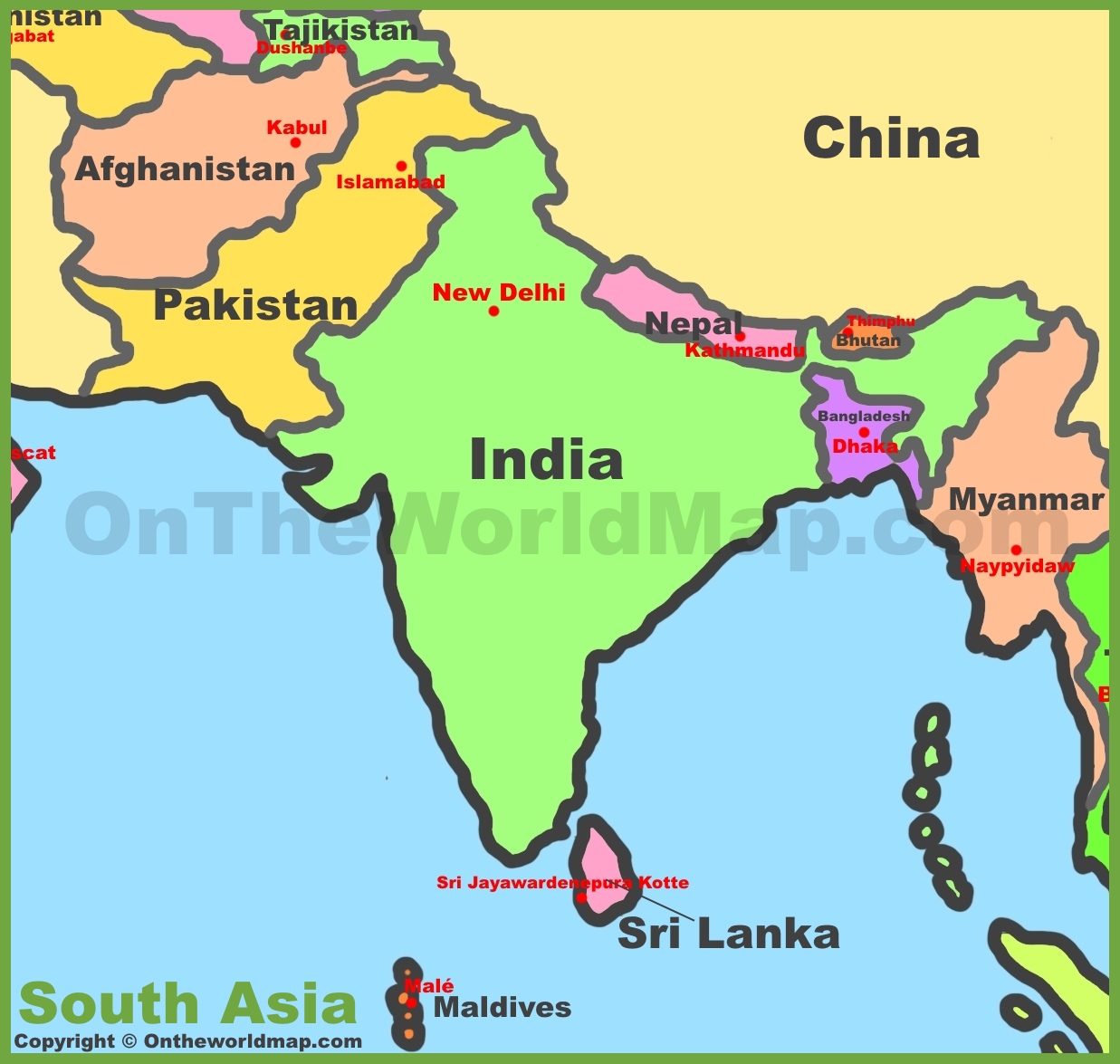
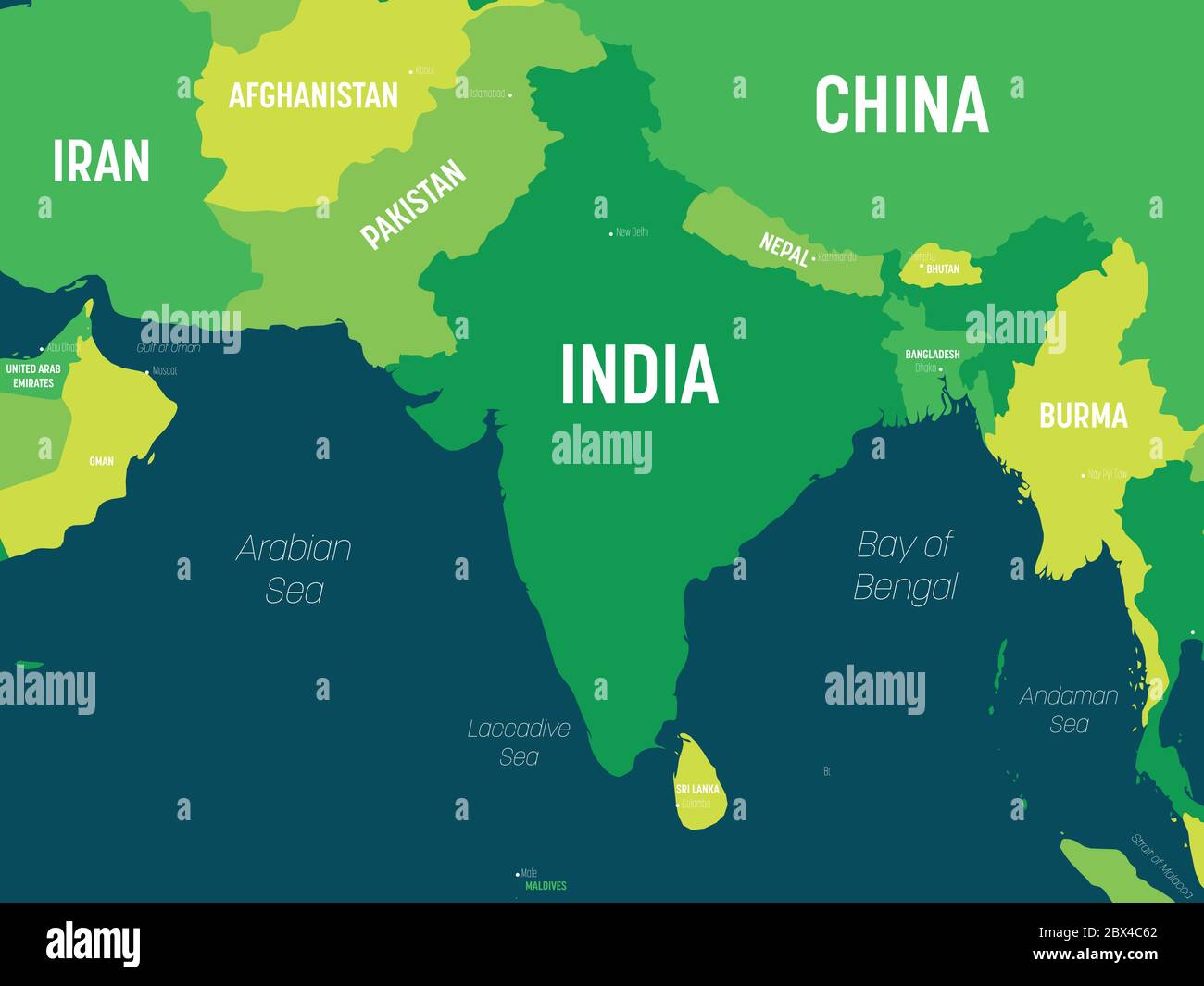
The South Asian countries map typically includes the following nations: India, Pakistan, Bangladesh, Nepal, Bhutan, Sri Lanka, and the Maldives. Afghanistan is sometimes included due to its historical and cultural ties to the region. Each of these countries holds a distinct place on the map and in global affairs.
India: The Dominant Landmass
India, the largest country in South Asia, dominates the map with its vast landmass stretching from the Himalayas in the north to the Indian Ocean in the south. Its geographical diversity is unparalleled, encompassing towering mountains, fertile plains, arid deserts, and lush coastal regions. India shares borders with Pakistan, China, Nepal, Bhutan, Bangladesh, and Myanmar, making it a central hub in the region. Major geographical features include the Ganges River, the Thar Desert, and the Western and Eastern Ghats mountain ranges.
Pakistan: The Land of the Indus
Located to the west of India, Pakistan is defined by the Indus River valley, which has been the cradle of civilization for millennia. Its landscape varies from the rugged mountains of the north, including the famous Karakoram and Himalayan ranges, to the fertile plains of the Punjab and the arid Balochistan plateau. Pakistan shares borders with India, Afghanistan, Iran, and China. Key geographical features include the K2 mountain (the second highest peak in the world) and the Arabian Sea coastline.
Bangladesh: The Delta Nation
East of India lies Bangladesh, a low-lying delta nation formed by the Ganges, Brahmaputra, and Meghna rivers. This geography makes it incredibly fertile but also vulnerable to flooding. Bangladesh is densely populated and shares borders with India and Myanmar. The Sundarbans, the world’s largest mangrove forest, is a significant geographical feature.
Nepal: The Himalayan Kingdom
Nestled in the Himalayas, Nepal is renowned for its breathtaking mountain scenery, including Mount Everest, the world’s highest peak. It is a landlocked country bordered by India and China. Nepal’s geography is dominated by mountains and valleys, making it a popular destination for trekking and mountaineering. The Kathmandu Valley is a significant cultural and urban center.
Bhutan: The Land of the Thunder Dragon
East of Nepal is Bhutan, another Himalayan kingdom known for its pristine environment and unique cultural preservation policies. It is a landlocked country bordered by India and China. Bhutan’s landscape is characterized by steep mountains and deep valleys. Its commitment to Gross National Happiness (GNH) sets it apart on the global stage.
Sri Lanka: The Island Nation
An island nation off the southeastern coast of India, Sri Lanka is known for its beautiful beaches, lush tea plantations, and ancient ruins. Its geography includes coastal plains and central highlands. The island’s biodiversity is a major attraction, and its strategic location in the Indian Ocean has made it a key maritime hub.
The Maldives: The Atoll Paradise
Southwest of India, the Maldives is an archipelago of coral atolls in the Indian Ocean. Its geography is defined by its low-lying islands and stunning marine environment. Tourism is a major industry, drawing visitors to its pristine beaches and vibrant coral reefs.
Afghanistan: A Bridge Between Regions
While its inclusion in the South Asian countries map is sometimes debated, Afghanistan shares significant historical and cultural connections with the region. It is a landlocked country with a rugged, mountainous terrain. Afghanistan borders Pakistan, Iran, Turkmenistan, Uzbekistan, Tajikistan, and China. The Hindu Kush mountain range dominates its geography.
What are the major rivers in South Asia?
South Asia is home to some of the world’s most important rivers. The Indus River, primarily flowing through Pakistan, has been the lifeline of civilizations for millennia. The Ganges and Brahmaputra rivers, traversing India and Bangladesh, are crucial for agriculture and transportation. These rivers are not only geographical features but also hold deep cultural and religious significance.
What mountain ranges define the region?
The Himalayas dominate the northern part of South Asia, forming a natural barrier and influencing the climate and geography of the region. The Karakoram range, home to K2, is another significant mountain range. The Hindu Kush range extends into Afghanistan, connecting South Asia with Central Asia. The Western and Eastern Ghats run along the coasts of India, contributing to the region’s diverse ecosystems.
How does the geography of South Asia impact its climate?
The geography of South Asia significantly influences its climate. The Himalayas act as a barrier, blocking cold winds from Central Asia and contributing to warmer temperatures in the Indian subcontinent. The monsoon winds, driven by the region’s unique land-sea temperature differences, bring seasonal rainfall that is crucial for agriculture. The coastal regions experience maritime climates, while the interior regions have more extreme temperature variations.
What are the main agricultural regions?
The fertile plains of the Ganges and Indus River valleys are the main agricultural regions in South Asia. Rice, wheat, and jute are major crops grown in these areas. The tea plantations of Sri Lanka and India’s Assam region are also significant agricultural zones. The diverse climate and soil conditions support a wide range of agricultural activities.
What are the key natural resources found in South Asia?
South Asia is rich in natural resources. India has significant reserves of coal, iron ore, and petroleum. Pakistan has natural gas reserves. Nepal and Bhutan have hydropower potential due to their mountainous terrain and rivers. Sri Lanka is known for its gemstones. The region’s natural resources play a crucial role in its economic development.
Understanding South Asia’s Time Zone
The primary time zone observed in South Asia is Indian Standard Time (IST), which is UTC+5:30. This time zone is followed by India and Sri Lanka. Pakistan Standard Time (PKT) is UTC+5, Bangladesh Standard Time (BST) is UTC+6, Nepal Standard Time (NST) is UTC+5:45, and Bhutan Standard Time (BTT) is UTC+6. Understanding these time differences is essential for coordinating international activities and communications.
South Asia’s Diverse Climates
The climate across South Asia varies dramatically due to its diverse geography. The northern regions experience alpine climates with cold temperatures and heavy snowfall. The Indo-Gangetic Plain has a humid subtropical climate with hot summers and mild winters. Coastal areas have tropical climates with high humidity and rainfall. Arid and semi-arid climates prevail in parts of Pakistan and India. The monsoon season, characterized by heavy rainfall, is a defining feature of the region’s climate.
Exploring the Cultural Significance of South Asian Landmarks
South Asia is replete with landmarks of immense cultural and historical significance. The Taj Mahal in India is a symbol of love and architectural brilliance. The ancient ruins of Mohenjo-daro and Harappa in Pakistan offer insights into the Indus Valley Civilization. The sacred Buddhist sites in Nepal and Sri Lanka attract pilgrims from around the world. These landmarks are not just tourist attractions but also embodiments of the region’s rich heritage.
Tips for Traveling in South Asia
Traveling in South Asia can be an enriching experience, but it’s important to be prepared. Respect local customs and traditions. Be mindful of the climate and dress accordingly. Stay hydrated and be cautious about food and water. Plan your itinerary carefully and allow for flexibility. Learn a few basic phrases in the local languages. With careful planning and an open mind, you can have an unforgettable journey through this vibrant region.
In conclusion, the South Asian countries map represents a region of immense diversity and significance. From the towering Himalayas to the fertile plains and island nations, each country contributes uniquely to the region’s identity. Understanding the geography, climate, and cultural aspects of South Asia is essential for anyone seeking to engage with this dynamic part of the world.
Whether you are a student, a traveler, or a business professional, exploring the South Asian countries map provides valuable insights into the complexities and opportunities of this vibrant region. The interplay of geography, culture, and history shapes the identity of each nation, making South Asia a fascinating subject of study and exploration.
The region’s strategic importance in global politics and economics cannot be overstated. Its location at the crossroads of Asia, its vast population, and its rich natural resources make it a key player on the world stage. As South Asia continues to develop and integrate into the global economy, understanding its geographical and cultural context will become increasingly important.
By delving into the specifics of each country, we gain a deeper appreciation for the interconnectedness of the region and the unique challenges and opportunities it faces. The South Asian countries map is not just a geographical representation but a window into a world of rich history, diverse cultures, and boundless potential.
Ultimately, understanding the South Asian countries map is an ongoing journey of discovery, offering endless opportunities to learn, explore, and connect with one of the world’s most fascinating regions. From its towering mountains to its bustling cities and serene coastlines, South Asia captivates the imagination and inspires a sense of wonder.