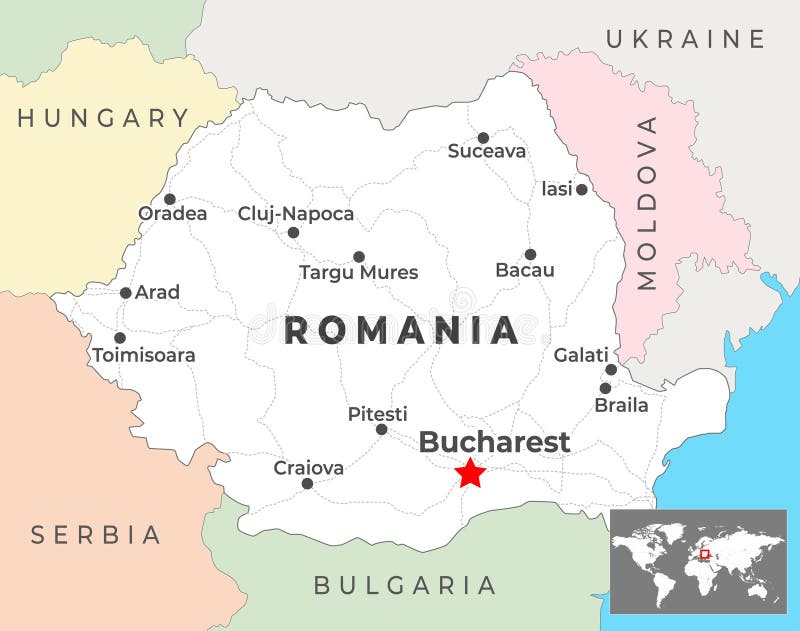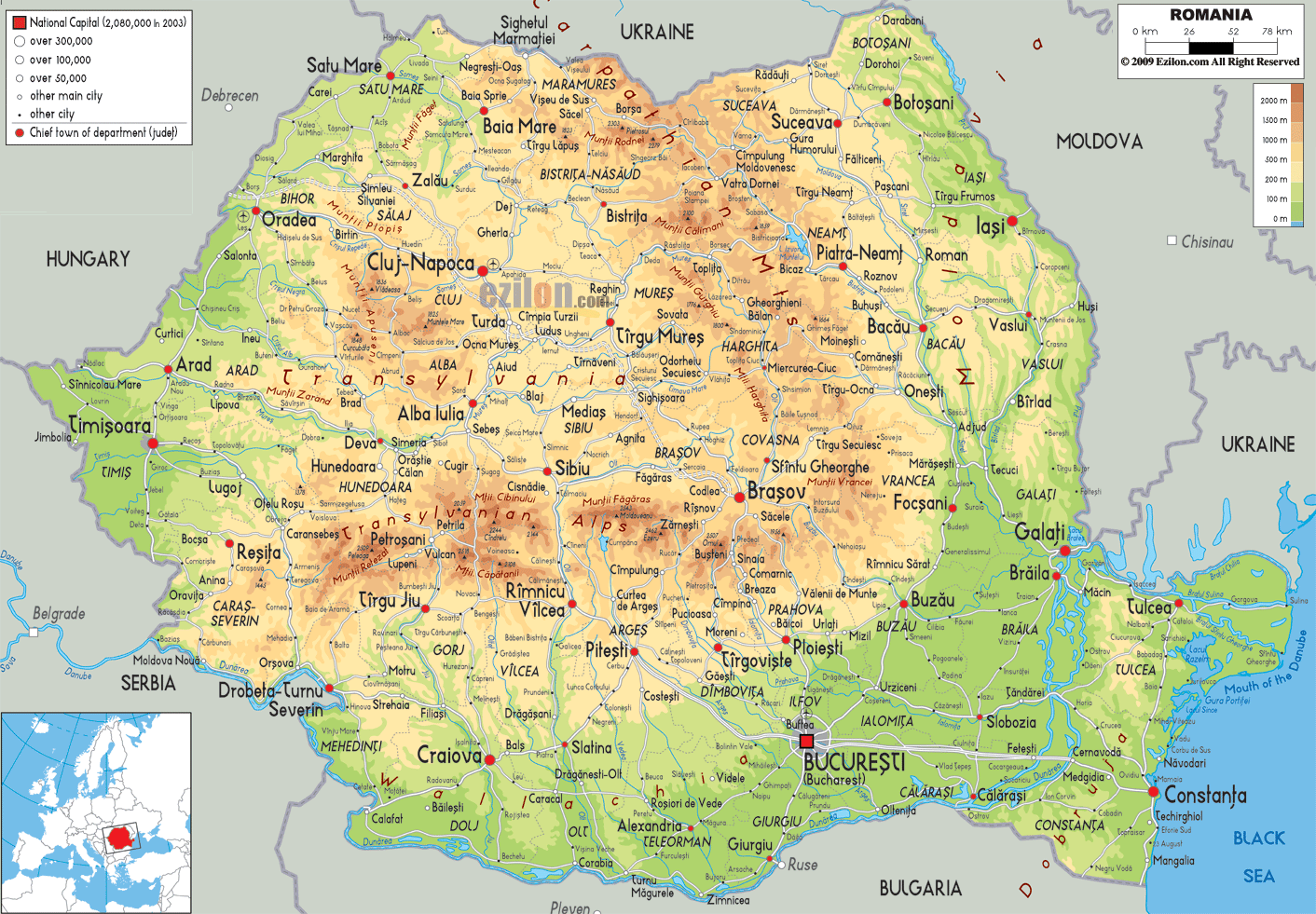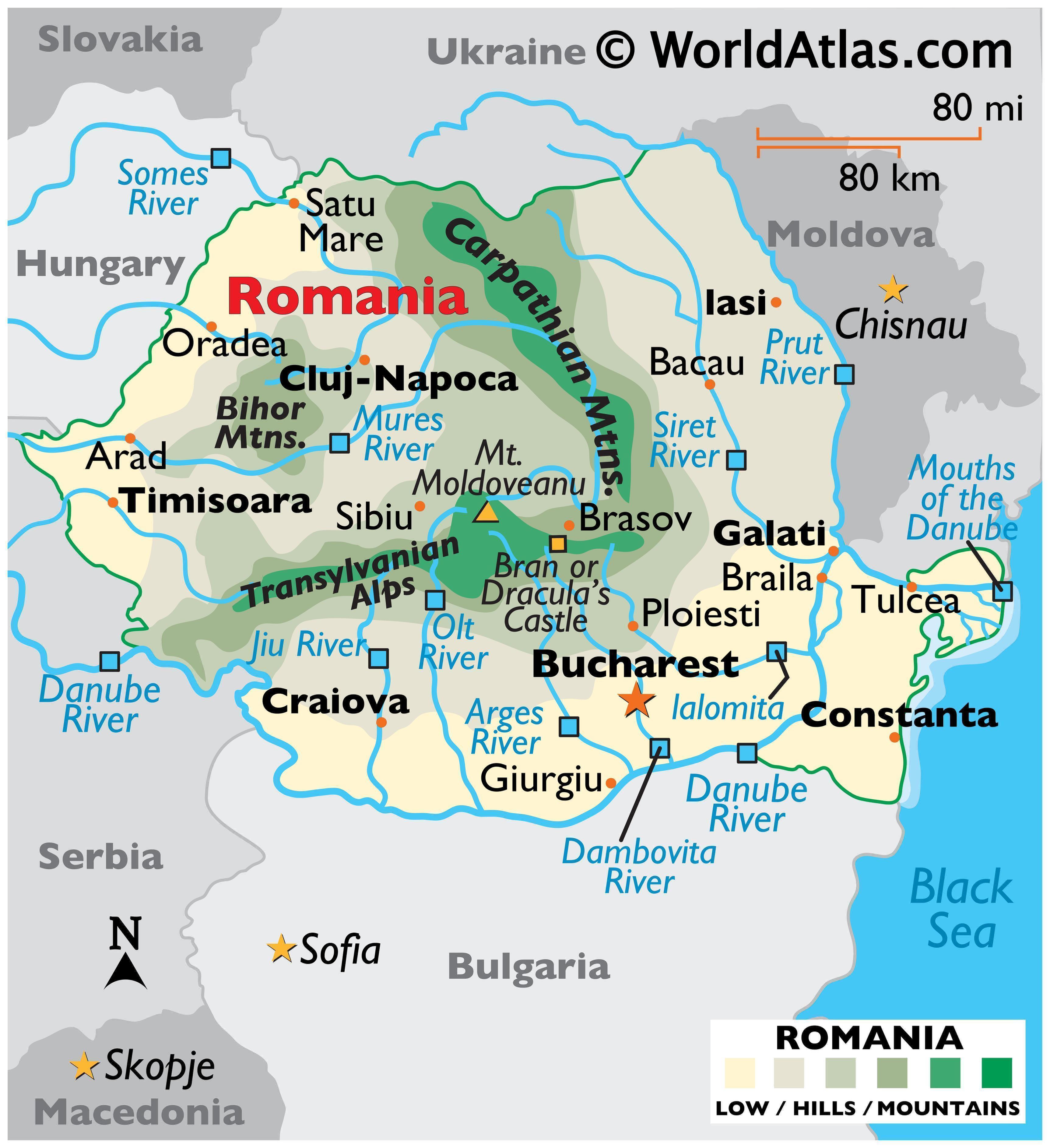
This article will provide a comprehensive overview of Romania’s geographical location, its regions, its relationship with neighboring countries, and other key aspects that define its place in Europe. Whether you’re a student, a traveler, or simply curious about the world, this guide will offer valuable insights into Romania’s unique position.
Romania’s Location in Europe
Romania is positioned in the southeastern part of Europe, a region often referred to as the Balkans or Eastern Europe. Its geographical coordinates place it roughly between 43° and 48° North latitude and 20° and 30° East longitude. This location gives Romania a temperate-continental climate, characterized by four distinct seasons.
Bordering Countries
- Ukraine: Located to the north, Ukraine shares a significant border with Romania.
- Moldova: Situated to the east, Moldova was historically linked to Romania.
- Hungary: Found to the northwest, Hungary has a shared history with Romania, particularly regarding Transylvania.
- Serbia: To the southwest lies Serbia, a country with close cultural ties to Romania.
- Bulgaria: Bordering Romania to the south, Bulgaria shares a border along the Danube River.
Proximity to Key European Landmarks
Romania’s location provides relatively easy access to other major European landmarks and cities. It’s situated within a reasonable distance from Central European capitals like Vienna and Budapest, and it serves as a gateway to the Balkan region. Its Black Sea coastline also provides access to maritime routes connecting Europe with Asia.
A Closer Look at Romania’s Regions
Romania is traditionally divided into several historical and geographical regions, each with its own distinct character and charm.
Transylvania
Perhaps the most famous region, Transylvania is known for its stunning medieval towns, imposing castles (including the legendary Bran Castle), and the Carpathian Mountains. Historically, Transylvania was a melting pot of cultures, with significant Hungarian and German influences.
Wallachia
Located south of the Carpathian Mountains, Wallachia is a fertile plain with Bucharest, the capital city, at its heart. This region is known for its agricultural lands and historical significance as a former principality.
Moldavia
Situated in northeastern Romania, Moldavia (not to be confused with the Republic of Moldova) is characterized by rolling hills, vineyards, and historic monasteries. The region is known for its painted churches, which are UNESCO World Heritage sites.
Dobrogea
This region lies between the Danube River and the Black Sea. Dobrogea is a unique blend of cultures, with influences from Greek, Turkish, and Romanian traditions. The Danube Delta, a UNESCO Biosphere Reserve, is a major attraction.
Other Notable Regions
Other significant regions include Banat, Crisana, and Maramures, each offering unique cultural experiences and natural landscapes. Banat, in western Romania, is known for its multicultural heritage, while Maramures, in the north, is famous for its traditional wooden churches.
Major Cities in Romania
Romania is home to several major cities, each playing a crucial role in the country’s economy, culture, and administration.
Bucharest
The capital and largest city, Bucharest, is the political, economic, and cultural heart of Romania. Often referred to as "Little Paris," Bucharest boasts a mix of architectural styles, from grand boulevards to communist-era buildings.
Cluj-Napoca
Located in Transylvania, Cluj-Napoca is a major university city and a thriving hub for technology and innovation. It’s known for its vibrant nightlife, cultural events, and historical landmarks.
Timisoara
Situated in western Romania, Timisoara is a city with a rich history and a significant role in the Romanian Revolution of 1989. It’s known for its beautiful architecture, parks, and multicultural atmosphere.
Iasi
Located in Moldavia, Iasi is a historic city and a major center for education and culture. It’s home to Romania’s oldest university and numerous historical monuments.
Constanta
As Romania’s main port city on the Black Sea, Constanta is a major economic and transportation hub. It boasts a rich history dating back to ancient times and offers beautiful beaches and seaside resorts.
Romania’s Diverse Landscape
One of Romania’s most striking features is its diverse landscape, which includes mountains, plains, forests, and coastal regions.
The Carpathian Mountains
The Carpathian Mountains dominate Romania’s geography, forming a natural barrier across the country. They offer stunning scenery, hiking trails, and winter sports opportunities. The mountains are also home to diverse wildlife, including bears, wolves, and lynx.
The Danube Delta
A UNESCO Biosphere Reserve, the Danube Delta is one of the largest and best-preserved river deltas in Europe. It’s a haven for birds and wildlife, with a unique ecosystem of marshes, lakes, and canals.
The Black Sea Coast
Romania’s Black Sea coast offers sandy beaches, seaside resorts, and historical sites. Cities like Constanta and Mamaia attract tourists seeking relaxation and recreation.
The Plains
The Wallachian and Moldavian plains are fertile agricultural regions that support Romania’s agricultural sector. These plains are characterized by rolling hills, fields of crops, and picturesque villages.
Romania’s Climate
Romania has a temperate-continental climate, with four distinct seasons. Summers are warm and sunny, while winters are cold and snowy. The Carpathian Mountains influence the climate, creating regional variations in temperature and precipitation.
Average Temperatures
Average temperatures range from -3°C (27°F) in January to 24°C (75°F) in July. However, temperatures can vary significantly depending on the region and altitude.
Precipitation
Rainfall is fairly evenly distributed throughout the year, with slightly higher amounts in the mountains. Snowfall is common in winter, especially in the higher elevations.
Romania’s Natural Resources
Romania is rich in natural resources, including oil, natural gas, coal, timber, and minerals. These resources play a significant role in the country’s economy.
Energy Resources
Romania has significant reserves of oil and natural gas, both onshore and offshore in the Black Sea. These resources contribute to the country’s energy independence and export potential.
Mineral Resources
Romania also has deposits of coal, iron ore, copper, and other minerals. These resources support the country’s mining and manufacturing industries.
Timber
With vast forests covering a large portion of the country, timber is an important natural resource. Romania’s forestry industry produces lumber, paper, and other wood products.
Romania’s Strategic Importance in Europe
Romania’s geographical location gives it strategic importance within Europe, particularly in terms of transportation, trade, and security.
Transportation Hub
Romania serves as a transportation hub connecting Western and Eastern Europe, as well as the Balkans. Its road and rail networks facilitate the movement of goods and people across the region.
Black Sea Access
As a Black Sea nation, Romania has access to important maritime routes connecting Europe with Asia and the Middle East. The port of Constanta is a major gateway for trade and commerce.
NATO and EU Membership
Romania’s membership in NATO and the European Union enhances its security and economic integration within Europe. It plays an active role in promoting regional stability and cooperation.
Conclusion
Romania’s location on the European map is more than just a point of geography; it’s a defining factor in its history, culture, and economy. From the Carpathian Mountains to the Black Sea coast, Romania’s diverse landscape and rich natural resources contribute to its unique identity. Its strategic position in Southeastern Europe makes it an important player in regional and international affairs. Whether you’re interested in exploring its medieval towns, hiking its mountains, or relaxing on its beaches, Romania offers a wealth of experiences for every traveler.
Understanding Romania’s geography provides valuable insights into its past, present, and future. As a country that bridges Eastern and Western Europe, Romania continues to evolve and contribute to the continent’s rich tapestry.
Key Takeaways:
- Romania is located in Southeastern Europe, bordering Ukraine, Moldova, Hungary, Serbia, and Bulgaria.
- It’s divided into several historical regions, including Transylvania, Wallachia, and Moldavia.
- Major cities include Bucharest, Cluj-Napoca, Timisoara, and Constanta.
- Romania’s landscape is diverse, with mountains, plains, forests, and a Black Sea coast.
- The country has a temperate-continental climate with four distinct seasons.
- Romania is rich in natural resources, including oil, natural gas, and timber.
- Its strategic location makes it an important transportation hub and player in European affairs.