Why Understanding the NYC Subway Map is Crucial
The NYC subway isn’t just a mode of transportation; it’s a lifeline for the city. Grasping how to read the subway map unlocks efficient travel, allowing you to explore diverse neighborhoods, reach important destinations, and experience the true pulse of New York. Without it, you’re relying on taxis and ride-sharing apps, costing you time and money.
Decoding the Colors: Understanding the Subway Lines
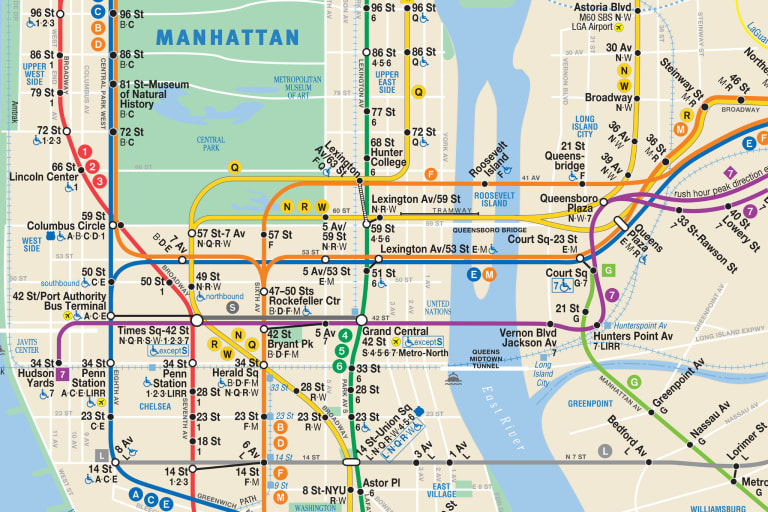
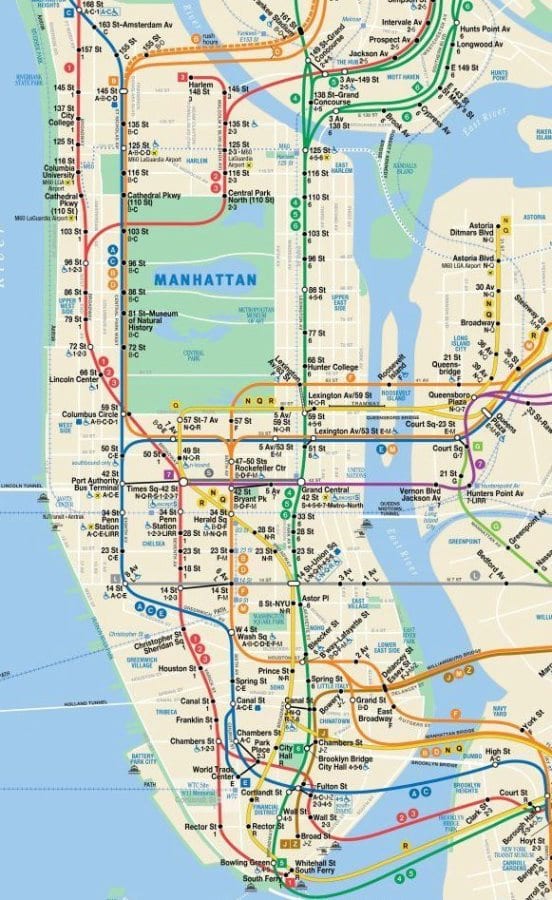
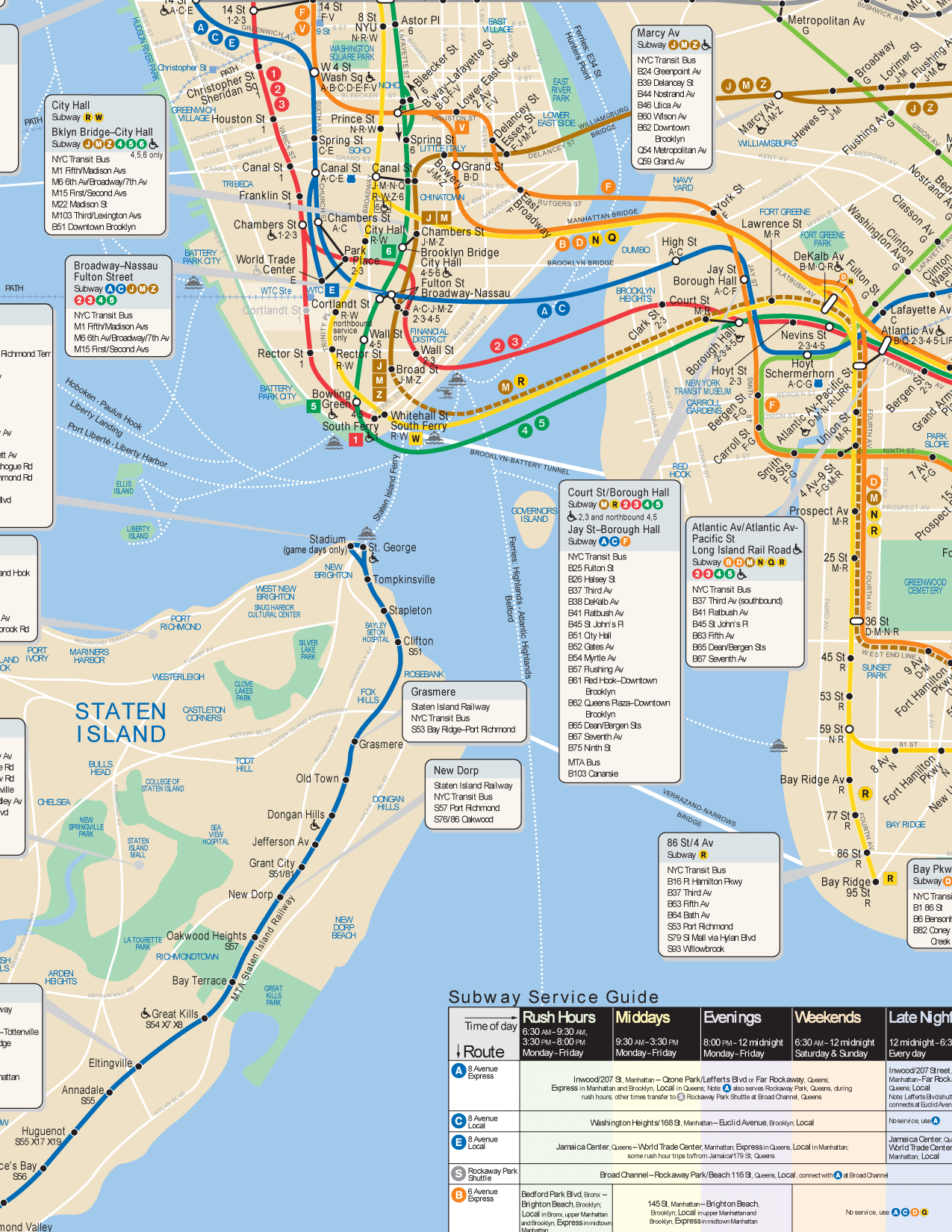
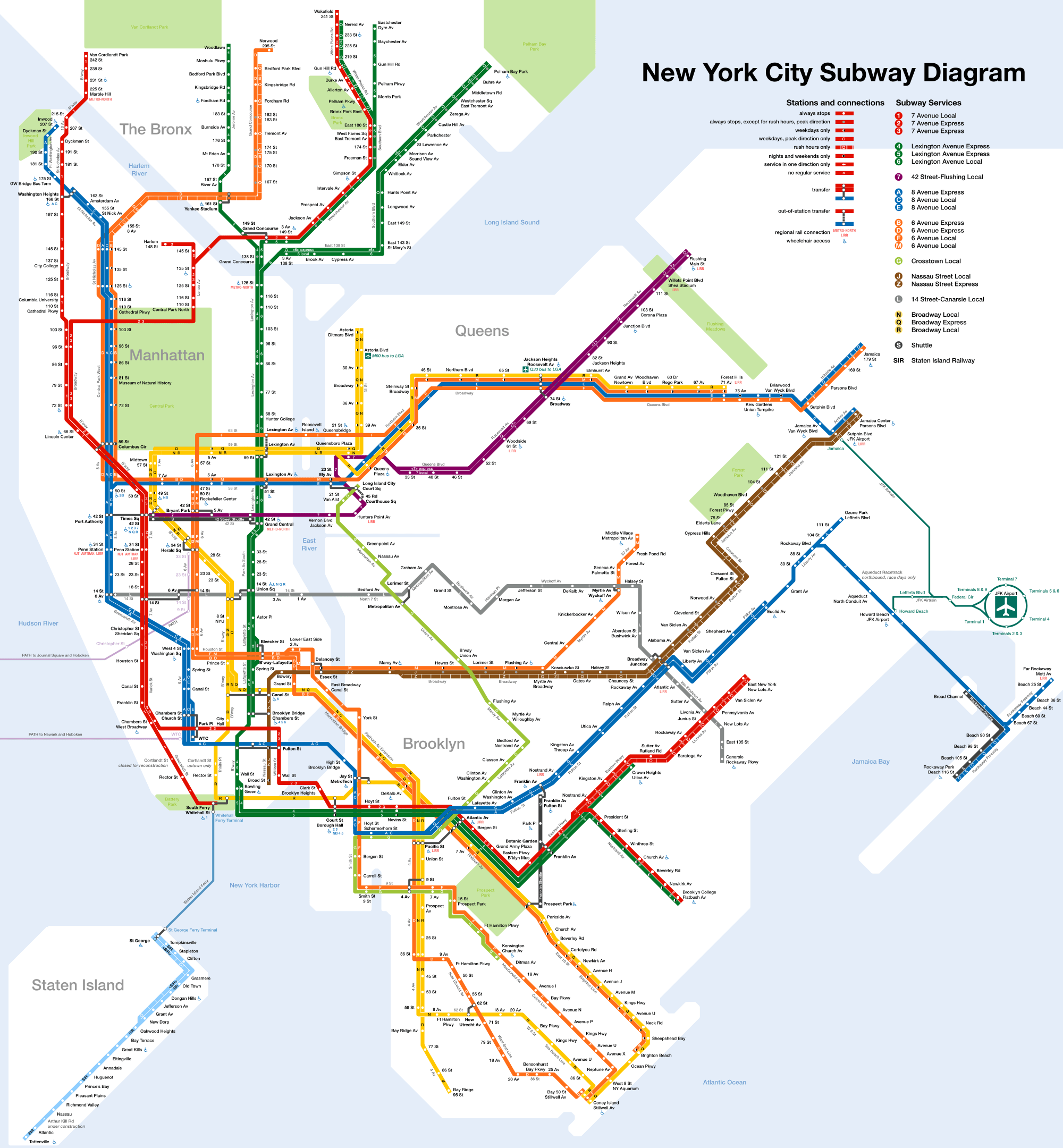
One of the first things you’ll notice about the NYC subway map is its vibrant array of colors. Each color represents a different subway line or group of lines. Understanding these colors is fundamental to navigation.
The A, C, E Lines (Blue): These lines run primarily on the IND Eighth Avenue Line, connecting Upper Manhattan, Midtown, and Lower Manhattan, with some routes extending into Brooklyn and Queens.
The B, D, F, M Lines (Orange): These lines operate on the IND Sixth Avenue Line, traversing Manhattan from the Bronx to Brooklyn, offering crucial connections throughout the city.
The G Line (Lime Green): This line is unique as it primarily runs within Brooklyn and Queens, connecting neighborhoods without directly entering Manhattan.
The J, Z Lines (Brown): These lines run on the BMT Nassau Street Line, connecting Brooklyn and Lower Manhattan, with the Z line offering limited-stop express service.
The L Line (Gray): This line runs across 14th Street in Manhattan and extends into Brooklyn, a vital artery connecting the East and West Sides.
The N, Q, R, W Lines (Yellow): These lines operate on the BMT Broadway Line, running through Manhattan and connecting to Brooklyn and Queens. Be aware that some of these lines have different routing patterns depending on the time of day or day of the week.
The 1, 2, 3 Lines (Red): These lines run on the IRT Broadway–Seventh Avenue Line, connecting the Bronx, Upper West Side, and Lower Manhattan.
The 4, 5, 6 Lines (Green): These lines run on the IRT Lexington Avenue Line, connecting the Bronx, Upper East Side, and Lower Manhattan. The 4 and 5 lines offer express service during peak hours.
The 7 Line (Purple): This line connects Times Square in Manhattan to Flushing, Queens, a vital link to one of the city’s most diverse neighborhoods.
The SIR (Staten Island Railway) (Teal): While technically part of the subway system, the Staten Island Railway operates independently, connecting St. George to Tottenville on Staten Island.
Local vs. Express Trains: A Key Distinction
Another critical element of the NYC subway system is the distinction between local and express trains. Understanding this difference can save you significant travel time.
Local Trains: These trains stop at every station along their route. They are identified on the subway map with a plain circle.
Express Trains: These trains skip certain stations, allowing for faster travel between major hubs. They are identified on the subway map with a white diamond inside a colored circle.
How to Read the Map: A Step-by-Step Guide
Now that you understand the colors and train types, let’s break down how to read the subway map effectively.
1. Identify Your Starting Point and Destination: Locate your current location and your desired destination on the map. Use landmarks, street names, or cross-streets to pinpoint the exact stations.
2. Find the Connecting Lines: Determine which subway lines serve both your starting point and destination. Look for lines that directly connect the two stations or require a transfer.
3. Plan Your Route: Choose the most efficient route based on the available lines, transfer options, and whether you prefer local or express service. Consider the time of day, as some lines may have different service patterns during peak hours or weekends.
4. Note Transfer Stations: If your route requires a transfer, identify the transfer station and the direction you need to take on the connecting line. Pay attention to signage within the station to ensure you’re heading in the right direction.
5. Check for Service Changes: Before you embark on your journey, check for any planned service changes, delays, or disruptions. You can find this information on the MTA website, the MYmta app, or station announcements.
Essential Tips for Subway Navigation
Download the MYmta App: This official app provides real-time train arrival information, service alerts, and trip planning tools.
Use Citymapper: Citymapper is a third-party app that offers comprehensive transit information, including subway, bus, and ferry routes.
Look for Station Signage: Pay attention to signage within the stations, including platform signs, directional signs, and service change announcements.
Ask for Help: Don’t hesitate to ask station agents or fellow riders for assistance if you’re unsure about directions or service information.
Be Aware of Peak Hours: The subway can be extremely crowded during peak hours (7-9 AM and 5-7 PM). Plan your trips accordingly, or consider traveling during off-peak times.
Consider a MetroCard: A MetroCard offers a convenient and cost-effective way to pay for subway rides. You can purchase a pay-per-ride MetroCard or an unlimited ride MetroCard.
Navigating Common Challenges
Service Changes: Service changes are a frequent occurrence due to maintenance or construction. Always check for service alerts before you travel and be prepared to adjust your route if necessary.
Crowded Trains: As mentioned earlier, the subway can be very crowded during peak hours. Be patient, courteous, and prepared for close quarters.
Delays: Delays can happen for various reasons, such as track maintenance, signal problems, or medical emergencies. Stay informed about the cause of the delay and adjust your plans accordingly.
Lost or Confused: If you get lost or confused, don’t panic. Ask a station agent or fellow rider for assistance. Most New Yorkers are happy to help.
Subway Etiquette: Essential Dos and Don’ts
Do: Stand to the right on escalators to allow others to pass on the left.
Do: Let passengers exit the train before you attempt to board.
Do: Offer your seat to elderly, pregnant, or disabled passengers.
Don’t: Block the doorways or aisles.
Don’t: Talk loudly on your phone or play music without headphones.
Don’t: Eat messy or smelly food on the train.
Don’t: Litter on the platform or in the train.
People Also Ask (PAA) – Answering Common Questions
Q: How do I find the fastest route on the NYC subway?
A: Use the MYmta app or Citymapper to find the fastest route based on real-time train schedules and service conditions. Consider using express trains when available to save time.
Q: What’s the difference between local and express trains?
A: Local trains stop at every station, while express trains skip certain stations, allowing for faster travel between major hubs. Express trains are indicated by a white diamond inside a colored circle on the subway map.
Q: How much does it cost to ride the NYC subway?
A: A single subway ride costs $2.75. You can pay with a MetroCard, OMNY (contactless payment), or a mobile device with OMNY enabled.
Q: How do I transfer between subway lines?
A: Follow the signs within the station to the platform for your connecting line. Pay attention to the direction of the train (e.g., uptown or downtown) to ensure you’re heading in the right direction.
Q: What do I do if there’s a service change on my line?
A: Check the MTA website, the MYmta app, or station announcements for information about the service change. Consider alternative routes or modes of transportation if necessary.
Exploring Beyond Manhattan: Subway Adventures in the Outer Boroughs
Brooklyn: Explore the trendy neighborhoods of Williamsburg and Bushwick via the L train, or visit the iconic Coney Island via the D, F, N, or Q trains.
Queens: Discover the diverse culinary scene in Flushing via the 7 train, or visit the cultural institutions in Long Island City via the 7, E, M, or G trains.
The Bronx: Visit the Bronx Zoo via the 2 or 5 trains, or explore the New York Botanical Garden via the B, D, or 4 trains.
Staten Island: Take the Staten Island Ferry (free!) and then explore the borough via the Staten Island Railway (SIR).
Conclusion: Mastering the NYC Subway Map for Seamless Travel
The NYC subway map is your key to unlocking the city’s endless possibilities. By understanding the colors, train types, and essential navigation tips, you can confidently navigate the subway system and explore all that New York City has to offer. Embrace the challenge, plan your routes wisely, and enjoy the ride!
Remember to stay updated on service changes, practice good subway etiquette, and don’t hesitate to ask for help when needed. With a little preparation and a sense of adventure, you’ll be navigating the NYC subway like a true New Yorker in no time.