The Age of Empires: Dominant Powers of Pre-WWI Europe
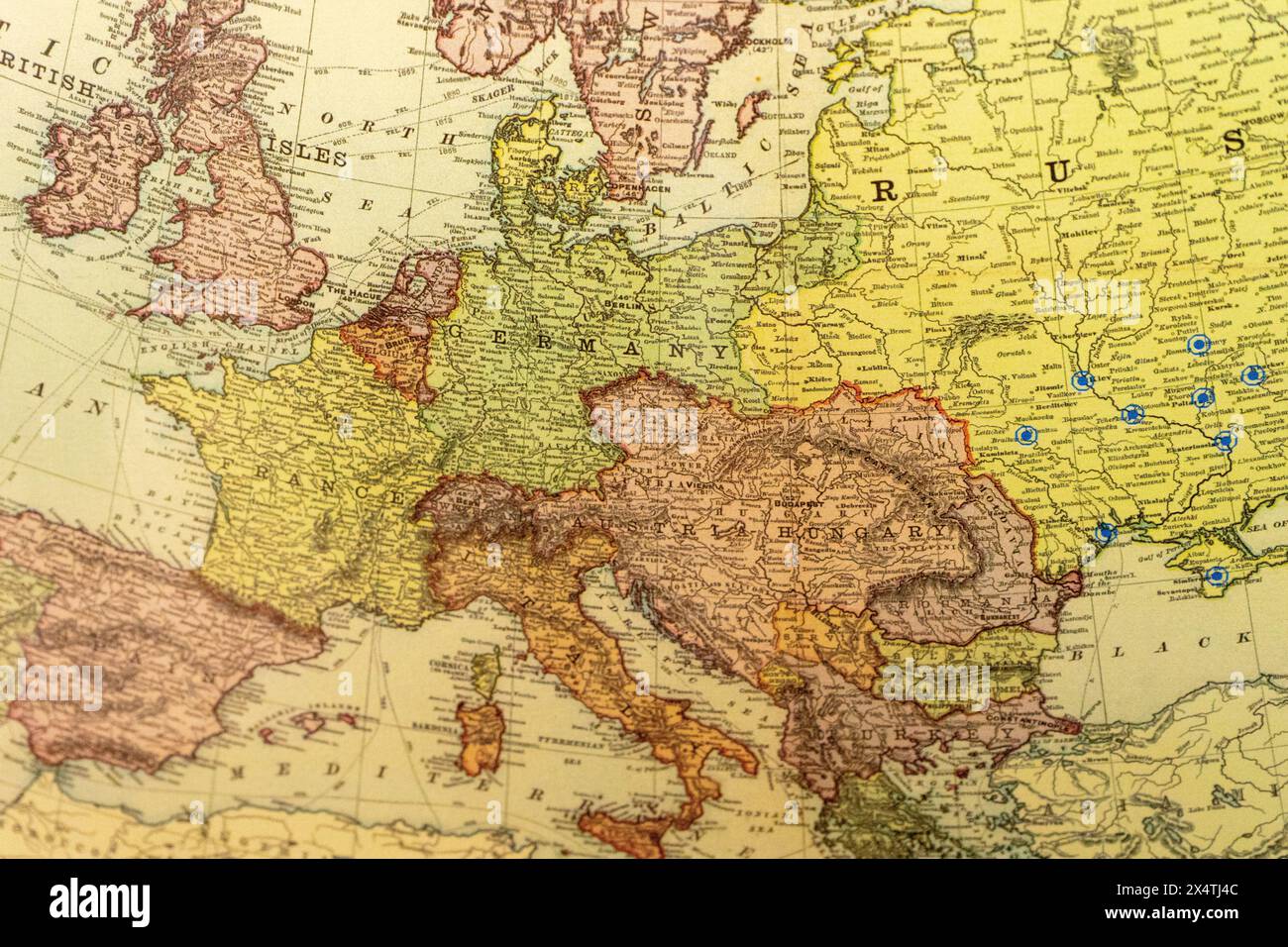
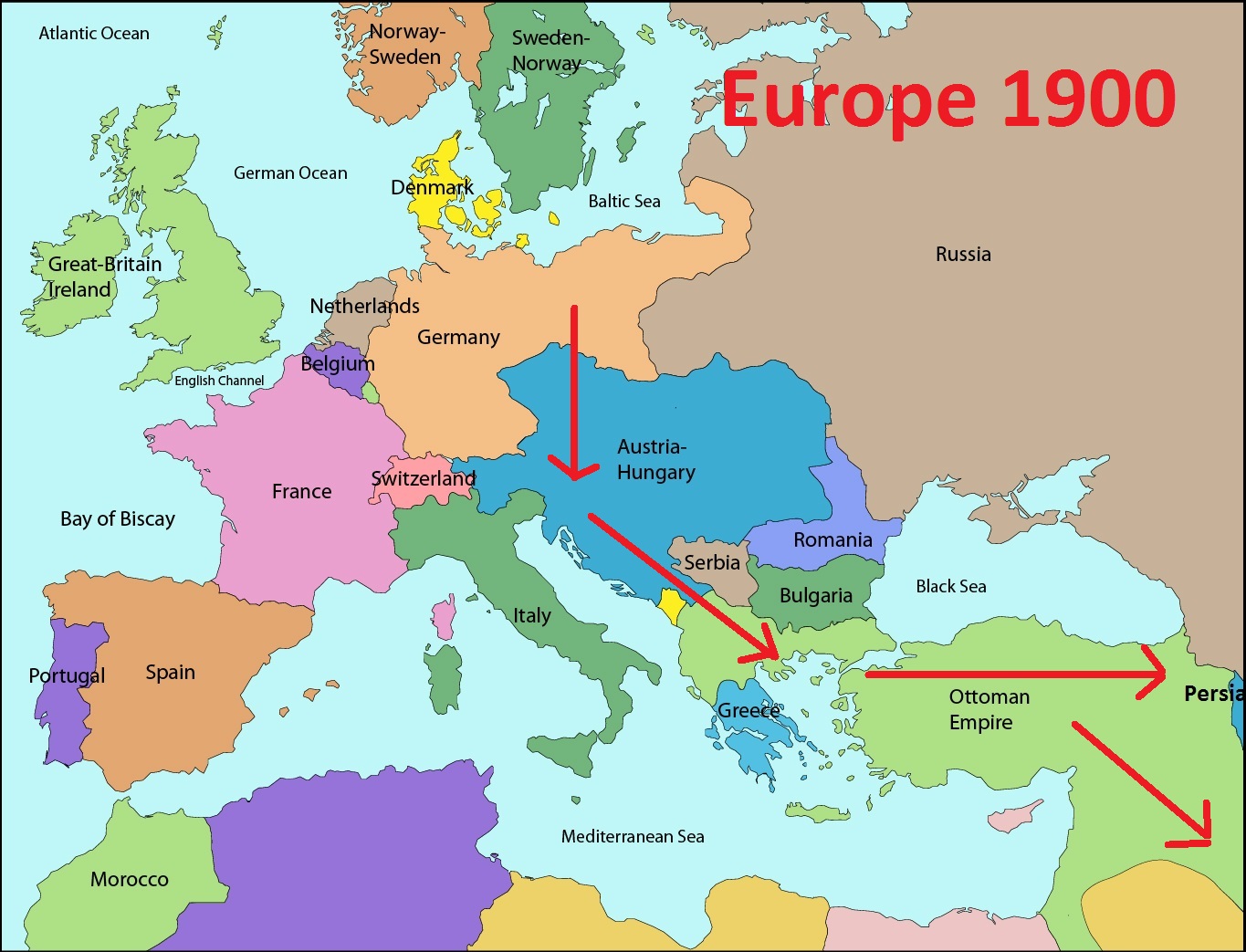
Unlike the Europe of today, the continent in 1914 was dominated by empires. These colossal entities, ruled by emperors, kings, and tsars, held sway over diverse populations who often had little in common with their rulers or each other. Nationalism was a powerful, destabilizing force, bubbling just beneath the surface of imperial control.
The British Empire: The Sun Never Sets
Great Britain stood as the world’s preeminent global power, its empire stretching across every continent. While its primary focus was on its vast overseas colonies, its European policy was crucial. For much of the 19th century, Britain pursued a policy of "splendid isolation," avoiding permanent alliances. However, the rising industrial and naval might of Germany prompted a significant shift. London recognized the threat a dominant Germany posed to the European balance of power and, by extension, to its own security, leading it to forge crucial understandings with its traditional rivals, France and Russia.
The German Empire: A Rising Power
Forged in the fires of the Franco-Prussian War in 1871, the German Empire was the new powerhouse of continental Europe. It boasted a dynamic industrial economy, a highly professionalized and powerful army, and an ambitious leader in Kaiser Wilhelm II. The Kaiser’s pursuit of Weltpolitik (‘world policy’) aimed to secure Germany’s "place in the sun," challenging British naval supremacy with a massive shipbuilding program and asserting German influence globally. This aggressive posture caused considerable alarm in London, Paris, and St. Petersburg.
The Russian Empire: The Eastern Colossus
The Russian Empire, under the autocratic rule of Tsar Nicholas II, was a giant of immense territory and population but beset by internal weaknesses. Its economy was largely agrarian and less developed than its Western counterparts. The empire had been shaken by a humiliating defeat in the Russo-Japanese War (1904-1905) and a subsequent revolution in 1905. Despite these issues, Russia saw itself as the great protector of the Slavic peoples, particularly those in the Balkans, a role that put it on a direct collision course with the Austro-Hungarian Empire.
The Austro-Hungarian Empire: A Patchwork of Peoples
Perhaps the most fragile of the great powers, the Austro-Hungarian Empire was a dual monarchy governed by the Habsburg dynasty. It was less an empire and more a volatile collection of ethnicities, including Germans, Hungarians, Czechs, Poles, Slovaks, Croats, Serbs, and more. Rising nationalist sentiments, especially among its South Slav populations who were inspired by the independent Kingdom of Serbia, threatened to tear the empire apart from within. Vienna’s primary foreign policy goal was to suppress these movements and maintain its precarious hold on the Balkans.
The Ottoman Empire: The “Sick Man of Europe”
For over a century, the Ottoman Empire had been in a state of terminal decline, earning it the moniker the "sick man of Europe." It had progressively lost its territories in the Balkans to newly independent states like Serbia, Greece, Bulgaria, and Romania. This decline created a dangerous power vacuum, which the other great powers, particularly Russia and Austria-Hungary, were eager to exploit. The empire’s weakness made the entire region profoundly unstable.
The French Third Republic: Seeking Revanche
France was still smarting from its crushing defeat in the 1870-71 Franco-Prussian War, a conflict that resulted in the loss of the provinces of Alsace and Lorraine to Germany. The desire for revanche (revenge) and the reclamation of these lost territories was a cornerstone of French foreign policy. Fearful of the growing power of its German neighbor, France diligently worked to build alliances, primarily with Russia and Great Britain, to encircle and contain Germany.
The Tangled Web of Alliances
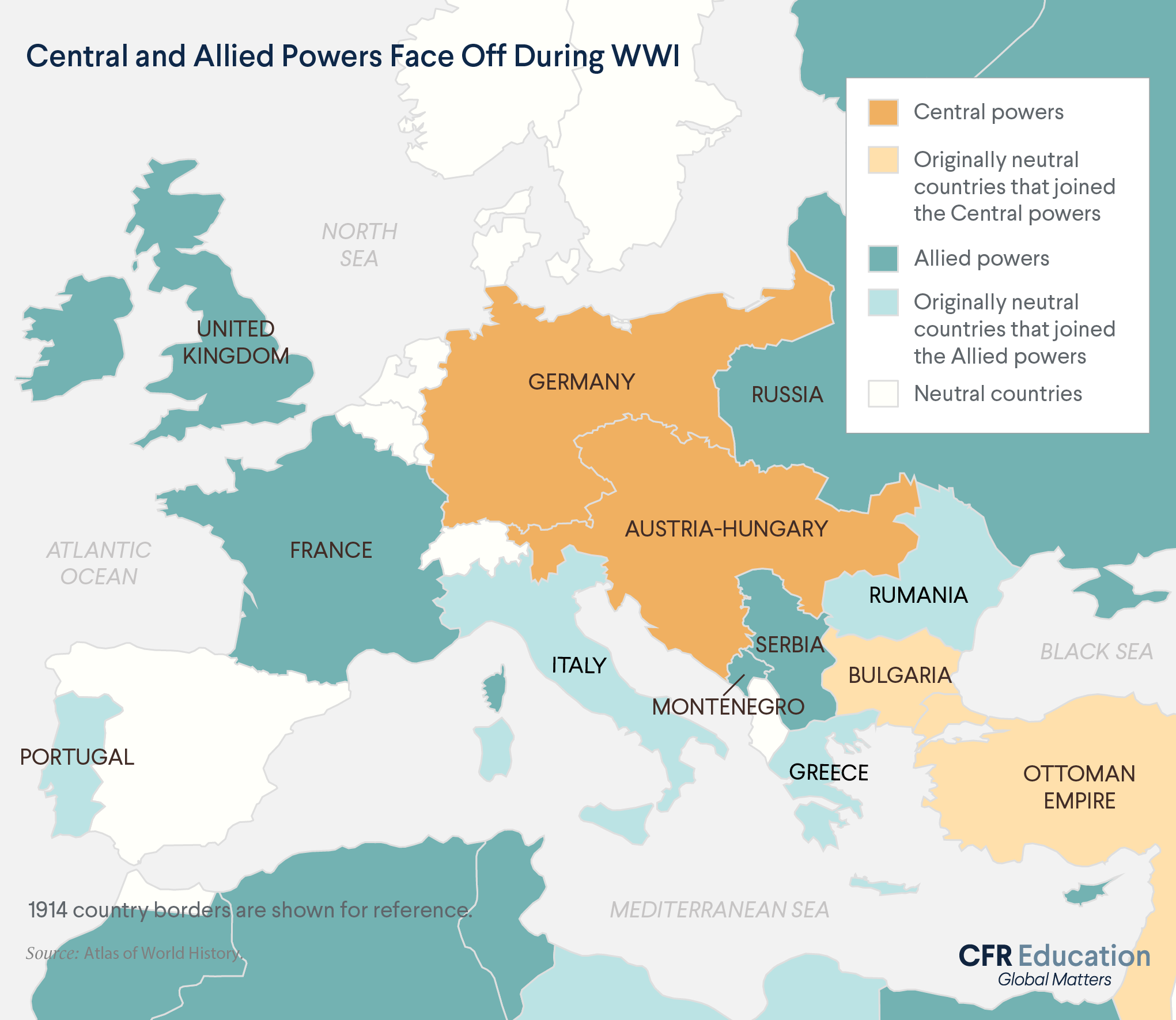
To maintain a balance of power and deter aggression, the nations of Europe bound themselves in a complex system of military alliances. Intended to provide security, this system instead created two heavily armed, opposing camps. It ensured that a regional conflict could rapidly escalate into a continent-wide war, as each nation was obligated to defend its allies.
The Triple Alliance (The Central Powers)
Formed in 1882, the Triple Alliance was a pact between Germany, Austria-Hungary, and Italy. The core of this alliance was the mutual defense agreement between Germany and Austria-Hungary. Italy’s commitment was always questionable, as it had its own territorial ambitions against Austria-Hungary. The alliance was primarily a defensive measure against a potential attack from France or Russia.
The Triple Entente
The Triple Entente was not a single formal military pact like the Triple Alliance, but rather a series of interconnected agreements. It began with the Franco-Russian Alliance (1894), countering the Triple Alliance. This was followed by the Entente Cordiale (1904) between Britain and France, which settled colonial disputes. Finally, the Anglo-Russian Convention (1907) resolved their rivalries in Asia. Together, these agreements aligned France, Britain, and Russia, creating a powerful bloc to counter the ambitions of the Central Powers.
Flashpoints and Contested Territories: The Map’s Hotspots
Several regions on the pre-WWI map were sources of intense friction, acting as geopolitical pressure cookers where the interests of the great powers clashed directly.
Alsace-Lorraine: A Franco-German Sore Spot
The annexation of Alsace-Lorraine by Germany in 1871 was a wound that never healed for France. The French public and political establishment were united in their desire to see the ‘lost provinces’ returned. This issue alone guaranteed lasting enmity between France and Germany, making any long-term reconciliation impossible and fueling the arms race between them.
The Balkans: The “Powder Keg of Europe”
This volatile peninsula was, without question, the most dangerous place in Europe. As the Ottoman Empire retreated, newly independent states like Serbia harbored ambitions of uniting their ethnic compatriots, many of whom still lived under Austro-Hungarian rule. This Pan-Slavist movement, championed by Serbia and backed by Russia, was viewed as an existential threat by Austria-Hungary. The Balkan Wars of 1912-1913, while pushing the Ottomans out, also exacerbated rivalries between the Balkan states and drew the great powers deeper into the regional quagmire.
Poland: A Nation Without a State
A stark feature of the 1914 map is the complete absence of Poland as an independent country. In the late 18th century, it had been partitioned and absorbed by its powerful neighbors: the Russian Empire, the German Empire (in its predecessor state, Prussia), and the Austro-Hungarian Empire. While not an immediate cause of the war, the desire for Polish independence was a potent nationalist undercurrent that would play a significant role in the peace settlement after the war.
Key Differences: The 1914 Map vs. Today
A direct comparison between the map of 1914 and a modern map reveals a dramatically different Europe. Understanding these changes highlights the sheer scale of the war’s impact.
- Empires Instead of Nation-States: The most significant difference was the dominance of the Austro-Hungarian, German, Russian, and Ottoman Empires, which encompassed dozens of modern-day countries.
- No Independent Poland, Czechoslovakia, or Yugoslavia: These nations were born from the ashes of the empires. Their territories were divided among Germany, Austria-Hungary, and Russia.
- A Massive Austria-Hungary: This empire covered all of modern Austria, Hungary, Czechia, Slovakia, Slovenia, Croatia, and Bosnia-Herzegovina, plus parts of Italy, Romania, Poland, and Ukraine.
- A Larger Germany: The German Empire included Alsace-Lorraine (now in France) and significant territories that are today part of Poland.
- A Larger Russia: The Russian Empire included Finland, Estonia, Latvia, Lithuania, and much of Poland.
- United Ireland: The entire island of Ireland was part of the United Kingdom, though the movement for Home Rule was a major political issue.
- Scandinavia: Norway had only become fully independent from Sweden in 1905.
The Spark in the Powder Keg
This tense, fragile, and heavily armed continent needed only a single spark to erupt. That spark came on June 28, 1914, in Sarajevo, the capital of the Austro-Hungarian province of Bosnia. A Serbian nationalist, Gavrilo Princip, assassinated Archduke Franz Ferdinand, the heir to the Austro-Hungarian throne.
Austria-Hungary, determined to crush Serbian nationalism once and for all, issued an ultimatum to Serbia. When Serbia failed to meet all the demands, Austria-Hungary declared war. The alliance system then kicked into gear with terrifying predictability. Russia mobilized to protect its Slavic ally, Serbia. Germany, allied with Austria-Hungary, declared war on Russia. France, allied with Russia, was then drawn in. When Germany invaded neutral Belgium to execute its Schlieffen Plan to attack France, Great Britain, honoring a treaty to protect Belgian neutrality, declared war on Germany. The dominoes had fallen.
Conclusion: A Lost World Redrawn by War
The map of Europe before World War I represents a world that is, in many ways, unrecognizable to us today. It was a continent defined by ancient empires, not self-determined nations; by rigid aristocratic hierarchies, not widespread democracy; and by a sense of cultural certainty that was about to be shattered in the trenches of the Western Front. The Great War would not only redraw the map, toppling four empires and creating a host of new countries, but it would also fundamentally reshape the political, social, and psychological landscape of Europe and the world, setting the stage for the conflicts and ideologies of the 20th century.