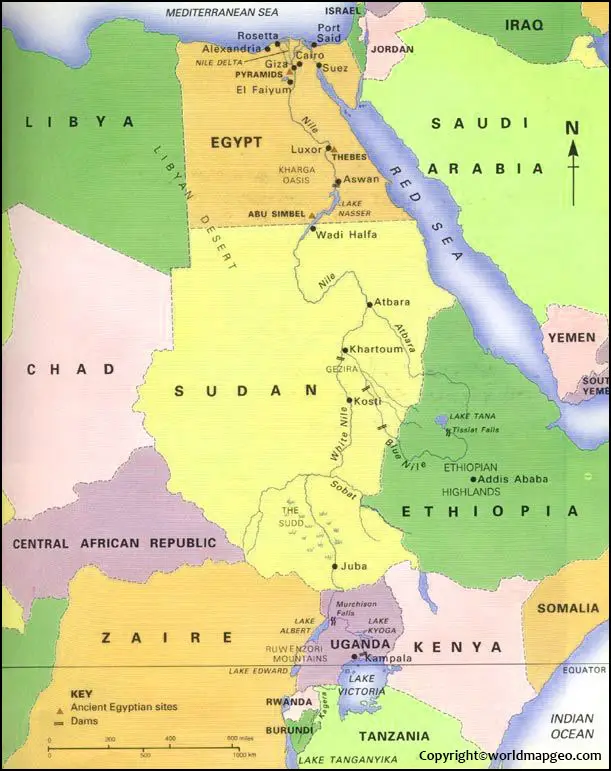
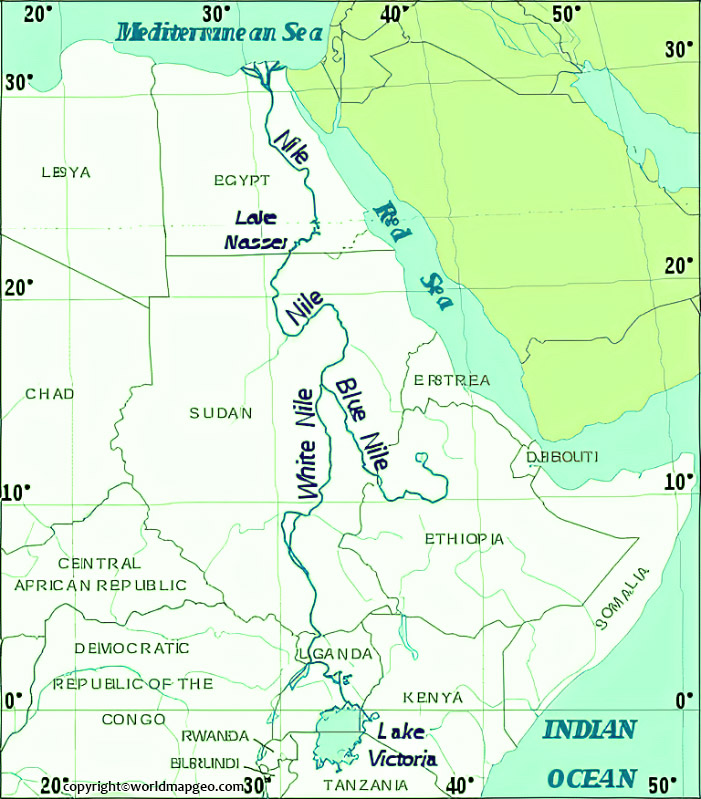
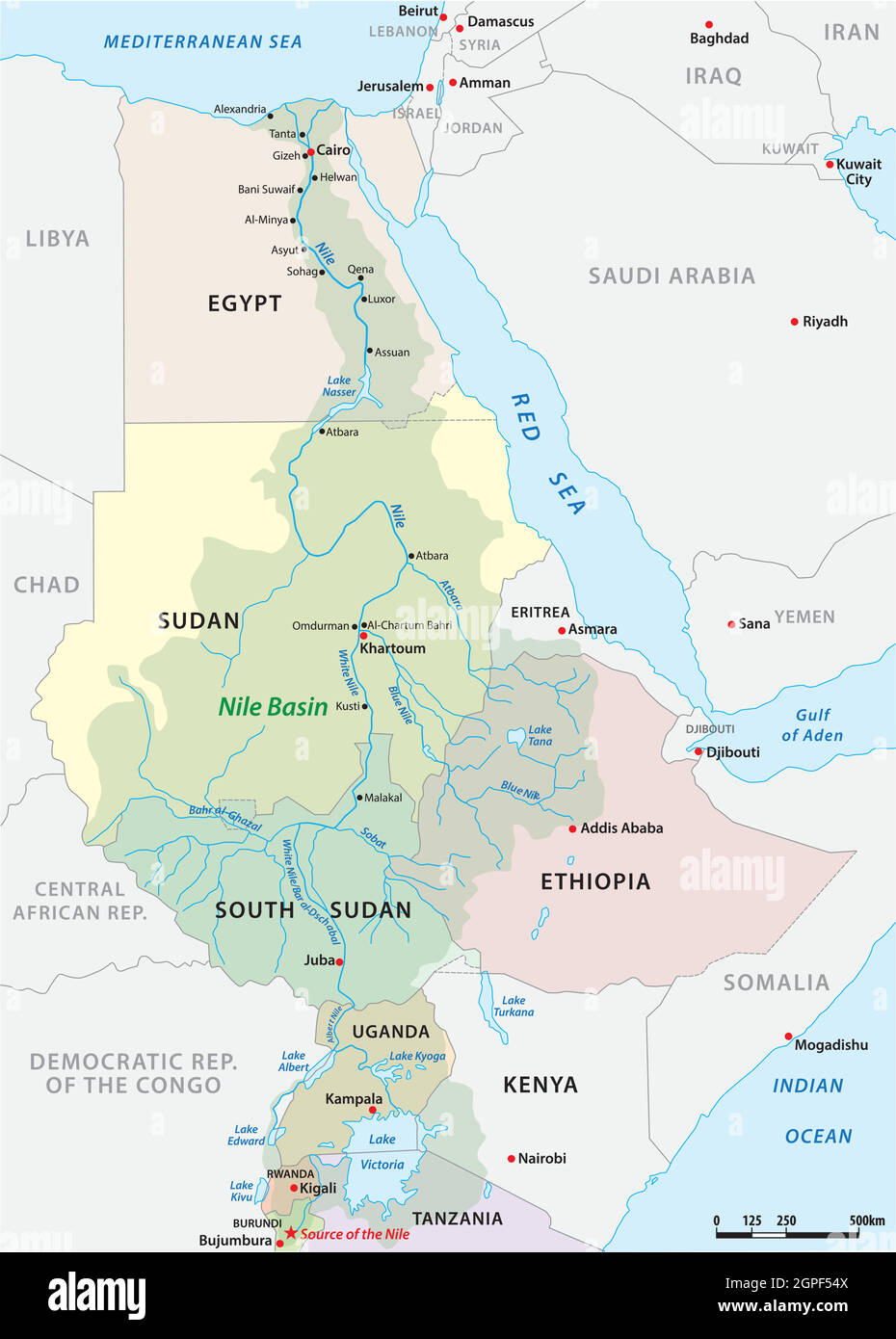
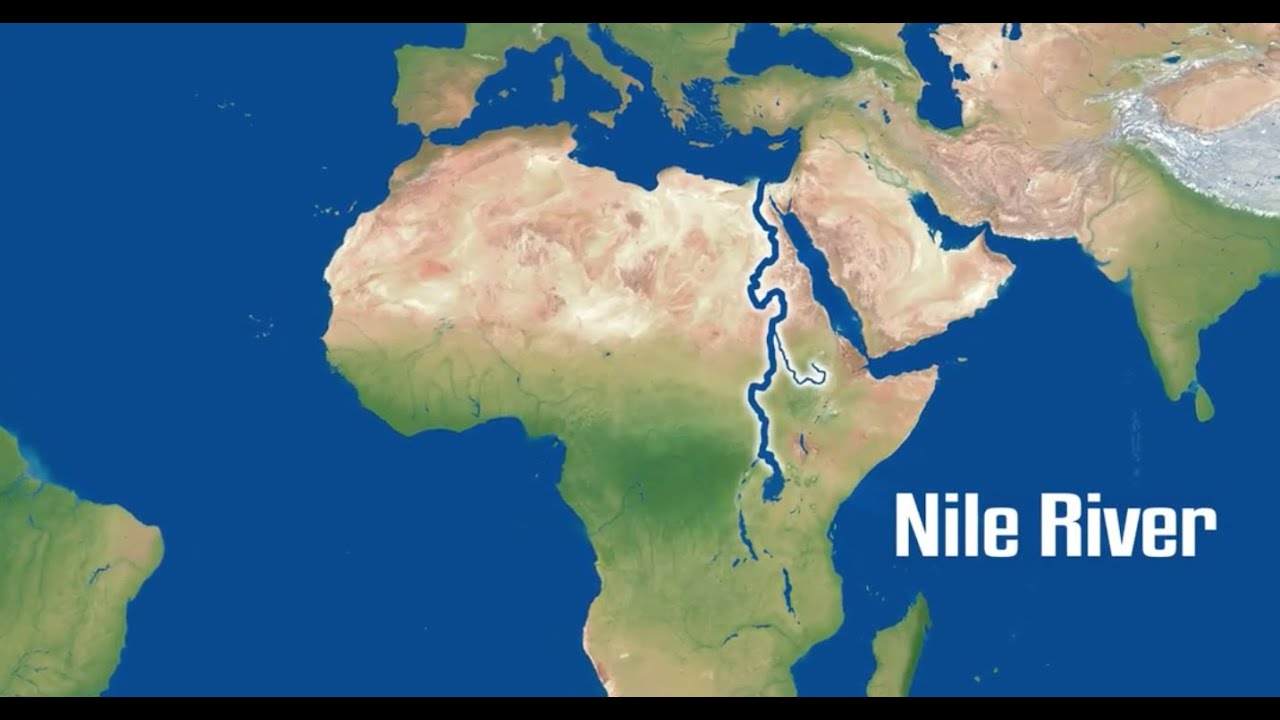
Understanding the Nile’s location is the first step in appreciating its importance. On a world map, the Nile is easily identifiable, stretching from south to north across eleven countries. Its journey begins in the heart of Africa and culminates in the Mediterranean Sea.
The Nile’s main sources are the White Nile, originating from the Great Lakes region of central Africa, primarily Lake Victoria, and the Blue Nile, which starts in Ethiopia. These two tributaries converge in Khartoum, Sudan, forming the main Nile.
The Nile’s location on a world map is significant not only geographically but also historically. The ancient Egyptians depended entirely on the Nile for their survival. The river provided water for drinking, irrigation, and transportation, and its annual floods deposited fertile silt that enriched the land, enabling abundant harvests. This cyclical flooding was a predictable event, allowing the Egyptians to develop sophisticated agricultural practices.
The Nile also served as a crucial transport route, connecting different parts of the ancient Egyptian kingdom. Boats carried goods, people, and building materials along the river, facilitating trade and communication. The Nile’s importance is reflected in the numerous ancient temples and monuments built along its banks, testaments to the civilization that thrived due to the river’s bounty.
The Nile’s impact extended beyond Egypt. It influenced the development of other civilizations in the region, including the Nubians. These societies shared a close relationship with the Nile, relying on it for similar resources and facing similar challenges related to flooding and agriculture. The river thus became a shared element, linking different cultures and fostering interconnectedness.
The Nile River’s influence on the surrounding ecosystems is profound. The river supports a diverse range of plant and animal life. The fertile floodplains and the river itself provide habitats for various species, including fish, birds, and mammals. The river’s presence also affects the climate, creating microclimates that influence local vegetation patterns.
The Nile’s ecosystem faces several challenges, including pollution, dam construction, and climate change. These factors can impact water quality, disrupt habitats, and alter the natural flow of the river. Efforts are underway to mitigate these impacts and protect the biodiversity of the Nile.
The Aswan High Dam, completed in 1970, is a major engineering project that has significantly altered the Nile’s ecosystem. While it provided benefits such as flood control and hydroelectric power, it also had negative consequences, including the disruption of the natural flow of sediment and the reduction of nutrient-rich silt downstream. This has led to changes in agricultural practices and impacts on aquatic life.
The cultures along the Nile, from ancient times to the present day, have been deeply influenced by the river. The ancient Egyptians developed a complex society with a rich religious and artistic tradition, all closely intertwined with the Nile. Their beliefs, rituals, and daily lives were shaped by the river’s cycles and its perceived power.
The annual flooding of the Nile was a central element of Egyptian religious beliefs. The flooding was seen as a blessing from the gods, and ceremonies were held to celebrate the event and ensure its continuation. The river also played a vital role in their mythology, with gods and goddesses often associated with the Nile’s features.
Today, the Nile continues to play a significant role in the lives of people living along its banks. Agriculture remains a major activity, with farmers relying on the river for irrigation. The Nile also provides a source of fish and other resources, sustaining local communities. Tourism is another important industry, with visitors coming to see the ancient monuments and experience the beauty of the river.
The Nile’s journey begins in the highlands of Burundi and Rwanda, with the headwaters of the Ruvyironza River, which then flows into the Kagera River. The Kagera River then flows into Lake Victoria, the primary source of the White Nile.
The White Nile flows north through Uganda and Sudan. In Sudan, it meets the Blue Nile at Khartoum. The Blue Nile originates from Lake Tana in Ethiopia and contributes a significant amount of water to the Nile, especially during the rainy season.
The combined waters of the White Nile and the Blue Nile continue north through Sudan and Egypt, where the river carves through the arid landscape, supporting life along its banks. The river then flows into the Mediterranean Sea, forming a delta that is a fertile agricultural region.
Understanding the geography of the Nile is essential for appreciating its significance. The river’s course is shaped by its tributaries, the landscape it traverses, and the geological features of the region. The Nile’s basin covers an area of approximately 3.25 million square kilometers (1.25 million square miles).
The Nile’s delta is a crucial area. This delta is formed as the river slows down and deposits sediment before entering the Mediterranean Sea. The Nile Delta is one of the most fertile agricultural regions in the world, supporting a large population and providing vital resources.
The Nile’s role in the development of ancient Egyptian civilization cannot be overstated. The river provided the foundation for their society, enabling agriculture, transportation, and trade. The Egyptians developed sophisticated irrigation systems and agricultural techniques to maximize their use of the Nile’s resources.
The Nile’s impact on Egyptian culture is evident in their art, architecture, and religious beliefs. The river was seen as a source of life and a symbol of fertility. The Egyptians built elaborate temples and monuments along the river, honoring the gods and goddesses associated with the Nile.
Modern Egypt continues to depend on the Nile. The river provides water for irrigation, industry, and domestic use. The Aswan High Dam, while controversial, continues to provide hydroelectric power and control flooding. The Nile also supports tourism, with visitors coming to see the ancient monuments and enjoy the river’s beauty.
The Nile has a rich biodiversity, supporting various species of fish, birds, and other animals. The river’s ecosystem faces threats from pollution, dam construction, and climate change. Conservation efforts are crucial to protect the Nile’s biodiversity and ensure its long-term health.
The Nile’s tributaries, the White Nile and the Blue Nile, play a vital role in the river’s hydrology. The White Nile provides a steady flow of water, while the Blue Nile contributes a significant amount of water during the rainy season. Understanding the role of these tributaries is crucial for managing the Nile’s water resources.
The Nile’s course has changed over time, influenced by geological events and human activities. The river’s delta has evolved, and the river’s flow has been altered by dam construction. Studying these changes is essential for understanding the Nile’s past and predicting its future.
The Nile is an essential resource for the countries it flows through. It is a source of water, food, and transportation. The river’s water resources are a subject of international cooperation, with countries working together to manage and share the river’s resources.
The Nile River, as seen on a world map, is a testament to the power of nature and the enduring influence of a geographical feature on human civilization. Its course, its tributaries, and its impact on the surrounding ecosystems and cultures provide a rich tapestry of history, geography, and environmental significance. From its humble beginnings to its grand entrance into the Mediterranean Sea, the Nile continues to be a source of life and inspiration.
The Nile River’s presence on a world map is more than just a line representing a river; it symbolizes the interconnectedness of geography, history, and human culture. Its influence is felt across multiple countries, shaping their destinies and leaving an indelible mark on the world.
The future of the Nile depends on sustainable management practices and international cooperation. Protecting its resources, mitigating environmental threats, and ensuring equitable access to its waters are crucial for the well-being of the communities it supports and the preservation of its ecological integrity.
In conclusion, the Nile River’s location on a world map is a starting point for exploring its profound significance. Its role in the rise of ancient civilizations, its impact on ecosystems, and its continued influence on modern societies make it a subject of endless fascination and study. Understanding the Nile is understanding a vital thread in the fabric of human history and the natural world.
The river’s significance extends beyond its geographical location. It serves as a reminder of the power and importance of water resources in shaping civilizations, fostering cultural exchange, and supporting the delicate balance of ecosystems. The Nile is a living testament to the interplay between humans and the environment, a story that continues to unfold with each passing day.
The Nile’s delta is a dynamic region, constantly shaped by the river’s flow and human activities. It is a vital habitat for various species and a crucial agricultural area. Understanding the delta’s ecosystem and its challenges is essential for its preservation. The delta’s rich soil, deposited over millennia, supports diverse plant life and provides sustenance for countless organisms. Protecting this area is vital for maintaining the Nile’s overall health and the well-being of the communities that depend on it.
The Nile River’s journey on a world map is a visual representation of a complex and multifaceted story. It is a story of life, history, and the intricate connections between humans and the environment. By appreciating its location, its influence, and its challenges, we can gain a deeper understanding of this remarkable river and its enduring legacy.

:max_bytes(150000):strip_icc()/__opt__aboutcom__coeus__resources__content_migration__mnn__images__2020__01__nile-river-map-01-be172010ddf14cae8252a0b8dd3871d5.jpg "The Nile River on a World Map: A Comprehensive Guide")