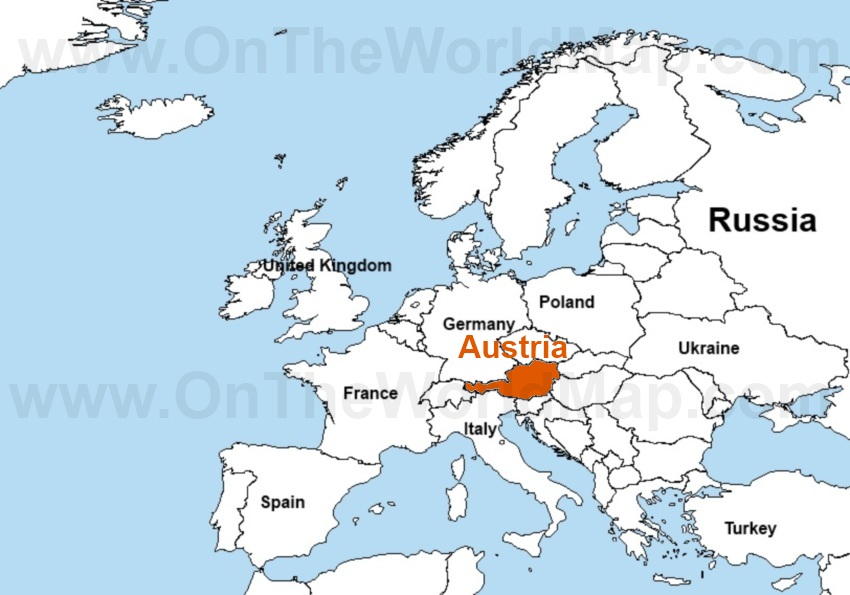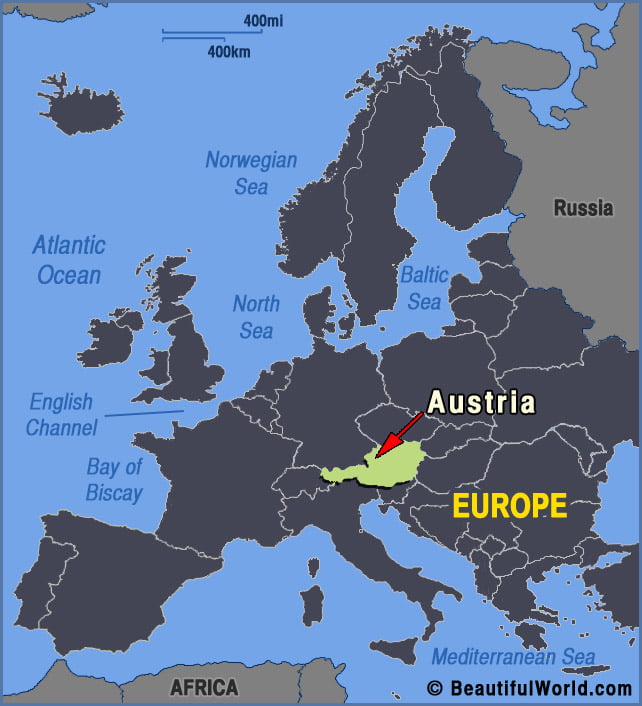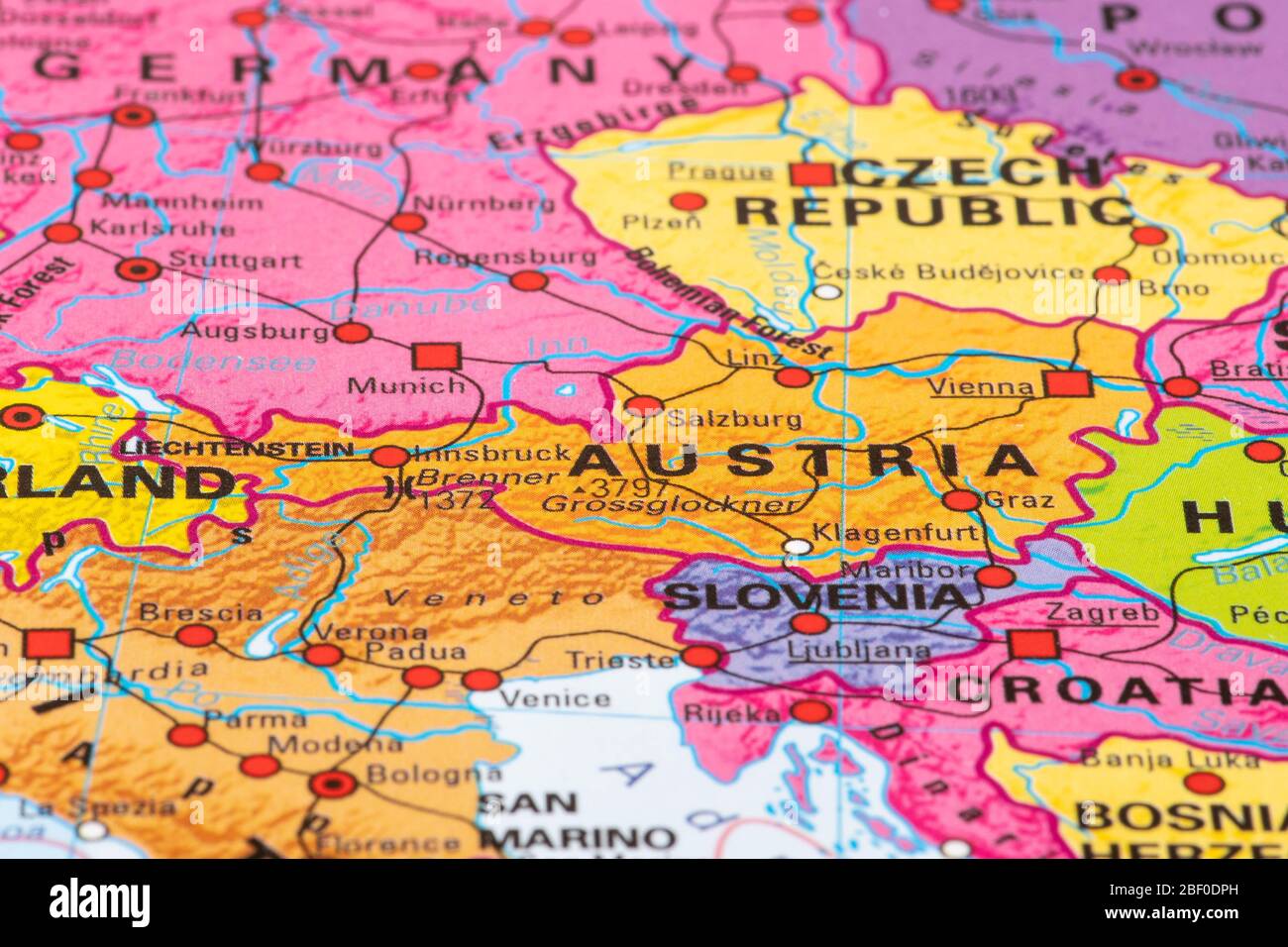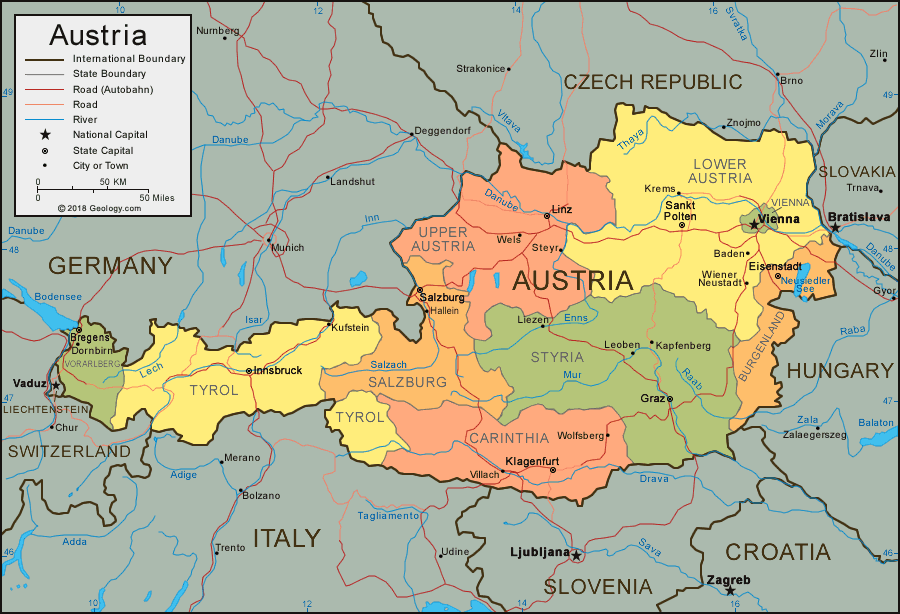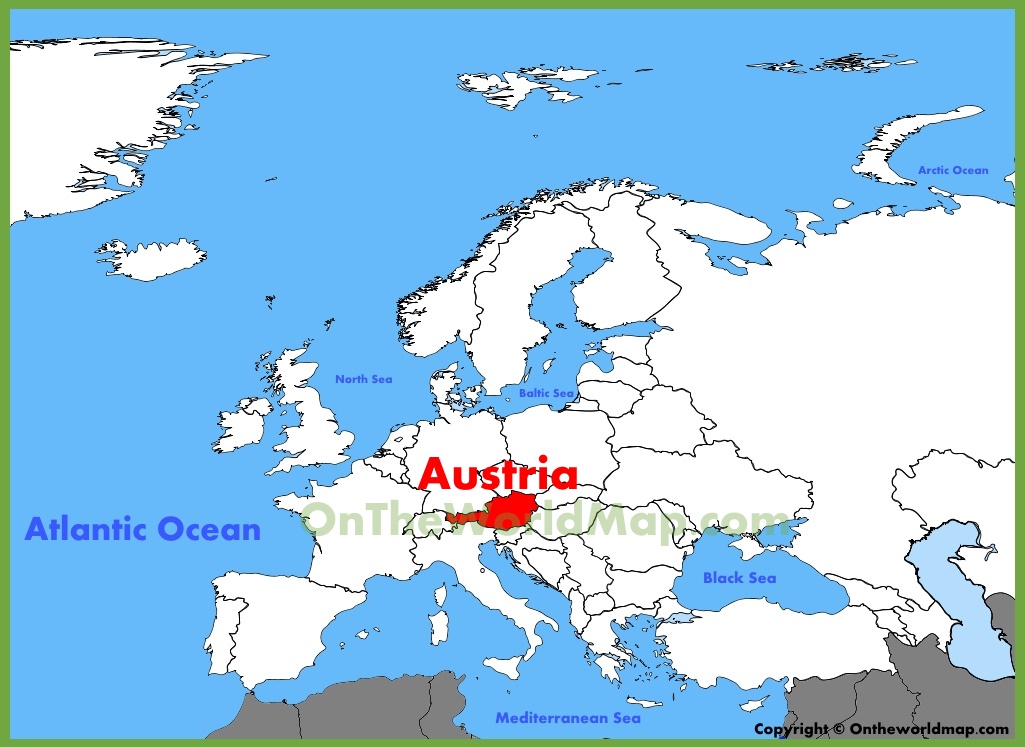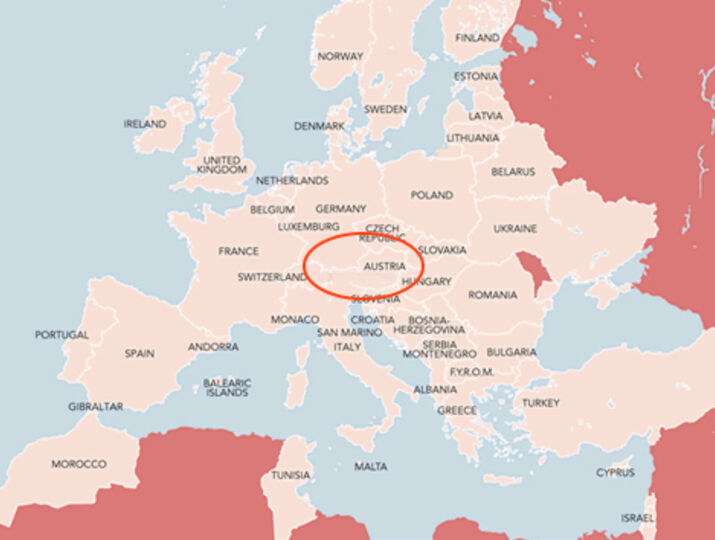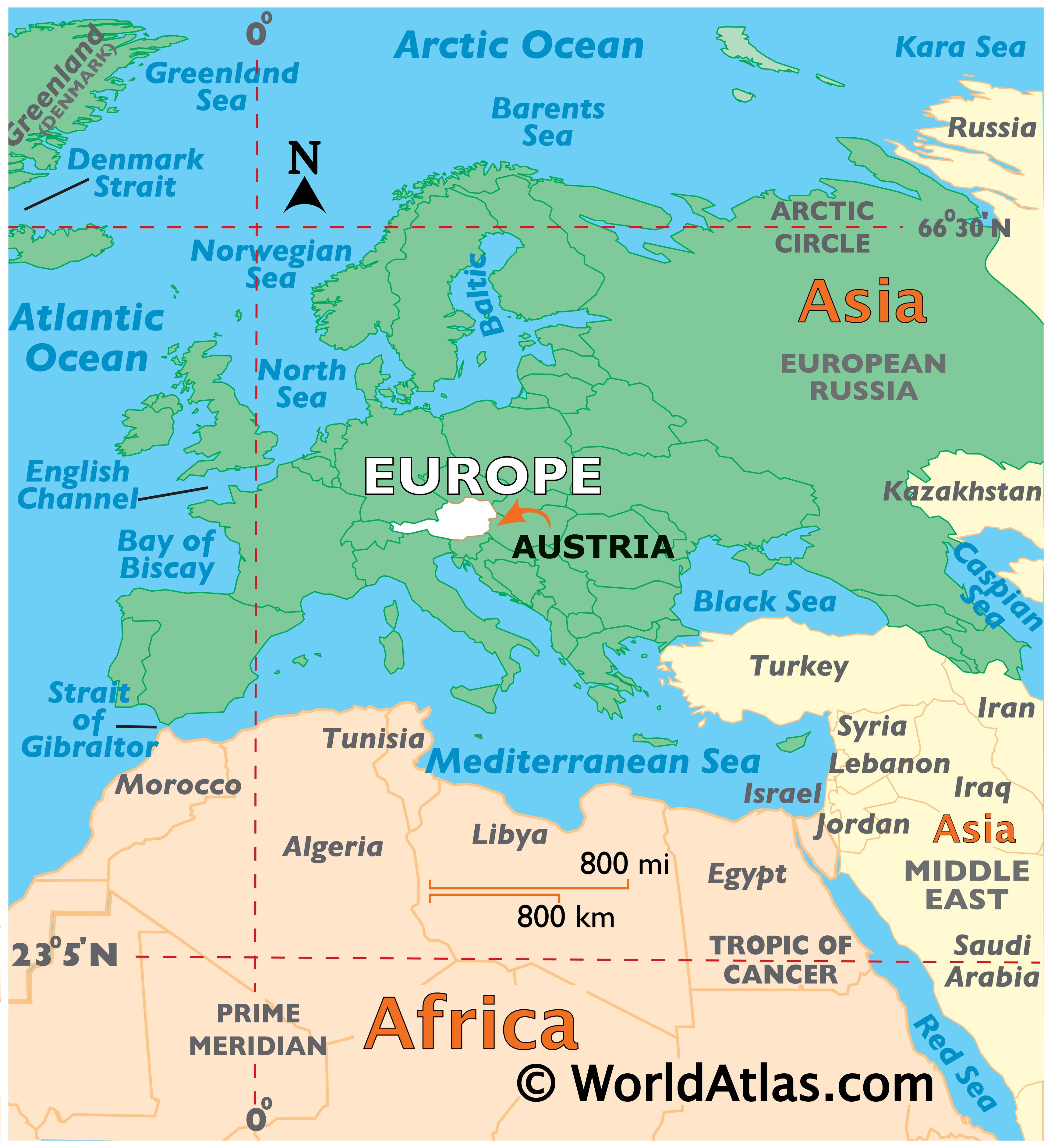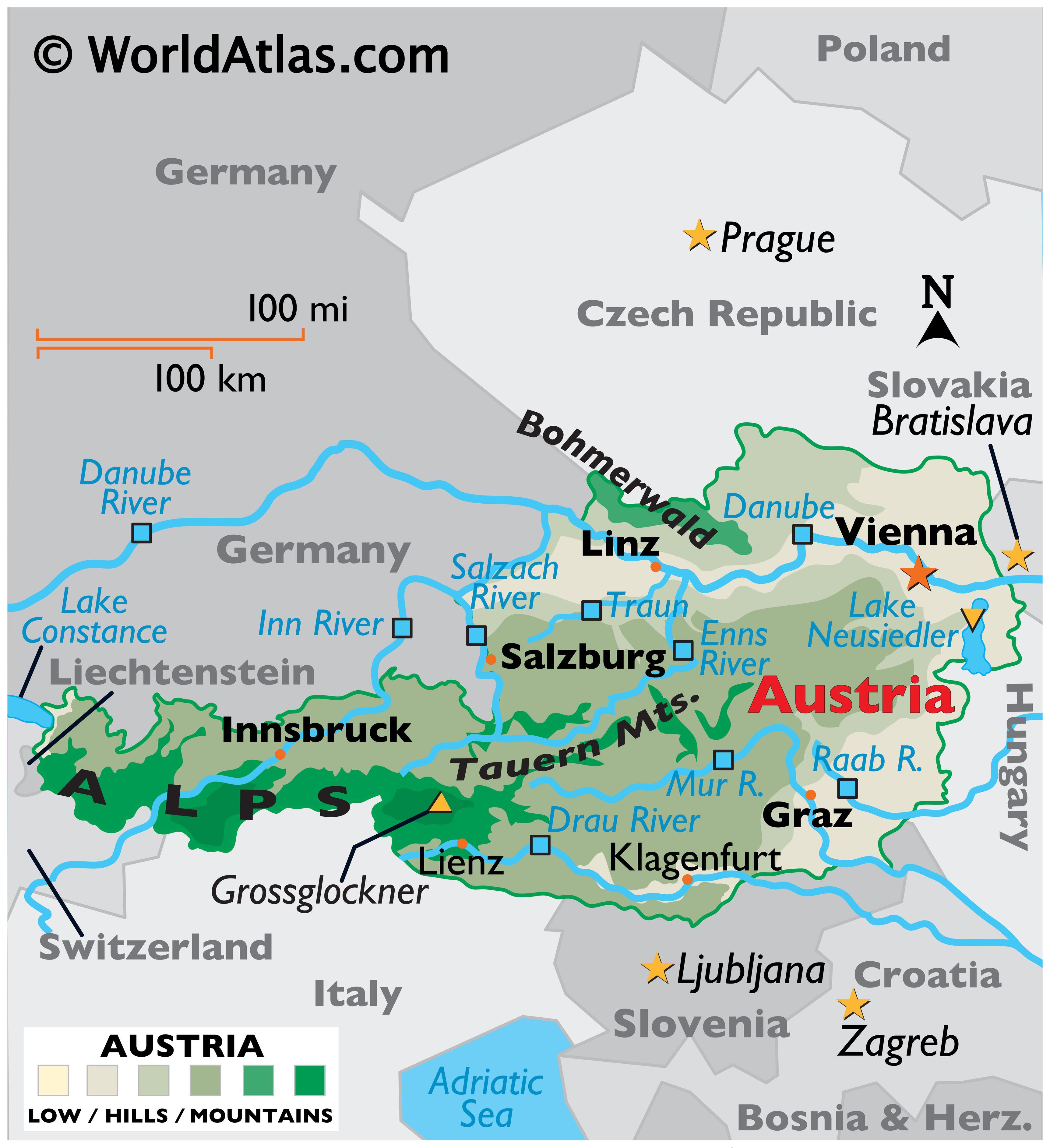
This guide will take you on a detailed journey to pinpoint Austria on the map of Europe. We’ll explore its geographical coordinates, delve into its relationships with its eight neighboring countries, traverse its diverse physical landscape from the Alps to the Danube, and understand why its central position has made it a crucial player on the European stage.
Pinpointing Austria on the European Map
Austria is a landlocked country situated in the southern part of Central Europe. This classification is important; it is not typically considered Western or Eastern Europe, but rather a hub that connects these regions. Its geographical position has historically made it a strategic center for trade, travel, and political influence.
Being ‘landlocked’ means Austria does not have a direct coastline. Instead, it is completely surrounded by other countries, which has profoundly influenced its trade routes, alliances, and cultural exchanges over the millennia. Its access to global trade has historically been through its major rivers, like the Danube, and extensive land-based transport networks.
For those who prefer precise coordinates, the approximate center of Austria is located at 47.5162° N latitude and 14.5501° E longitude. This places it firmly within the temperate climate zone of Central Europe, contributing to its distinct seasons of warm summers and cold, snowy winters, which are ideal for both agriculture and tourism.
Austria’s Neighbors: A Crossroads of Cultures
Austria’s identity is deeply intertwined with its neighbors. It shares borders with an impressive eight sovereign nations, creating a fascinating tapestry of languages, traditions, and economic partnerships. This unique position makes it one of the most connected countries in Europe.
The total length of Austria’s borders is approximately 2,562 kilometers (1,592 miles). Let’s explore each of these borders to understand the intricate web of relationships that define Austria’s place in Europe.
Northern Borders: Germany and the Czech Republic
To the north, Austria shares its longest border with Germany, stretching for 784 kilometers. This is arguably its most significant relationship, built on a shared language and deep historical and cultural ties. Major cities like Salzburg are located very close to the German border, facilitating immense cross-border traffic for work and leisure. The border runs from Lake Constance in the west to the Bohemian Forest in the east.
Also to the north is the Czech Republic (Czechia). This border, which is 362 kilometers long, represents a historic connection dating back to the Habsburg Monarchy. The relationship today is strong, characterized by robust trade and tourism, particularly between regions like South Bohemia and Upper Austria.
Eastern Borders: Slovakia and Hungary
To the east, Austria borders Slovakia for 91 kilometers. A remarkable feature of this border is the proximity of the two national capitals. Vienna and Bratislava are two of the closest capital cities in the world, separated by only about 60 kilometers, fostering a unique ‘twin city’ dynamic.
Further east and south lies Hungary, with a border of 366 kilometers. This boundary is steeped in the shared history of the Austro-Hungarian Empire, which existed until the end of World War I. Today, the border is a symbol of cooperation within the European Union, with strong economic and cultural links.
Southern Borders: Slovenia and Italy
To the south, Austria shares a 330-kilometer border with Slovenia. This border is largely defined by the dramatic mountain ranges of the Karawanks and the Julian Alps. It’s a region of shared Alpine culture and minority language groups, with a significant Slovene-speaking population in the Austrian state of Carinthia.
The border with Italy, running for 430 kilometers, is perhaps the most famous. It cuts through the heart of the Alps, including the iconic Brenner Pass, one of the most important transport routes between Northern and Southern Europe. This border region is a blend of Germanic and Italian cultures, evident in the cuisine, architecture, and languages of South Tyrol (in Italy) and Tyrol (in Austria).
Western Borders: Switzerland and Liechtenstein
Finally, to the west, Austria is bordered by Switzerland (164 km) and the microstate of Liechtenstein (35 km). These borders are dominated by the high peaks of the Alps. The relationship with Switzerland is one of mutual respect between two neutral, mountainous, and prosperous nations. The tiny principality of Liechtenstein is deeply integrated with both Switzerland and Austria, using the Swiss Franc as its currency but maintaining close diplomatic ties with Vienna.
The Geographical Landscape of Austria
Beyond its political borders, Austria’s physical map is one of breathtaking diversity and drama. The country can be broadly divided into three major geographical regions.
First and foremost is the Alpine Region. The Alps cover approximately 62% of Austria’s total area, primarily in the western and southern parts of the country. This makes Austria one of the most mountainous countries in Europe. It is home to hundreds of peaks over 3,000 meters, with the highest being the Grossglockner at 3,798 meters. This landscape is the backbone of Austria’s world-renowned tourism industry, offering unparalleled opportunities for skiing, hiking, and mountaineering.
Flowing through the northern part of the country is the mighty Danube River. This is Europe’s second-longest river and a vital artery for transport, trade, and culture. The most fertile land and the majority of Austria’s population are found in the Danube Valley. The river passes through major cities, including the capital, Vienna, as well as Linz and Krems, shaping their economic and historical development.
The third region comprises the Lowlands and Hills in the east and northeast. This area, part of the Pannonian Plain, is the agricultural heartland of Austria. Here you’ll find rolling hills, vast farmlands, and the unique steppe lake, Neusiedler See, a UNESCO World Heritage site shared with Hungary.
Austria’s Political and Administrative Divisions
- Vienna (Wien): The national capital and a state in its own right, it’s the cultural, economic, and political heart of the country.
- Lower Austria (Niederösterreich): Surrounding Vienna, it’s the largest state by area, known for its wine regions and castles.
- Upper Austria (Oberösterreich): With its capital Linz, it’s a major industrial hub with beautiful lake districts.
- Salzburg: Famous as the birthplace of Mozart and the setting for ‘The Sound of Music’, its capital city is a UNESCO World Heritage site.
- Tyrol (Tirol): The quintessential Alpine state, with its capital Innsbruck, it’s a paradise for winter sports enthusiasts.
- Styria (Steiermark): Known as the ‘Green Heart of Austria’, it boasts lush forests, vineyards, and the city of Graz.
- Carinthia (Kärnten): The southernmost state, famous for its warm lakes and sunny climate.
- Vorarlberg: The westernmost state, bordering Switzerland and Germany, with a distinct Alemannic culture.
- Burgenland: The easternmost state, a long, narrow strip along the Hungarian border, known for its wine and the Neusiedler See.
Austria’s Role in the European Union
Austria became a member of the European Union on January 1, 1995. Its geographical location has made it a crucial member state. It acts as a vital link between the founding members of Western Europe (like Germany and Italy) and the newer members in Central and Eastern Europe (like Hungary, Slovakia, and the Czech Republic).
Historically, Austria maintained a policy of strict neutrality during the Cold War, a status enshrined in its constitution. While it remains militarily neutral and is not a member of NATO, its membership in the EU has integrated it deeply into the political and economic fabric of the continent. Vienna is also host to numerous international organizations, including the OSCE and various UN agencies, further cementing its role as a global diplomatic center.
Why Austria’s Central Location Matters
Austria’s position is not just a geographical fact; it’s a strategic asset with far-reaching implications.
Economic Hub: Its location at the crossroads of major European transport corridors makes it a key logistics and trade hub. The Brenner Pass, for example, is a critical bottleneck for freight moving between Germany and Italy.
Tourism Magnet: Being centrally located and easily accessible by road, rail, and air from all corners of Europe makes it a prime tourist destination. Visitors are drawn to its imperial cities, world-class ski resorts, and pristine natural landscapes.
Cultural Melting Pot: For centuries, Austria was the heart of a vast multinational empire. The legacy of this history is a rich, diverse culture that has absorbed influences from its German, Hungarian, Slavic, and Italian neighbors. This is reflected in its cuisine, music, architecture, and traditions.
Frequently Asked Questions
Is Austria part of Germany?
No. This is a common misconception. Austria is a separate, independent, and sovereign country with its own government, laws, and distinct cultural identity. While German is the official language, the two nations have been separate since the dissolution of the Holy Roman Empire and the formal creation of the Austrian Empire.
What is Austria most famous for?
Austria is world-famous for many things, including its classical music legacy (Mozart, Strauss, Beethoven), imperial history visible in Vienna’s palaces (Schönbrunn, Hofburg), the stunning scenery of the Austrian Alps, delicious pastries like Apfelstrudel and Sachertorte, and cultural exports like ‘The Sound of Music’.
Is Austria an expensive country to visit?
Austria is generally considered to be on par with other Western European countries like Germany or France in terms of cost. While cities like Vienna and Salzburg and popular ski resorts can be expensive, there are many budget-friendly options, especially in rural areas and smaller towns.
Conclusion: More Than Just a Spot on the Map
Locating Austria on a map of Europe reveals far more than just its geographical coordinates. It unveils a country at the very heart of the continent—a nation defined by its connections. Surrounded by eight neighbors, bisected by the Alps and the Danube, and positioned as a bridge between diverse European regions, Austria is a true crossroads.
Its central location has been both a blessing and a challenge throughout its history, placing it at the center of empires, conflicts, and cultural renaissances. Today, it stands as a prosperous, stable, and influential nation whose identity is inextricably linked to its unique place on the European map.