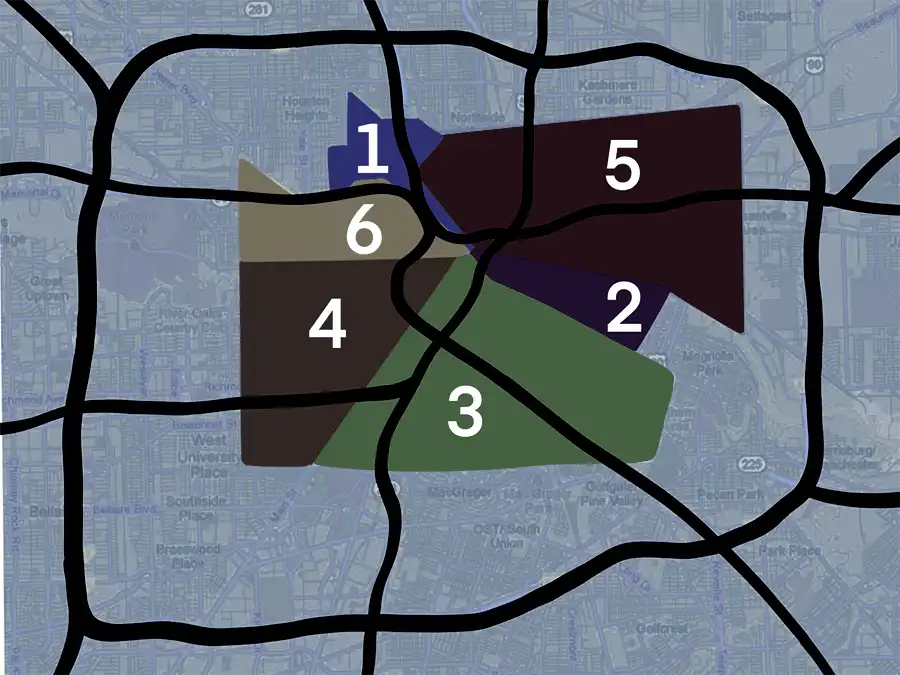
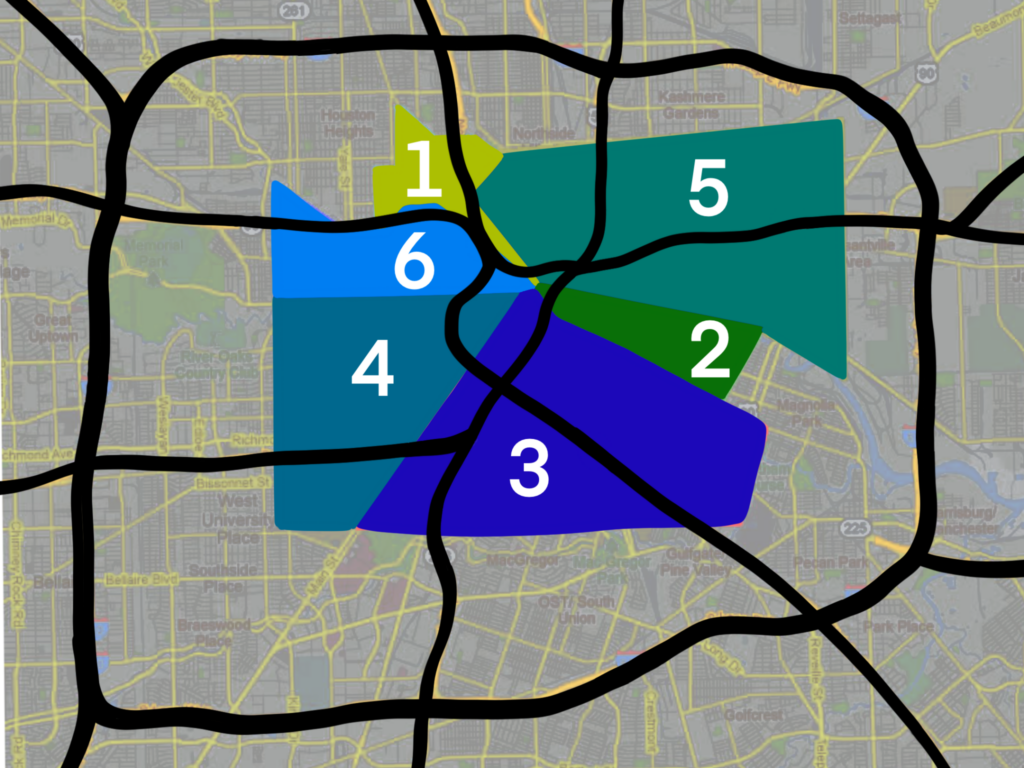
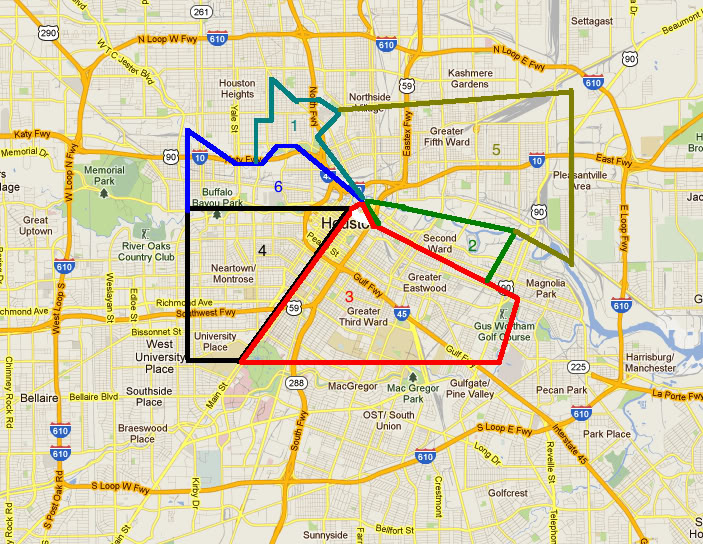
While the political ward system was officially abolished by the city in 1915, the identities of the First through Sixth Wards remain potent. They define communities, influence real estate trends, and serve as markers of historical preservation. This guide provides a detailed textual map and analysis of these six iconic areas.
The History Behind the Houston Wards Map
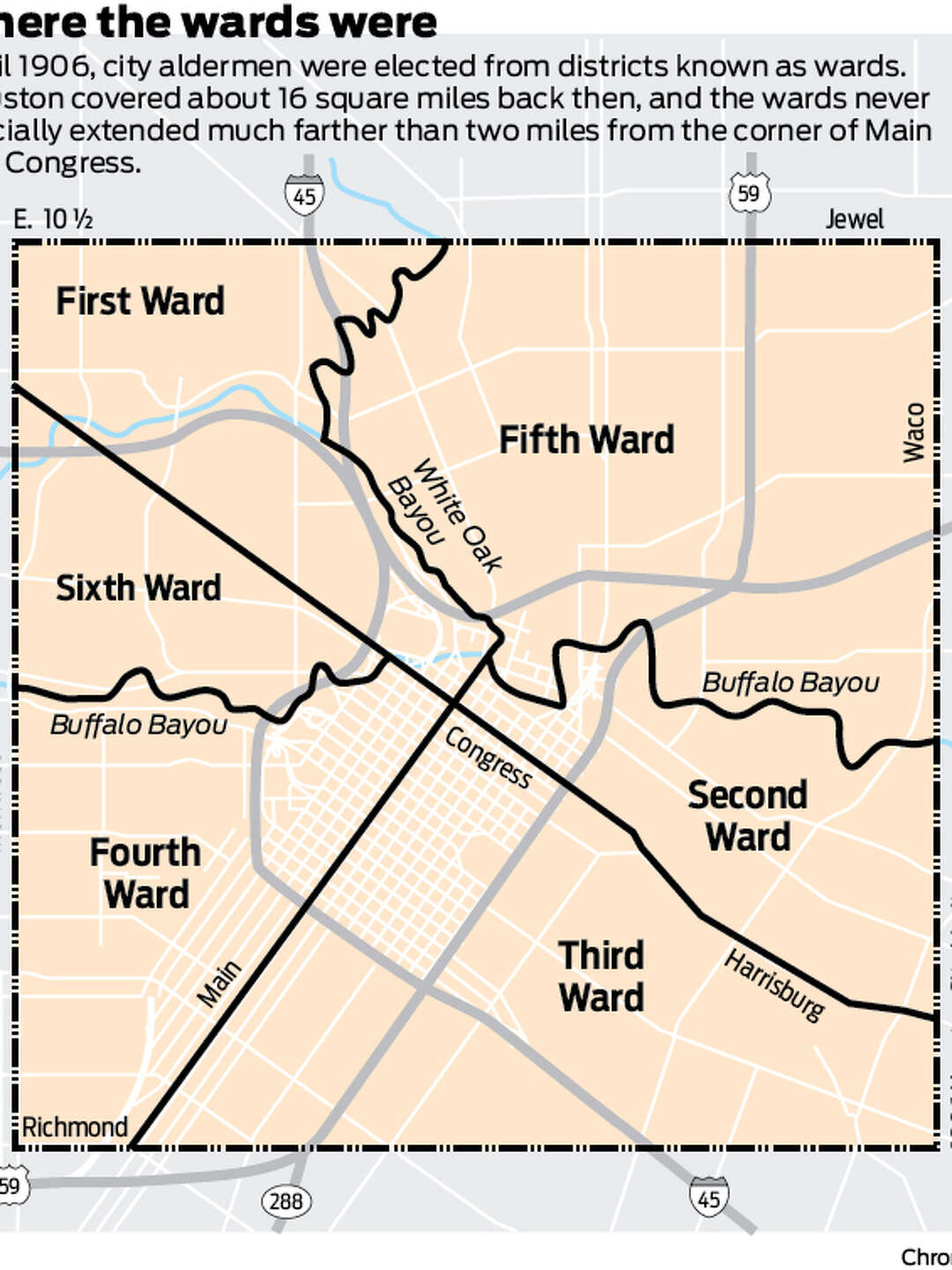
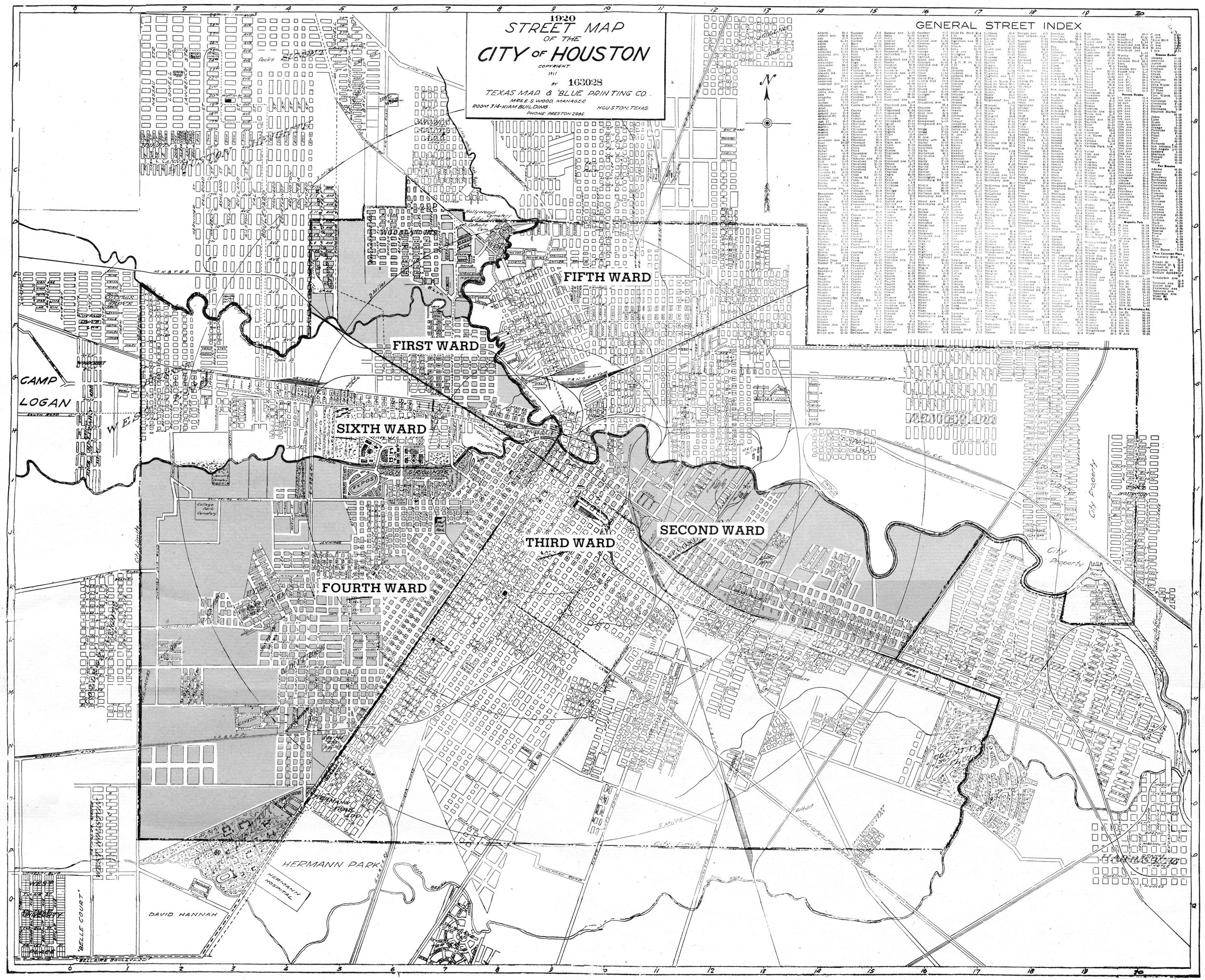
To understand the current map of Houston’s wards, one must look back to the 19th century. Shortly after the Allen brothers founded the city in 1836, it was divided into four distinct political districts. As the population grew, the boundaries shifted, and two additional wards were added, bringing the total to six by the late 1800s.
Geographically, the wards radiate outward from the intersection of Congress and Main Street in Downtown Houston, much like slices of a pie. This central hub served as the axis for the city’s early development. Although the city moved to a distinct council-district system over a century ago, the "Ward" labels stuck, particularly within African American and Hispanic communities where these neighborhoods became centers of culture and commerce.
Today, searching for a "wards in Houston map" reveals a mix of historic preservation districts, gentrifying urban cores, and vibrant cultural hubs. Below, we break down each ward, its location relative to the city center, and its modern-day atmosphere.
First Ward: The Arts District
Location: The First Ward is located directly northwest of Downtown Houston. Its boundaries are generally defined by Washington Avenue to the south, I-45 to the east, and Sawyer Street to the west.
Historically, the First Ward was a working-class neighborhood strategically located near the intersection of the White Oak and Buffalo Bayous. It was a hub for the railroad industry and local markets. In the modern era, the First Ward has undergone a massive transformation, rebranding itself as the Washington Avenue Arts District.
If you look at a contemporary map, you will see this area is densely packed with converted warehouses and silos that now house artist studios, galleries, and breweries. It is one of the smaller wards geographically but has become a heavyweight in the city’s cultural scene. The area is characterized by a mix of restored Victorian cottages and ultra-modern townhomes.
Second Ward: El Segundo Barrio
Location: The Second Ward sits directly east of Downtown, hugging the southern bank of the Buffalo Bayou. It extends eastward towards the Port of Houston.
Known affectionately as Segundo Barrio, this area is one of Houston’s most historically significant Hispanic neighborhoods. As the city expanded industrially in the early 20th century, the Second Ward became a primary destination for Mexican immigrants fleeing the Mexican Revolution.
On the map, the Second Ward encompasses the East End district. It is home to landmarks like Our Lady of Guadalupe Catholic Church and the Navigation Esplanade. The area retains a strong sense of community identity, though it is currently experiencing rapid development due to its proximity to the Dynamo Stadium and the downtown business district.
Third Ward: The Cultural Heart
Location: Located southeast of Downtown, the Third Ward is perhaps the most famous of the six. It is bounded roughly by I-45 to the north, Highway 288 to the west, and Old Spanish Trail to the south.
The Third Ward is widely recognized as the epicenter of Houston’s African American culture and history. It was a center for the Civil Rights movement in the city and is the home of Texas Southern University and the University of Houston. Culturally, it gained international fame as the childhood home of Beyoncé.
Key landmarks on the Third Ward map include Emancipation Park, the oldest park in Houston, which was purchased by former slaves in 1872 to celebrate Juneteenth. Today, the area is a battleground between preserving its rich historical legacy and managing the pressures of gentrification spreading from Midtown.
Fourth Ward: Freedmen’s Town
Location: The Fourth Ward is situated immediately west of Downtown, south of Washington Avenue and north of West Gray.
Historically, the Fourth Ward is the site of Freedmen’s Town, established by over 1,000 freed slaves shortly after the Civil War. It was once a thriving, independent municipality with its own paved streets (made of traditional bricks that still exist in pockets today) and businesses.
However, a look at a modern real estate map shows that much of the original Fourth Ward has been redeveloped into what is now known as Midtown. While Midtown is a bustling area of apartments, bars, and restaurants, preservationists are working tirelessly to protect the remaining historic structures of Freedmen’s Town, which stands as a testament to African American resilience.
Fifth Ward: The Nickel
Location: The Fifth Ward is located northeast of Downtown, separated from the city center by the Buffalo Bayou. It is bounded by I-10 to the south and Jensen Drive to the west.
Often referred to as "The Nickel," the Fifth Ward has a complex history. Originally settled by freedmen and later by working-class immigrants, it became a vibrant community known for its musical heritage, producing legends in blues, jazz, and hip-hop. It is historically a predominantly African American neighborhood.
Geographically, the Fifth Ward is larger than the First or Sixth Wards. While it has faced economic challenges and systemic neglect over the decades, recent revitalization efforts are underway. The map of the Fifth Ward is currently changing, with new infrastructure projects and community investment slowly reshaping the landscape.
Sixth Ward: The Old Sixth
Location: The Sixth Ward is the smallest of the wards, nestled west of Downtown and north of Buffalo Bayou, adjacent to the First Ward.
The Sixth Ward is unique on the Houston map because it contains the Old Sixth Ward Historic District. It boasts the highest concentration of intact Victorian-era homes in the region. Unlike the other wards, which have seen large swaths of demolition and redevelopment, the Sixth Ward has been fiercely protected by historic preservation ordinances.
Walking through the Sixth Ward feels like stepping back in time. The streets are lined with 19th-century cottages, and the neighborhood maintains a quiet, residential atmosphere despite being minutes away from the skyscrapers of the central business district.
Mapping the Bayou City: How the Wards Connect
- North of the Bayou: First Ward, Fifth Ward, Sixth Ward.
- South of the Bayou: Second Ward, Third Ward, Fourth Ward.
This geographical split historically influenced the development of industry and housing. The northern wards were often associated with the railroads that ran parallel to the bayou, while the southern wards expanded toward the universities and the medical center.
Modern Real Estate and Gentrification
When analyzing the wards today, the conversation inevitably turns to gentrification. Because these wards surround the central business district, the land they occupy is incredibly valuable. The "inner loop" (the area inside Interstate 610) is the most coveted real estate in the city.
The Fourth Ward (Midtown) and First Ward (Arts District) have seen the most dramatic changes, with high-density luxury housing replacing older single-family homes. The Second and Third Wards are currently in the midst of this transition, leading to complex dialogues about displacement and cultural erasure.
Frequently Asked Questions About Houston Wards
How many wards are in Houston?
There are six historic wards. While you may hear references to other numbered zones in pop culture or rap lyrics, only Wards 1 through 6 are historically recognized as the original political districts of the city.
Are the wards dangerous?
Safety varies significantly block by block, as is common in any major metropolitan area. Areas like the Sixth Ward and parts of the First and Fourth Wards are highly gentrified and generally considered safe. Parts of the Third and Fifth Wards struggle with higher crime rates historically, but they are also large, community-focused areas with many safe, family-oriented neighborhoods.
Which is the oldest ward in Houston?
The first four wards were established simultaneously in 1839. However, the First Ward is often cited as one of the oldest continuously inhabited areas close to the original port.
Conclusion
The wards in Houston map represents more than just geography; it represents the DNA of the city. From the historic Victorian architecture of the Sixth Ward to the vibrant cultural legacy of the Third Ward and the industrial grit of the Fifth, these neighborhoods tell the story of Houston’s evolution.
For visitors and locals alike, exploring these wards offers a glimpse into the diverse communities that built the Bayou City. Whether you are looking for art, history, food, or music, the six wards provide a roadmap to the true character of Houston.