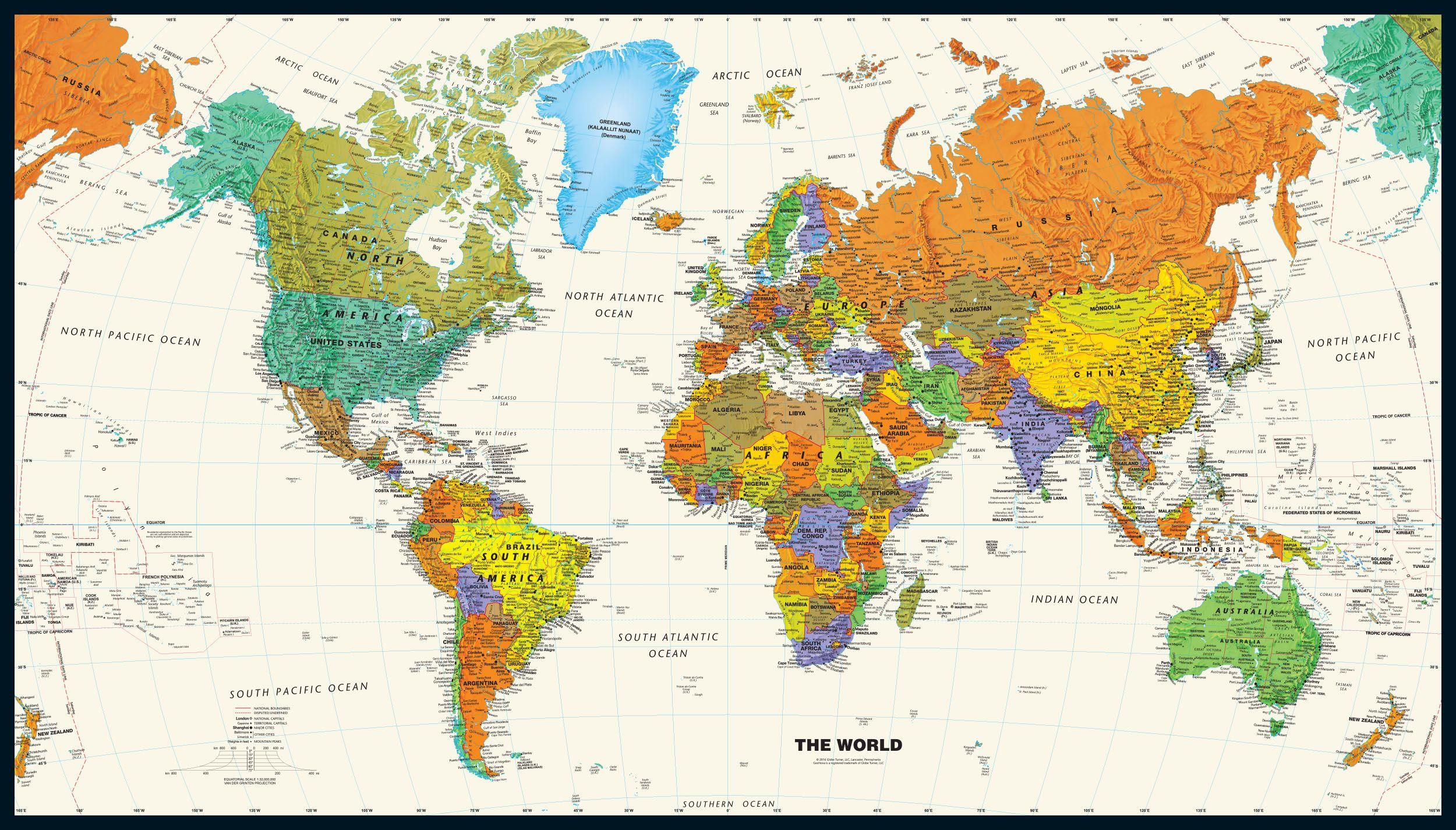
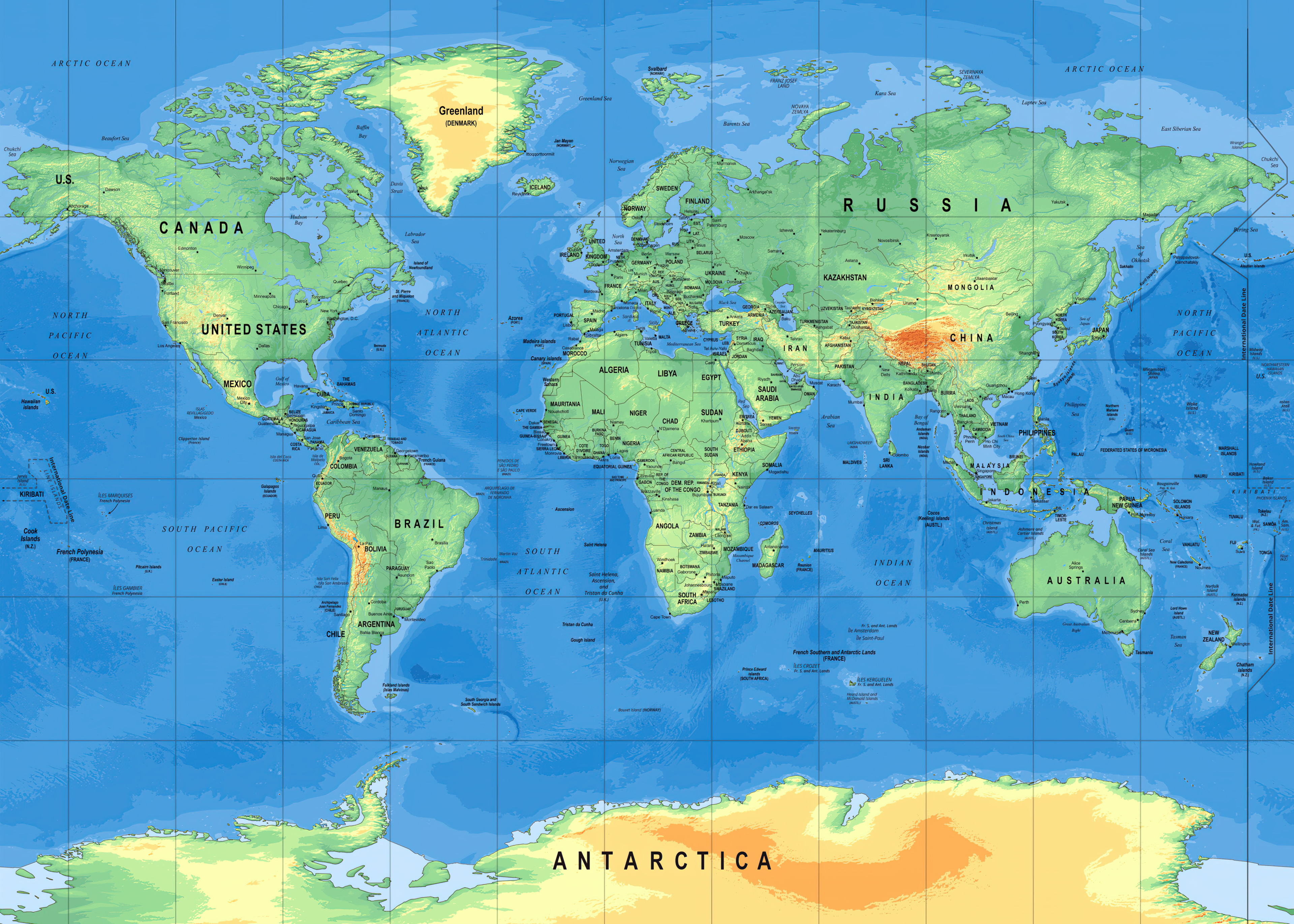
This comprehensive guide aims to navigate the landscape of free cartography. We will explore the best repositories for high-resolution downloads, interactive tools, and educational resources. Furthermore, we will delve into the technical aspects of digital mapping, including file formats and projection types, ensuring you select the perfect map for your specific needs.
Why Quality Matters in Free World Maps
When searching for a free world map, quality and accuracy are paramount. A low-resolution image might look acceptable on a smartphone screen, but it will appear pixelated and unreadable when printed or used in a presentation. Furthermore, geopolitical boundaries shift; a map from ten years ago may not accurately reflect current sovereign states, such as the changes in Sudan or the renaming of specific regions.
Professional-grade maps provide clarity through high DPI (dots per inch) for printing and vector-based scalability for digital design. Additionally, reliable sources ensure that the projection used—the method of flattening the globe onto a 2D surface—is appropriate for the intended use, minimizing distortion of landmass sizes and distances.
Top Sources for Free Interactive World Maps
For users requiring dynamic data, zoom capabilities, and route planning, interactive maps are superior to static images. These platforms utilize satellite imagery and GIS (Geographic Information Systems) data to provide real-time accuracy.
1. Google Maps and Google Earth
Undoubtedly the most popular mapping service globally, Google Maps offers an unparalleled level of detail. For a more immersive experience, Google Earth renders a 3D representation of the globe based on satellite imagery. While these tools are free for personal use, they are primarily designed for navigation and exploration rather than for downloading static files for print.
2. OpenStreetMap (OSM)
Often described as the ‘Wikipedia of Maps,’ OpenStreetMap is a collaborative project that creates a free, editable map of the world. It is built by a community of mappers that contribute and maintain data about roads, trails, cafés, railway stations, and much more. The data is free to use under an open license, making it a favorite for developers and open-source enthusiasts.
3. Bing Maps
Microsoft’s Bing Maps remains a strong competitor, offering high-quality ‘Bird’s Eye’ views and comprehensive street maps. It serves as an excellent alternative for those who want to cross-reference geographical data or prefer a different interface.
Best Repositories for High-Resolution Printable Maps
If your goal is to print a map for a classroom, office wall, or study guide, you need static, high-resolution files. The following sources are government or educational institutions that provide public domain or creative commons maps.
The CIA World Factbook
The Central Intelligence Agency (CIA) maintains the World Factbook, which provides public domain maps. These are excellent for reference as they are copyright-free. You can find physical maps, political maps, and regional maps available for download in JPEG and PDF formats. Because they are in the public domain, you can modify, reproduce, and distribute them without fear of copyright infringement.
The Library of Congress
For historical context and vintage aesthetics, the Library of Congress offers a massive digital collection. While many are historical, they also house contemporary reference maps. These are often available in extremely high-resolution TIFF files, perfect for large-format printing.
United Nations Map Library
The UN provides a collection of general maps and peacekeeping deployment maps. These are highly accurate regarding international borders and are often used in academic and diplomatic settings. They are typically available as PDF downloads.
Understanding Map Types: Which One Do You Need?
When you search for a ‘map of the world free’, you will encounter several distinct types. Understanding the difference ensures you download the right tool for the job.
Political World Maps
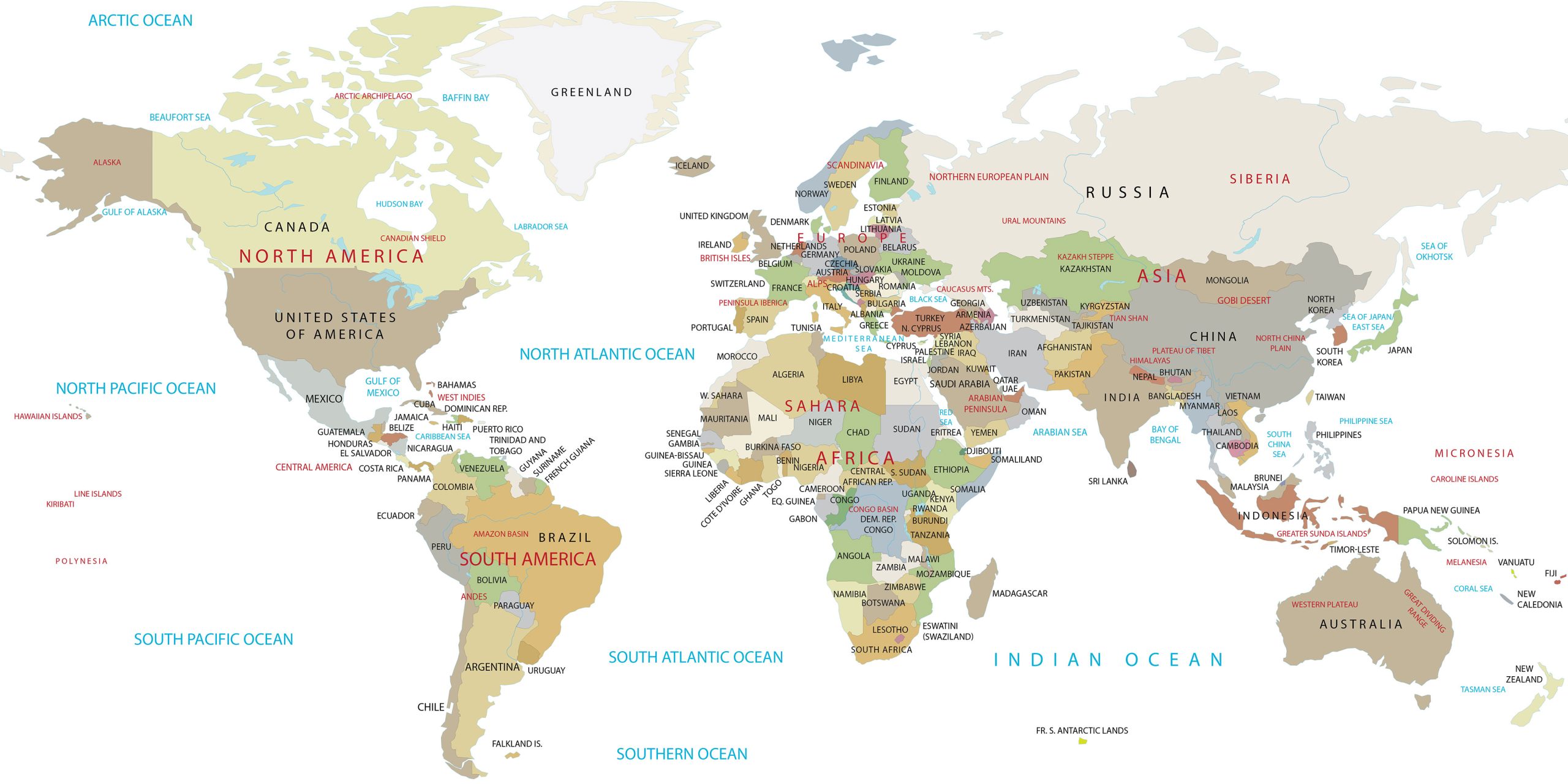
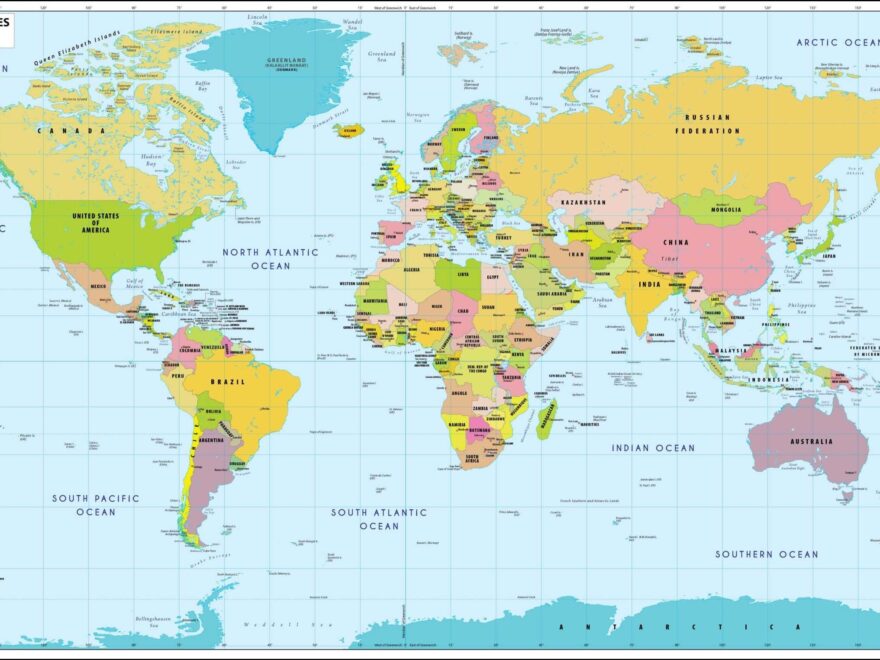
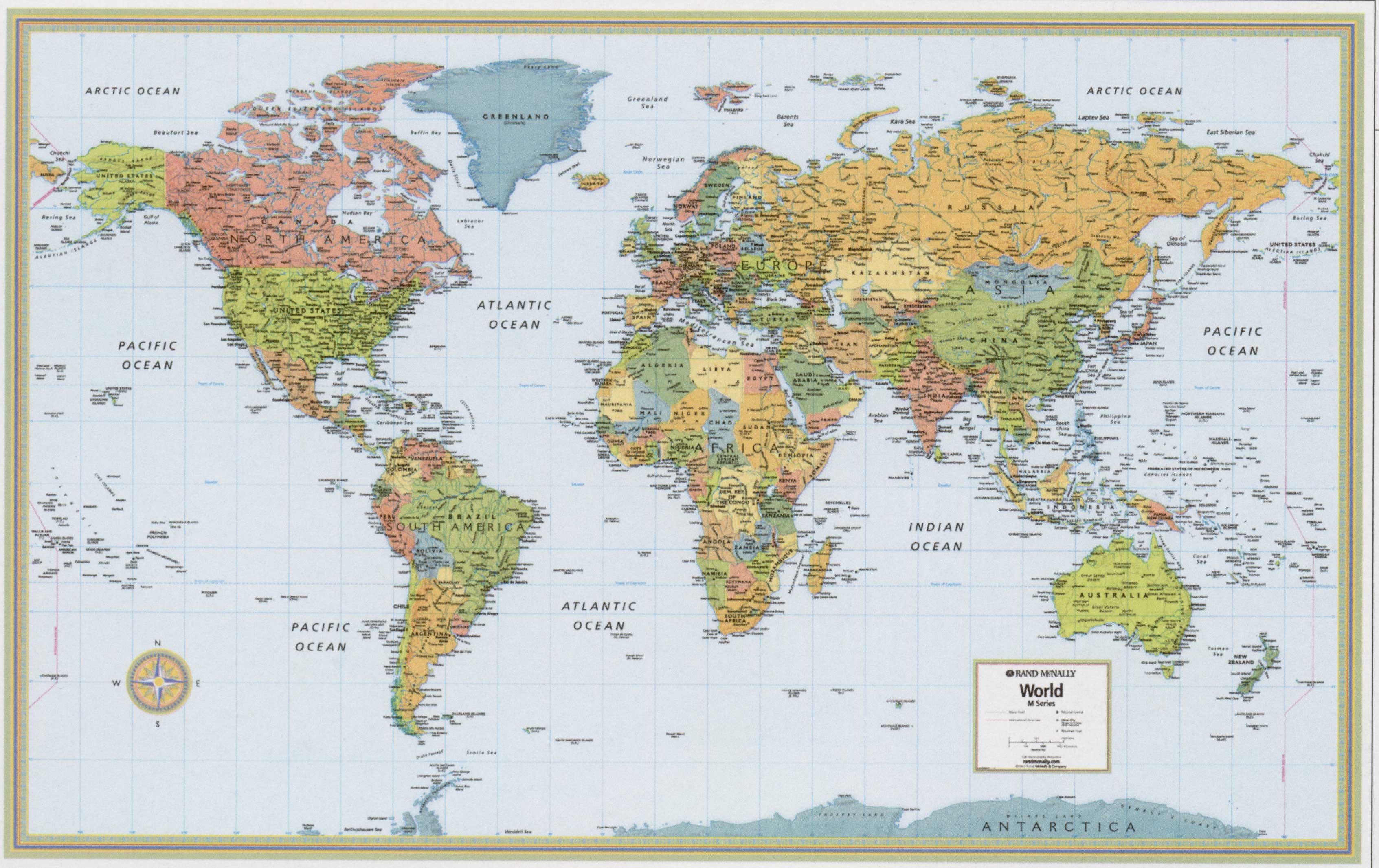
A political map focuses on state and national boundaries. It highlights countries, capitals, and major cities, often using bright colors to differentiate between nations. This is the standard map used in classrooms to teach geopolitics.
Physical World Maps
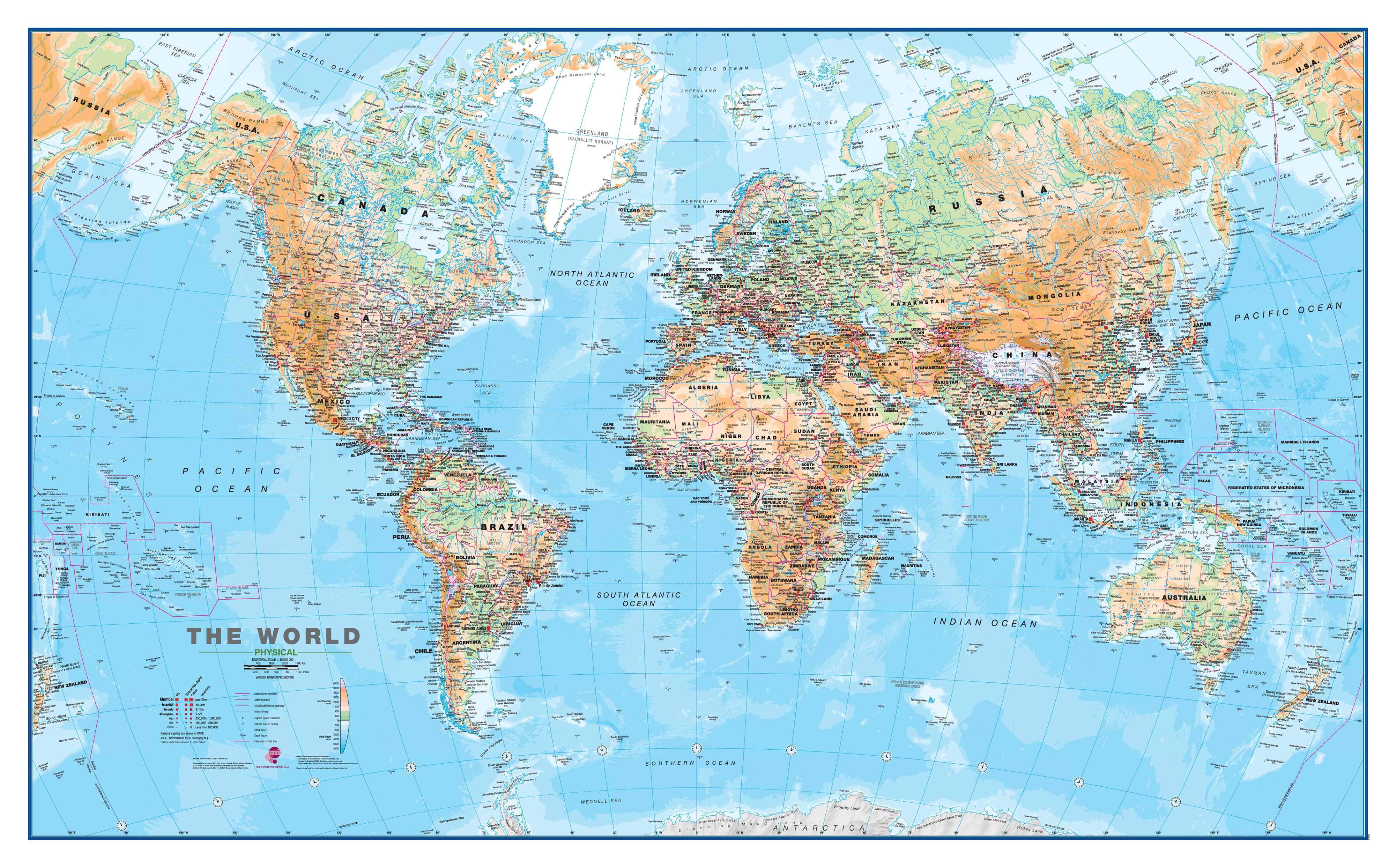
A physical map emphasizes the natural features of the earth. It uses color gradients (hypsometric tints) to show elevation, highlighting mountain ranges, deserts, plains, and bodies of water. These are essential for understanding physical geography and climate patterns.
Topographic and Thematic Maps
Topographic maps use contour lines to represent elevation and terrain shape in detail, mostly used by hikers and engineers. Thematic maps, on the other hand, focus on specific data sets, such as population density, climate zones, or economic resources.
Free Vector Maps for Designers
Graphic designers often require maps that can be scaled infinitely without losing quality. For this, raster images (JPG, PNG) are insufficient; vector formats (SVG, EPS, AI) are required.
Sites like FreeVectorMaps.com and Vecteezy offer stylized world maps. However, it is crucial to check the licensing. Some are free for personal use but require attribution, while others may require a paid subscription for commercial use without attribution. Always look for files that offer a ‘Creative Commons’ license if you have no budget for assets.
Educational Resources: Blank and Outline Maps
For teachers and homeschooling parents, blank maps are vital teaching aids. A blank outline map allows students to label countries, rivers, and mountain ranges, facilitating active learning.
World Atlas and National Geographic (education section) are excellent sources for printable outline maps. These are usually optimized for standard letter-sized paper and are designed to be printer-friendly, using minimal black ink.
The Issue of Map Projections
It is impossible to flatten a sphere onto a rectangle without distortion. This mathematical problem is solved by ‘projections.’ The most common projection is the Mercator projection, which preserves direction but severely distorts the size of landmasses near the poles (making Greenland look as large as Africa).
When looking for a more accurate representation of relative sizes, look for the Gall-Peters projection or the Winkel Tripel projection (the latter is used by National Geographic). Understanding projections helps in selecting a map that conveys the correct message, especially in educational contexts.
Navigating Copyright: Free vs. Royalty-Free
A common misconception is that if an image is on Google Images, it is free to use. This is incorrect. Most maps are protected by copyright.
Public Domain: These maps (like those from the CIA or NASA) belong to the public and can be used for any purpose, including commercial products.
Creative Commons (CC): These maps are free to use, but often come with conditions, such as ‘Attribution’ (you must credit the creator) or ‘Non-Commercial’ (you cannot sell the work).
Royalty-Free: This usually refers to paid stock images where you pay a one-time fee to use the image multiple times. Do not confuse ‘Royalty-Free’ with ‘Free of Charge’.
Conclusion
Finding a high-quality map of the world free of charge is entirely possible if you know where to look. For accurate, up-to-date data, government resources like the CIA World Factbook and the USGS are unbeatable. For interactive exploration, Google and OpenStreetMap lead the industry. For designers and educators, specialized repositories offer vector and outline maps tailored to specific needs.
By understanding the nuances of file formats, map types, and licensing, you can secure the perfect cartographic resources for your project without spending a dime. Always verify the date of the map to ensure geopolitical accuracy and respect the licensing terms to support the creators and institutions that make these resources available.