Geographic Coordinates and Hemisphere
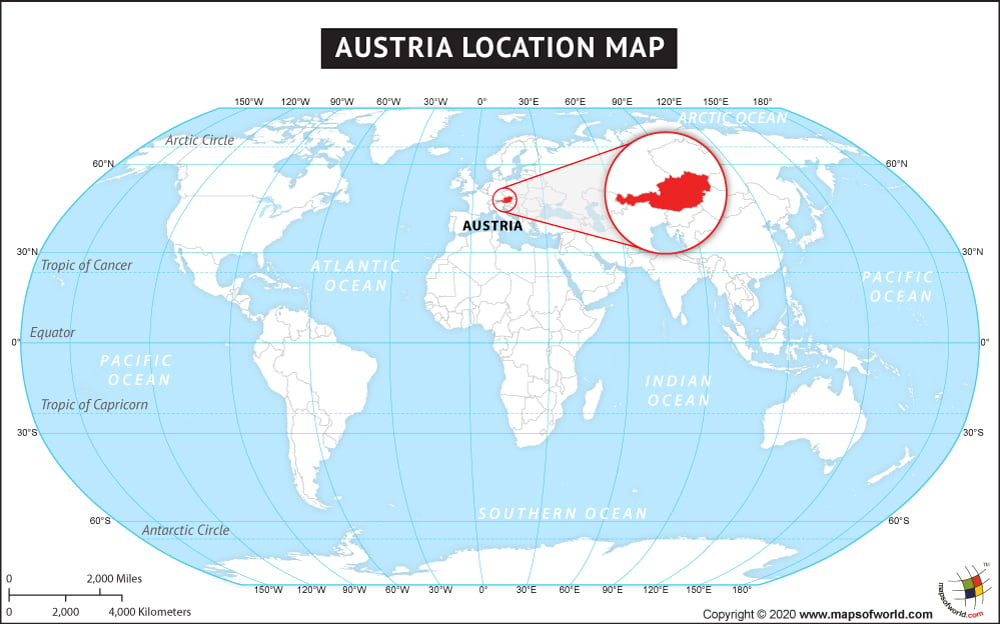
To pinpoint Austria scientifically, one must look at its geographic coordinates. Austria is located in the Northern Hemisphere and the Eastern Hemisphere. Specifically, it lies between latitudes 46° and 49° N, and longitudes 9° and 18° E. This places it roughly halfway between the equator and the North Pole, contributing to its temperate, transitional climate.
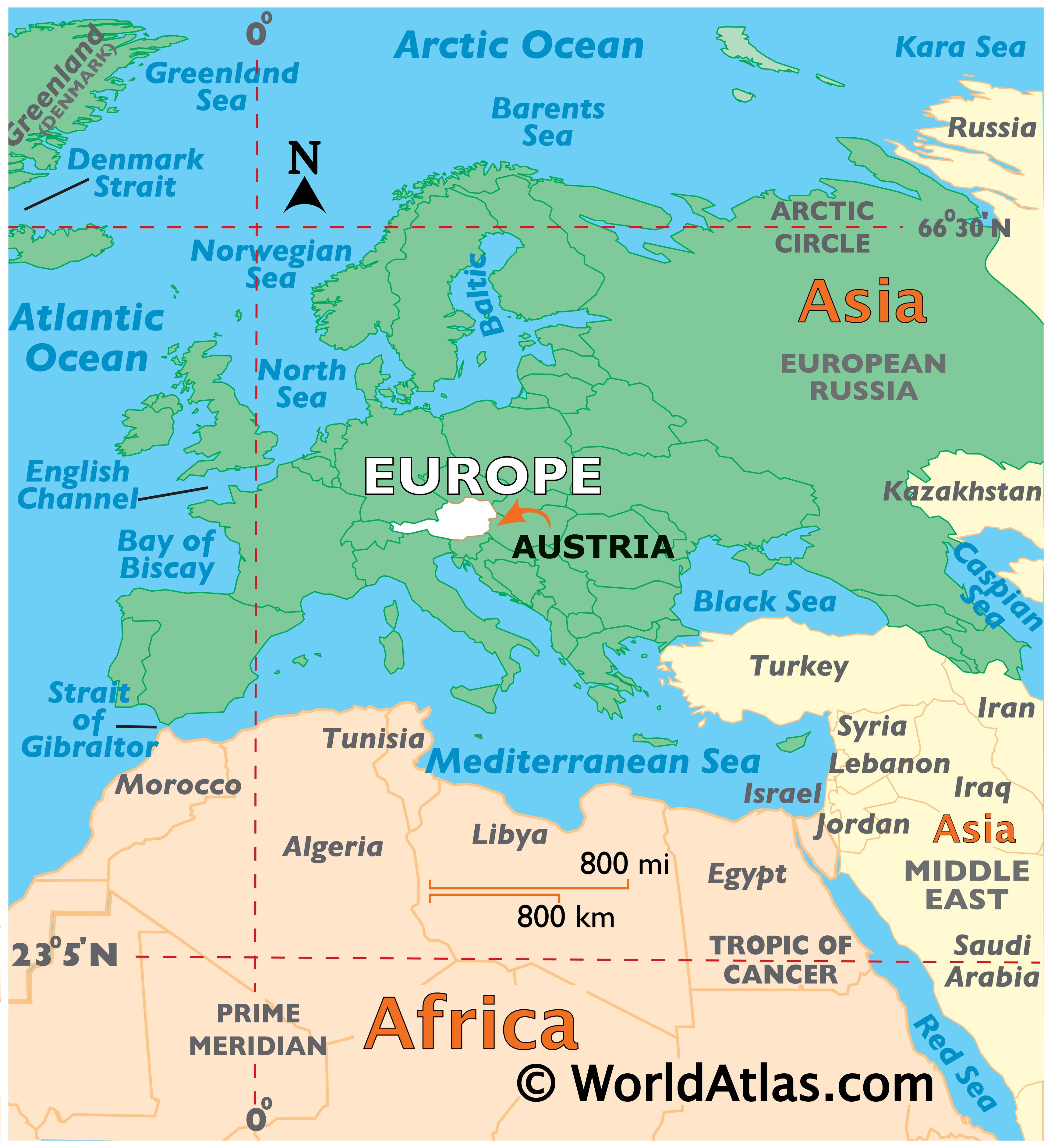
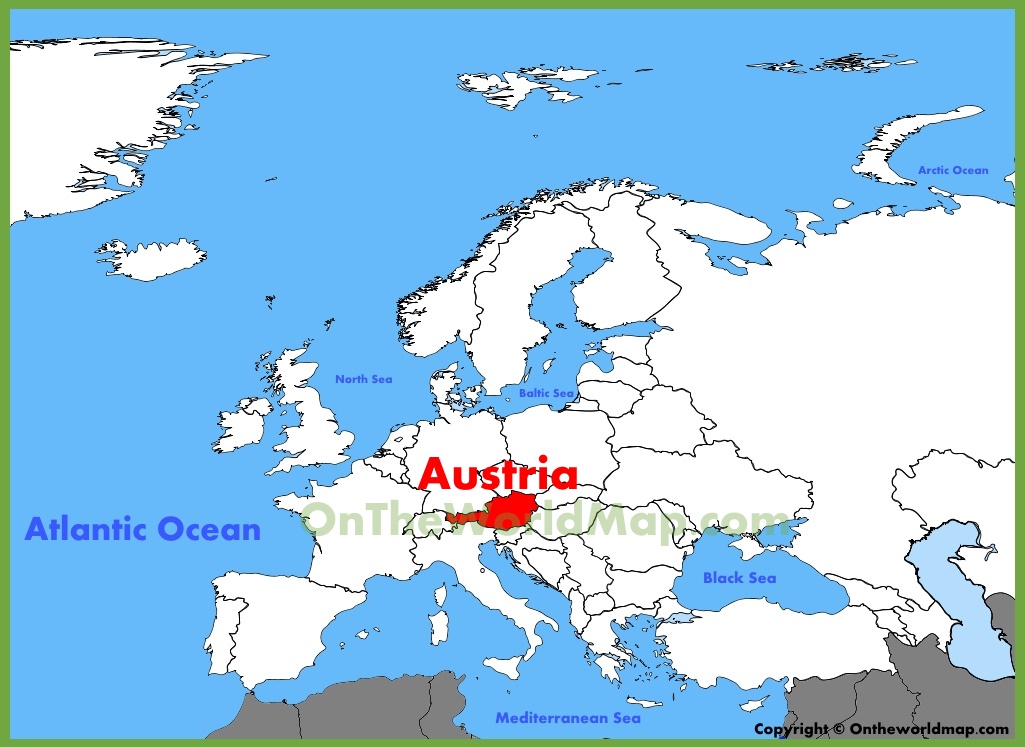
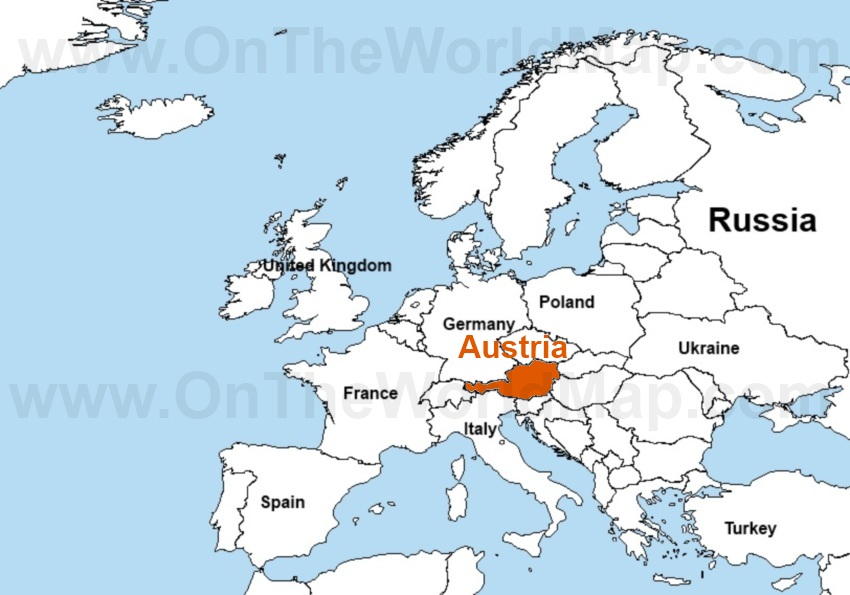
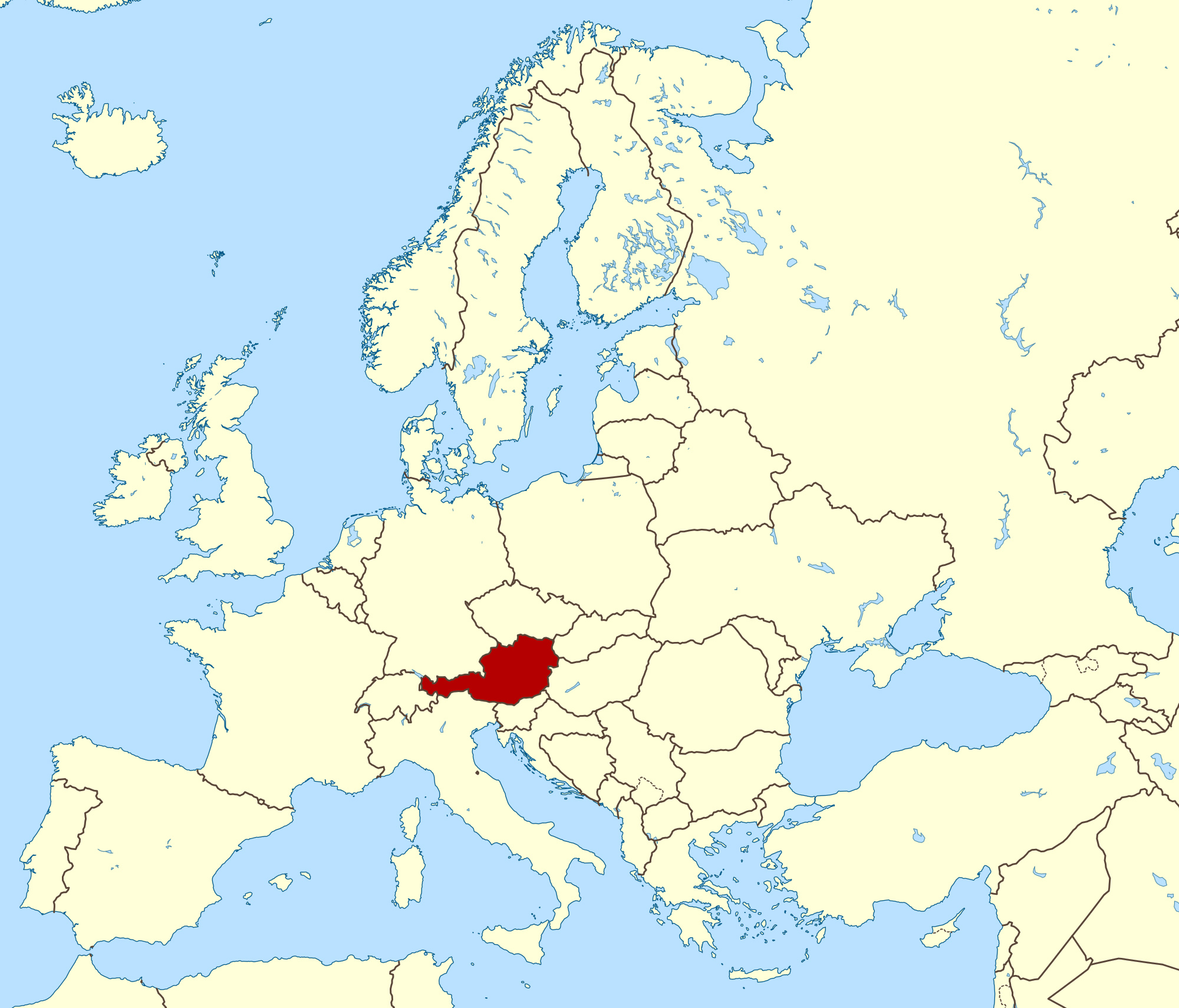
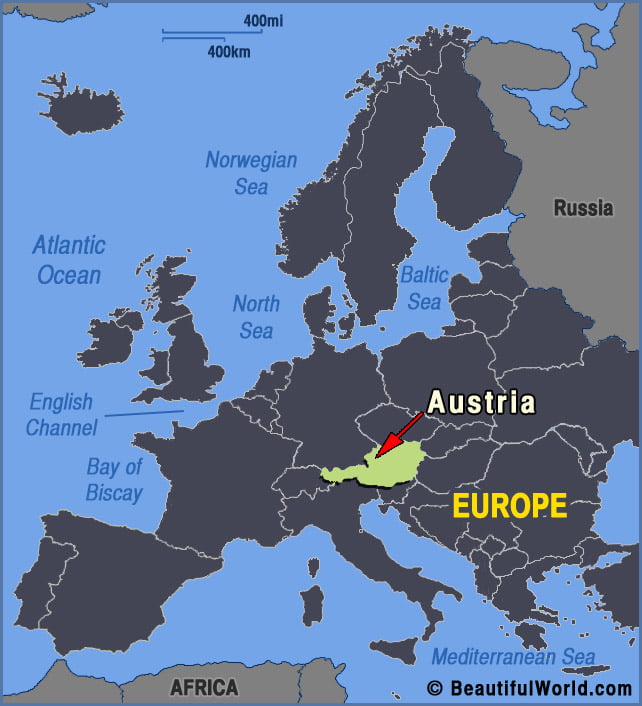
On a standard map of Europe, you will find Austria positioned somewhat centrally, slightly to the south. It is often described as being shaped somewhat like a panhandle or a guitar, stretching horizontally from west to east. Its central location has historically made it a crossroads for trade, culture, and conflict throughout European history.
A Landlocked Country in the Heart of Europe
One of the defining characteristics of Austria’s location is that it is a landlocked country. This means it has no direct access to the open sea. While this might seem like a disadvantage for trade in ancient times, Austria compensated by utilizing the mighty Danube River, which flows from west to east through the northern part of the country, connecting it to the Black Sea via neighboring nations.
Being landlocked also influences the country’s climate and culture. Without the moderating influence of an ocean, Austria experiences a continental climate with distinct seasons: cold, snowy winters perfect for skiing, and warm, pleasant summers ideal for hiking and sightseeing.
The Eight Neighbors: Who Borders Austria?
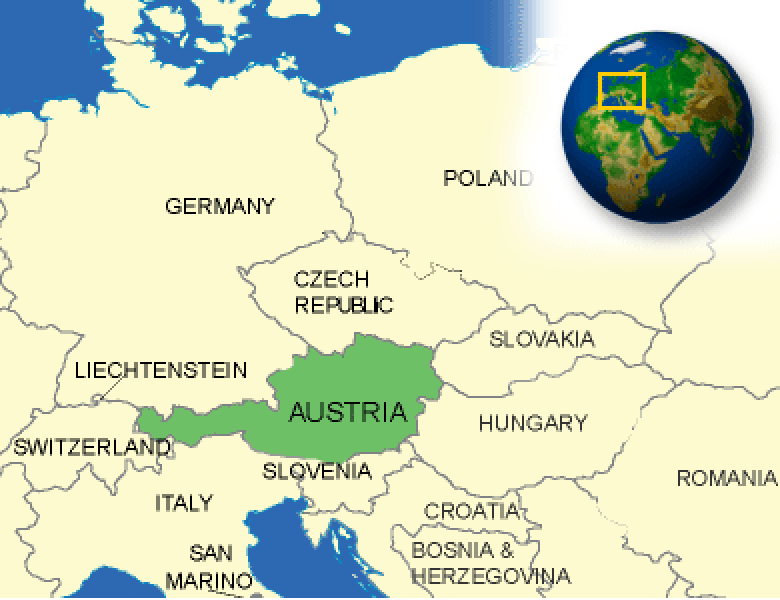
- Germany: Situated to the northwest, Germany shares a long border and a common language with Austria.
- Czech Republic (Czechia): Located to the north.
- Slovakia: Situated to the northeast. The capital cities of Vienna (Austria) and Bratislava (Slovakia) are famously close, separated by only about 60 kilometers.
- Hungary: Located to the east, sharing a deep historical connection through the Austro-Hungarian Empire.
- Slovenia: Situated to the south.
- Italy: Located to the south and southwest, bordering the famous Tyrol region.
- Switzerland: Situated to the west.
- Liechtenstein: A tiny principality located to the west, sandwiched between Austria and Switzerland.
This central position means that Austria acts as a physical link between the Germanic cultures of the north and west, the Slavic cultures of the east and south, and the Romance cultures of the south. This unique blend is evident in Austrian architecture, cuisine, and dialect variations.
Physical Geography: The Dominance of the Alps
When locating Austria on a physical relief map, the first thing you will notice is the texture of the terrain. Austria is predominantly a mountainous country. The Alps cover approximately 62% of the country’s land area, primarily in the west and south. This region is known as the Eastern Alps.
The highest point in Austria is the Grossglockner, which stands at 3,798 meters (12,461 feet). Because of this topography, the western part of the country (including states like Tyrol and Vorarlberg) is rugged and alpine, while the eastern part (including Vienna and the Burgenland) descends into lower hills and the Pannonian Basin.
The Danube River
While the mountains define the west and south, the Danube River defines the north. It is the second-longest river in Europe and serves as a vital artery for transport and tourism. The river enters Austria from Germany at Passau and flows eastwards past Linz and Vienna before entering Slovakia. If you are looking at a map, tracing the blue line of the Danube is one of the easiest ways to spot Austria’s northern regions.
Political Geography: EU and Schengen Area
Politically, locating Austria involves understanding its alliances. Austria has been a member of the European Union (EU) since 1995. This membership is crucial for travelers and businesses, as it integrates Austria into the European single market.
Furthermore, Austria is part of the Schengen Area. This means that for travelers moving between Austria and its Schengen neighbors (Germany, Italy, Slovakia, Slovenia, Hungary, Czech Republic, Switzerland, and Liechtenstein), there are typically no border controls. You can drive from Munich to Salzburg or take a train from Vienna to Prague without stopping for passport checks, making Austria a seamless hub for European travel.
It is also important to note that Austria uses the Euro (€) as its currency, firmly placing it within the Eurozone. However, unlike most of its neighbors, Austria is constitutionally neutral and is not a member of NATO, although it maintains a partnership with the alliance.
The Nine Federal States
- Vienna (Wien): The capital city and a state in its own right, located in the northeast.
- Lower Austria (Niederösterreich): Surrounds Vienna and borders Czechia and Slovakia.
- Upper Austria (Oberösterreich): Located west of Lower Austria, bordering Germany and Czechia.
- Salzburg: Famous for Mozart and ‘The Sound of Music’, located centrally near the German border.
- Tyrol (Tirol): An alpine state in the west, divided into North and East Tyrol.
- Vorarlberg: The westernmost state, bordering Switzerland and Liechtenstein.
- Carinthia (Kärnten): The southernmost state, bordering Italy and Slovenia.
- Styria (Steiermark): Known as the ‘Green Heart’ of Austria, located in the southeast.
- Burgenland: The easternmost state, bordering Hungary.
Common Confusion: Austria vs. Australia
It is a humorous but common geographical error to confuse Austria with Australia. While the names sound similar, the locations could not be more different. Austria is a small, landlocked republic in Central Europe. Australia is a massive continent-country in the Southern Hemisphere, surrounded by the Indian and Pacific Oceans.
There are no kangaroos in Austria (except in zoos), and the climate is alpine rather than outback. This confusion is so prevalent that souvenir shops in Vienna often sell t-shirts with the slogan: ‘No Kangaroos in Austria.’ When searching on a map, look for Austria above Italy, not below Indonesia.
Why Austria’s Location Matters
Austria’s location has historically made it a buffer zone and a meeting place. During the Cold War, it sat right on the edge of the Iron Curtain, maintaining neutrality between the Western and Eastern blocs. Today, this location serves as a logistical hub for companies expanding into Eastern Europe.
Vienna, the capital, is one of the four headquarters of the United Nations, alongside New York, Geneva, and Nairobi. This status is largely due to Austria’s central, neutral location and its history of diplomacy. The city hosts the IAEA (International Atomic Energy Agency) and OPEC (Organization of the Petroleum Exporting Countries), despite Austria not being a major oil producer.
How to Travel to Austria
Because of its central location, Austria is incredibly accessible. Vienna International Airport (VIE) is a major hub connecting Europe to the Middle East and Asia. The country’s rail network, operated primarily by ÖBB (Austrian Federal Railways), is among the best in the world.
High-speed trains like the Railjet connect Vienna to Munich, Budapest, Prague, and Zurich in just a few hours. The central location means that a trip to Austria can easily be combined with visits to multiple other European nations, making it an ideal base for a ‘Grand Tour’ of Central Europe.
Conclusion
In summary, Austria is located in the heart of Central Europe, north of Italy and east of Germany. It is a landlocked nation defined by the majestic Alps in the west and the Danube basin in the east. Sharing borders with eight diverse countries, it serves as a vital cultural and economic bridge within the European Union.
Whether you are planning a ski trip to Tyrol, a cultural excursion to Vienna, or simply studying geography, knowing exactly where Austria is on the world map helps appreciate its unique blend of Germanic, Slavic, and Romance influences. It is a small country with a massive footprint in history and culture, perfectly positioned at the crossroads of the continent.