From the earliest sketches of Roman Londinium to the intricate digital models of today’s sprawling metropolis, maps have been indispensable tools for understanding, navigating, and planning London. They tell stories of growth, destruction, resilience, and ambition, offering a visual chronicle of one of the world’s most dynamic cities.
A Journey Through London’s Mapping History
The story of London’s maps is as old as the city itself. Early cartographic efforts were rudimentary, often serving military or administrative purposes. These initial representations were less about precise geography and more about depicting key landmarks and boundaries.
Early Cartography: From Roman Londinium to Medieval Cityscapes
The Romans undoubtedly created maps of their settlement, Londinium, though few have survived. Medieval maps, often found in chronicles or as decorative elements, provided early bird’s-eye views, albeit with significant artistic license. These early depictions highlight the walled city, the River Thames, and prominent structures like St. Paul’s Cathedral and London Bridge, emphasizing the city’s strategic importance.
The famous ‘Copperplate Map’ (circa 1550s) and the ‘Agas Map’ (circa 1561-1570) are among the earliest detailed surveys of London, offering invaluable insights into the Tudor city before the Great Fire. These early works reveal a dense, bustling urban fabric, with narrow streets and numerous churches.
The Great Fire and Its Cartographic Legacy
The devastating Great Fire of London in 1666 marked a pivotal moment in the city’s cartographic history. Maps became crucial for assessing the damage, planning reconstruction, and allocating property. Christopher Wren’s ambitious, albeit ultimately unexecuted, plans for a new London city layout are famously depicted in detailed maps, showcasing a vision of broad avenues and grand public spaces.
John Ogilby’s ‘Survey of London’ (1676) is another monumental work following the fire, providing highly accurate street-level detail, which was essential for rebuilding efforts and property demarcation. These post-fire maps underscore the practical, problem-solving role of cartography.
The Georgian and Victorian Eras: Precision and Expansion
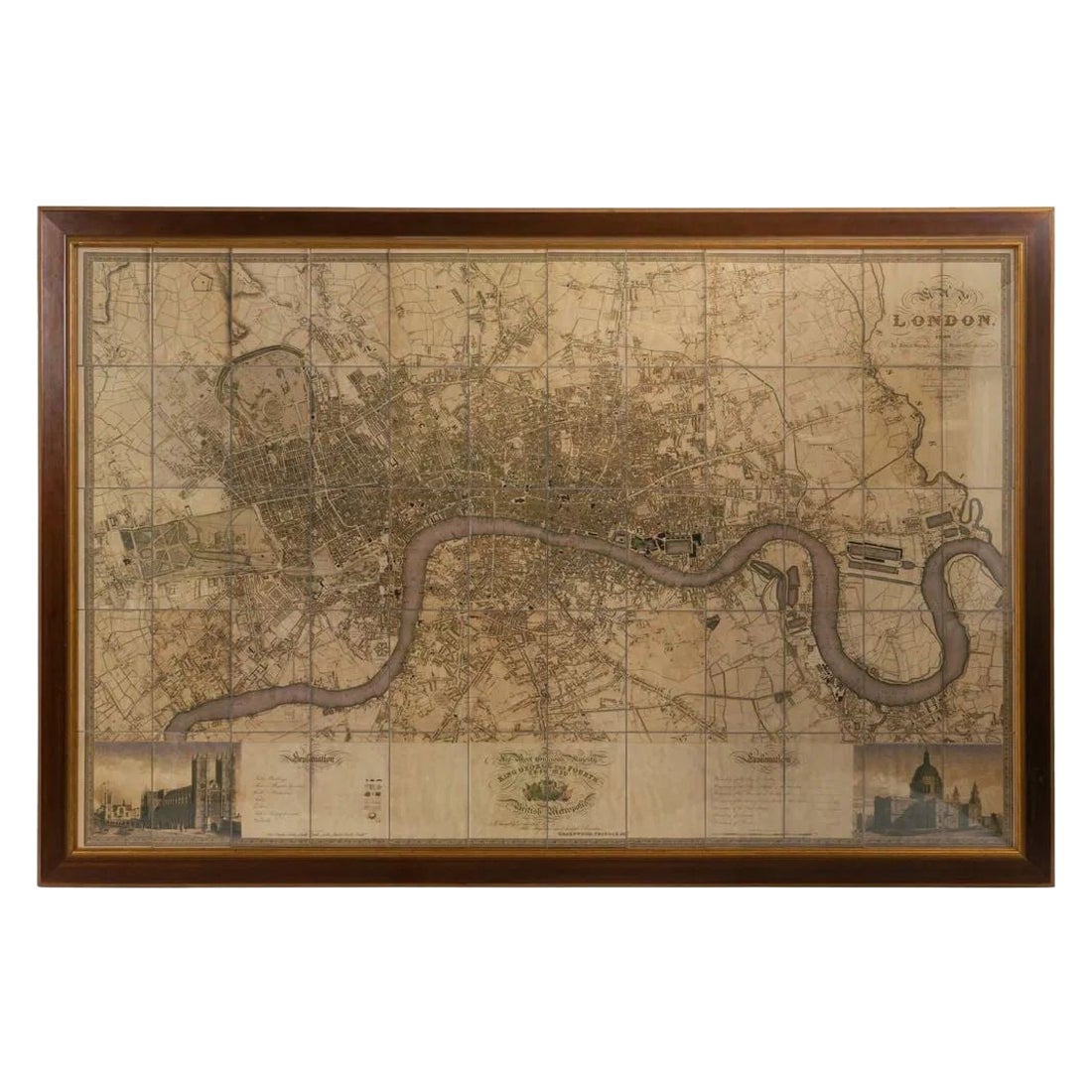
The 18th and 19th centuries saw an explosion in cartographic precision and detail. As London expanded rapidly, maps became vital for urban planning, infrastructure development (canals, railways, sewers), and public health initiatives. Ordnance Survey, established in 1791, played a crucial role in systematic, large-scale mapping of the entire United Kingdom, including London.
Victorian London produced some of the most iconic and detailed maps, reflecting the era’s fascination with data and progress. Charles Booth’s ‘Poverty Map’ (late 19th century), for instance, used color-coding to depict social conditions across the city, providing a powerful sociological tool that transcended mere geography.
The 20th Century: War, Reconstruction, and Modernization
The two World Wars brought new cartographic challenges, from strategic planning to documenting bomb damage and guiding reconstruction. Post-war, London’s maps continued to evolve, reflecting suburban growth, the creation of new towns, and the development of a complex transport network. The advent of aerial photography and later satellite imagery further revolutionized mapping techniques.
Key Institutions and Treasures: Where to Explore London’s Maps
London is a global hub for cartographic research, preservation, and commerce. Several institutions house some of the world’s most significant map collections, making it a paradise for enthusiasts and researchers alike.
The British Library: A Global Cartographic Archive
The British Library boasts one of the world’s largest and most comprehensive map collections, with over 4.5 million maps, atlases, globes, and digital mapping resources. Its holdings span millennia and continents, offering unparalleled opportunities for historical and geographical research. Visitors can explore everything from ancient world maps to contemporary digital datasets.
The Royal Geographical Society (with IBG): Pioneers in Exploration
Founded in 1830, the Royal Geographical Society (RGS-IBG) is a leading center for geographical learning and research. Its extensive collection includes maps, photographs, and artifacts from famous expeditions, providing a rich context for understanding the history of exploration and cartography, particularly in relation to the British Empire and beyond.
Museums and Galleries: Curated Cartographic Experiences
Beyond specialist institutions, many of London’s museums feature significant map displays. The Museum of London often showcases historical maps that illustrate the city’s development. Other institutions, like the National Maritime Museum in Greenwich, hold important collections of navigational charts and maritime maps, reflecting London’s historical role as a global port.
Specialist Map Shops: Discovering Unique Pieces
For those looking to acquire their own piece of cartographic history, London offers several renowned antique map dealers and specialist shops. Establishments like Stanford’s (though now moved from its iconic Long Acre location, still a go-to for travel guides and modern maps) and various independent antique dealers in areas like Mayfair and St. James’s, provide access to rare and collectible maps, atlases, and globes. These shops are treasure troves for collectors and provide expert advice on map preservation and provenance.
Types of Maps Reflecting London’s World
The diversity of maps found in and about London is staggering, each serving a unique purpose and telling a different story.
Historical and Antique Maps: Windows to the Past
These maps provide invaluable insights into London’s past urban layout, demographic shifts, and major events. From early panoramic views to detailed Victorian street plans, they are essential for historians, genealogists, and anyone curious about how the city once looked.
Modern Urban Planning and Geospatial Data
Today, maps are at the heart of urban planning, infrastructure development, and environmental management. Geographic Information Systems (GIS) and geospatial data are used by local authorities and developers to model growth, manage resources, and address challenges like climate change and housing shortages.
The Iconic London Underground Map: A Design Masterpiece
Perhaps one of the most famous maps in the world, Harry Beck’s diagrammatic London Underground map (first published in 1933) revolutionized transport mapping. It prioritized topological accuracy over geographical precision, making complex networks intuitive and easy to navigate. This design masterpiece continues to influence public transport maps globally.
Tourist Maps and Navigation Aids
For millions of visitors each year, maps are essential for exploring London’s attractions. From free pocket maps to detailed tourist guides, these resources help navigate the city’s famous landmarks, hidden gems, and diverse neighborhoods. Digital navigation apps have become ubiquitous, offering real-time guidance and integrated public transport information.
Digital Mapping and the Future of London’s Cartography
The future of London’s cartography is increasingly digital. Real-time traffic maps, augmented reality navigation, 3D city models, and citizen science mapping projects are transforming how we interact with and understand our urban environment. Open data initiatives are also making vast amounts of geospatial information accessible to the public, fostering innovation and transparency.
The Practicality and Passion: Using and Collecting Maps in London
Beyond their historical and aesthetic appeal, maps continue to serve crucial practical functions and inspire passionate collecting.
Navigating the Modern Metropolis
Despite the rise of digital tools, physical maps still hold value for many. They offer a broader context, better battery life, and a tactile experience that digital screens cannot replicate. For hikers, cyclists, or those simply wishing to disconnect, a traditional map remains an indispensable companion.
Urban Planning and Development Insights
Professionals in urban planning, architecture, and environmental science rely heavily on sophisticated maps and geospatial analysis to make informed decisions about London’s development. These tools help visualize data, predict trends, and manage complex projects, ensuring sustainable growth.
The Art and Science of Map Collecting
Collecting antique maps of London is a captivating hobby, combining historical research with an appreciation for art and craftsmanship. Collectors seek out rare editions, significant cartographers, and maps depicting specific historical periods or events. The condition, provenance, and rarity all contribute to a map’s value.
Educational Value and Research Opportunities
London’s cartographic resources offer immense educational value. Students and researchers across disciplines—history, geography, urban studies, art history—can access primary sources to deepen their understanding of the city’s development and its place in the world.
People Also Ask (Integrated Responses)
What is the oldest map of London? The earliest known detailed map of London is often considered to be the ‘Copperplate Map’ from the 1550s, though only fragments survive. The ‘Agas Map’ (circa 1561-1570) is another incredibly early and comprehensive depiction.
Where can I buy antique maps in London? London offers several reputable antique map dealers. While Stanford’s is excellent for modern maps and travel guides, for genuine antique pieces, explore specialized dealers in areas like St. James’s or consult with experts at map fairs and online marketplaces that specialize in historical cartography.
How has London’s map changed over time? London’s maps have changed dramatically, reflecting its growth from a walled city to a sprawling metropolis. Early maps were largely illustrative; later ones became increasingly precise with new surveying techniques. The Great Fire of 1666, the expansion of railways, and modern urban planning have all left indelible marks on the city’s cartographic representation, evolving from simple street plans to complex digital models.
Conclusion: Charting London’s Ever-Evolving Story
The world of maps in London is a rich tapestry, weaving together centuries of history, scientific advancement, artistic expression, and human endeavor. From the intricate lines of an ancient parchment to the dynamic pixels of a real-time digital display, maps continue to be essential for navigating, understanding, and shaping this magnificent city.
Whether you are a historian, a traveler, a collector, or simply a curious inhabitant, exploring London through its maps offers a profound connection to its past and a clearer vision of its future. The cartographic legacy of London is not merely a collection of data points; it is a living, breathing narrative of a city that never stands still.
Embrace the journey through London’s cartographic landscape, and discover the countless stories etched into its geographical soul. Each map is a window, not just to a place, but to a moment in time, a perspective, and an ongoing conversation about what it means to be London.