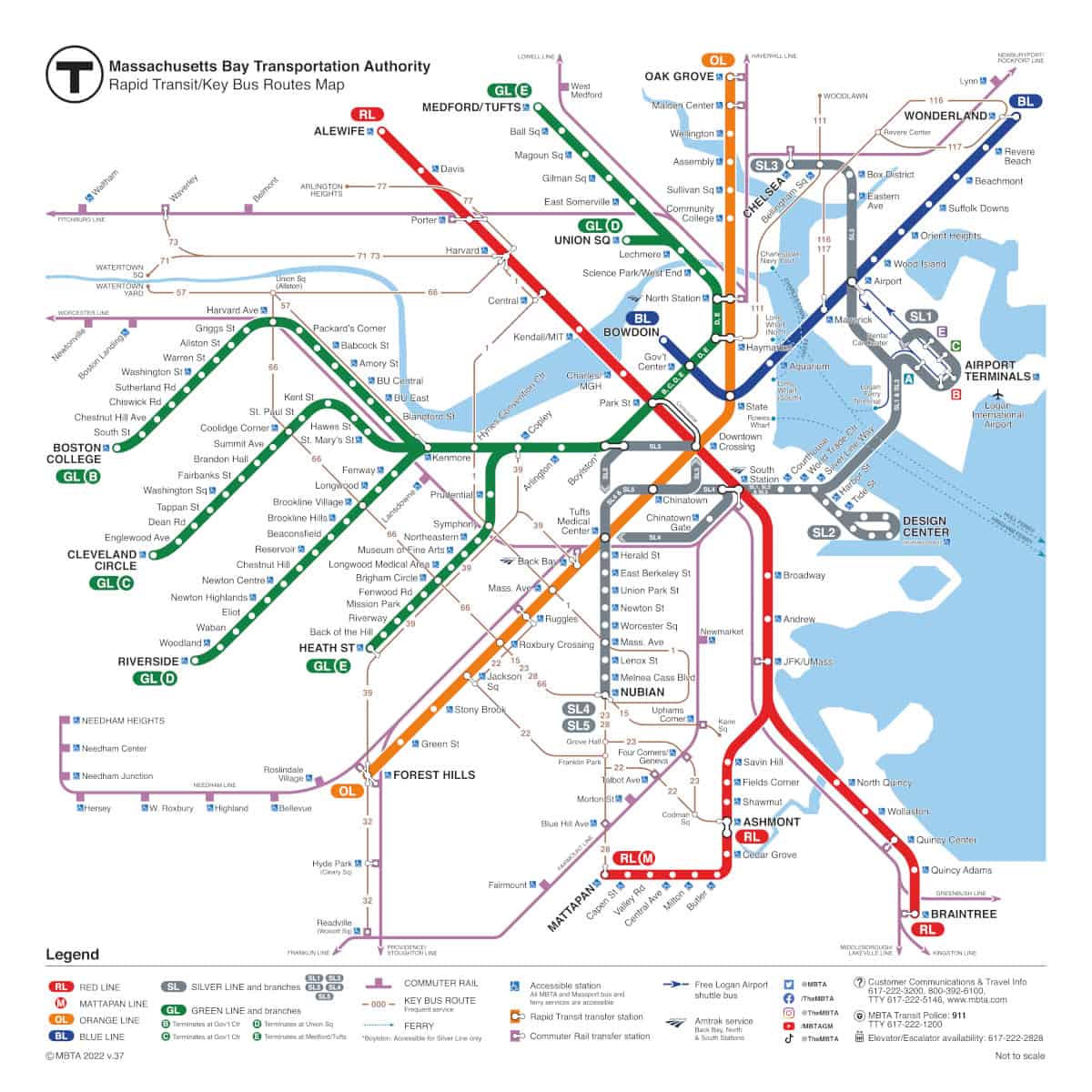
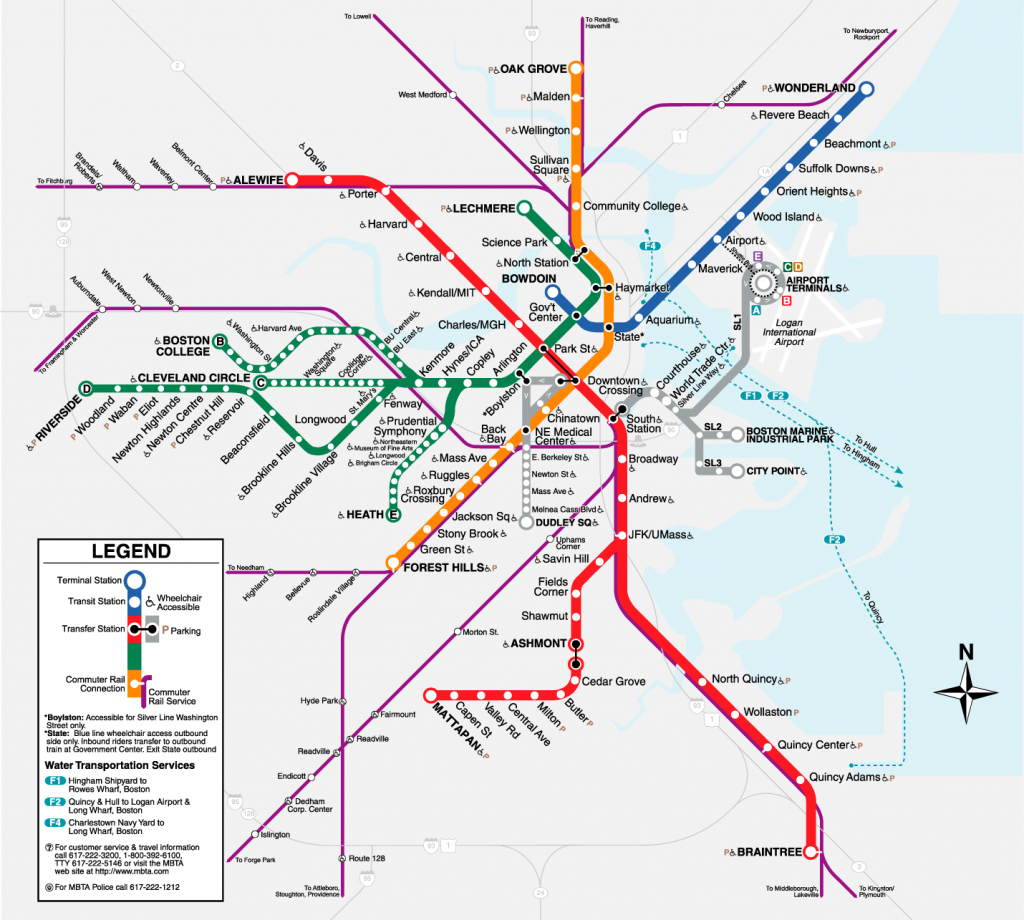
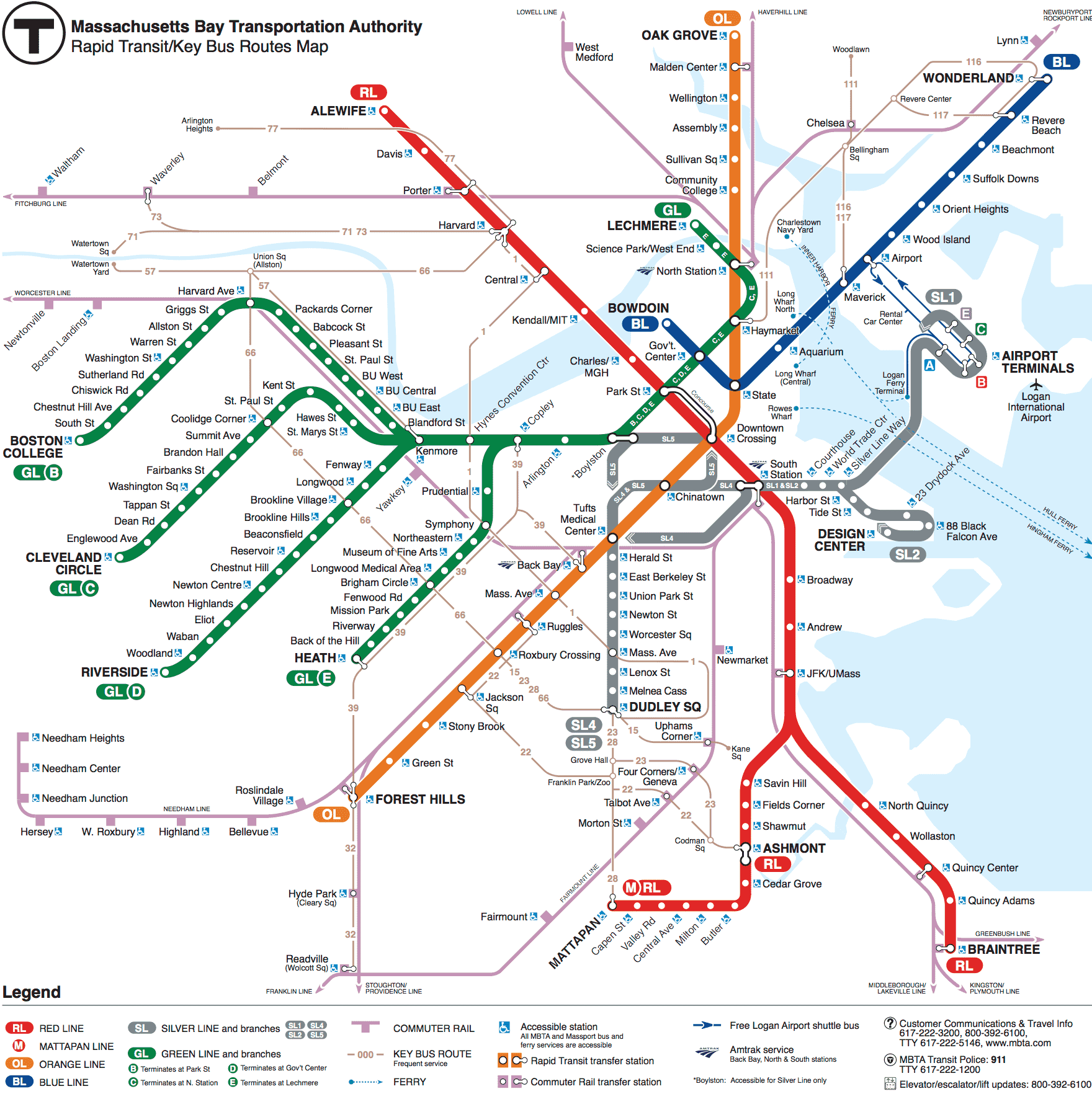
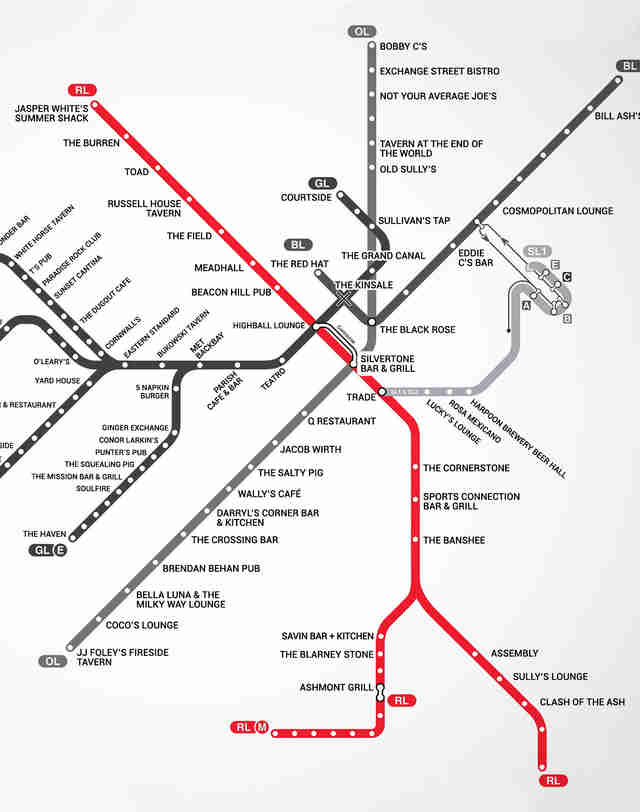
At its core, the Red Line connects the northern suburbs of Cambridge with the southern neighborhoods of Dorchester and Braintree, making it one of the longest and most heavily utilized lines in the MBTA system. Its distinctive red color on the official subway map makes it easy to identify, symbolizing its central role in the ‘T’ system.
The official MBTA subway map is a masterpiece of design, simplifying complex routes into an intuitive visual format. For the Red Line, you’ll notice a single main trunk that splits into two distinct branches south of the JFK/UMass station: the Ashmont branch and the Braintree branch. This bifurcation is a key feature to understand when planning your journey.
Reading the map effectively involves more than just identifying colors. Pay attention to the small icons indicating accessibility features, commuter rail connections, and bus transfers. Stations are typically marked with a dot or a square, and transfer stations to other subway lines (Green, Orange, Blue) are clearly delineated with intersecting lines.
The Red Line begins its journey at Alewife Station in Cambridge, a major transportation hub offering extensive parking and bus connections. From there, it proceeds through some of the most intellectually vibrant areas of the city.
Key stations along the main trunk include Davis Square and Porter Square, both bustling neighborhoods known for their unique shops, restaurants, and cultural scenes. Porter Square also offers a direct transfer to the MBTA Commuter Rail Fitchburg Line, connecting to points west.
Further south, the Red Line serves the prestigious academic institutions of Harvard University (at Harvard Square) and MIT (at Kendall/MIT Station). These stations are not just transit stops but gateways to world-renowned educational and research centers.
As the Red Line crosses under the Charles River into downtown Boston, it reaches critical transfer points. Charles/MGH Station provides access to Massachusetts General Hospital and the scenic Esplanade, while Park Street Station is a major interchange for the Green Line, leading to destinations like Fenway Park and Boston College.
Downtown Crossing is another vital hub, offering transfers to the Orange Line and serving as a gateway to the city’s financial district, shopping areas, and the historic Freedom Trail. This station is often a focal point for both commuters and tourists.
The journey continues to South Station, a colossal transportation nexus. Here, Red Line passengers can connect to Amtrak, MBTA Commuter Rail lines serving points south and west, and numerous intercity bus services. It’s a critical gateway for regional and national travel.
South of South Station, the Red Line passes through Broadway and Andrew, serving residential and emerging commercial areas. JFK/UMass Station is where the Red Line branches diverge. This station is also a significant interchange for the Commuter Rail’s Fairmount and Plymouth/Kingston Lines, and provides access to the University of Massachusetts Boston and the Edward M. Kennedy Institute for the United States Senate.
From JFK/UMass, the Ashmont branch continues south through Dorchester. Stations on this branch include Savin Hill, Fields Corner, Shawmut, and its terminus, Ashmont Station. This branch primarily serves residential communities, offering a convenient commute for residents of Dorchester.
The Braintree branch, also diverging from JFK/UMass, heads southeast. Key stations along this branch include North Quincy, Wollaston, Quincy Center, Quincy Adams, and its final stop, Braintree Station. Quincy Center and Braintree are significant hubs, offering extensive parking garages and connections to various bus routes, making them ideal park-and-ride options for suburban commuters.
A common question is: How many stops are on the Red Line? Including both branches, the Red Line has a total of 22 distinct stations. From Alewife to Ashmont, there are 17 stations. From Alewife to Braintree, there are 18 stations. The shared segment from Alewife to JFK/UMass has 13 stations.
Another frequent query pertains to travel time: How long does it take to go end-to-end on the Red Line? A full journey from Alewife to Ashmont typically takes approximately 35-40 minutes. From Alewife to Braintree, the ride is slightly longer, usually around 45-50 minutes, depending on the time of day and any service adjustments. These times are estimates and can vary during peak hours or due to unforeseen delays.
The Red Line operates with varying frequency throughout the day. During peak hours (roughly 7-9 AM and 4-6 PM on weekdays), trains run every 4-8 minutes. Off-peak, you can expect trains every 8-15 minutes. Weekend and late-night service is less frequent, so it’s always advisable to check the MBTA website or a real-time tracking app for the most up-to-date schedule.
Accessibility is a priority for the MBTA. Most Red Line stations are ADA compliant, offering elevators and ramps for passengers with mobility challenges. Look for the wheelchair icon on the map to identify accessible stations. The MBTA is continually working to upgrade older stations to ensure full accessibility across the entire system.
When navigating the Red Line, a CharlieCard or CharlieTicket is essential. CharlieCards offer a discounted fare and can be reloaded at fare vending machines or retail locations. CharlieTickets are paper tickets primarily used for single rides or limited-use passes. Cash is not accepted on board trains.
For tourists, the Red Line provides convenient access to many of Boston’s iconic attractions. From Harvard Square’s historic charm to the bustling market at Downtown Crossing, and the scenic waterfront accessible from South Station, the Red Line is your gateway.
Consider using the Red Line to reach:
- Harvard University (Harvard Square Station)
- MIT (Kendall/MIT Station)
- Boston Common and Public Garden (Park Street or Downtown Crossing Stations)
- Faneuil Hall Marketplace (short walk from Downtown Crossing or Park Street)
- New England Aquarium (transfer to Blue Line at Downtown Crossing, or short walk from South Station)
- Museum of Science (transfer to Green Line at Park Street to Lechmere, then walk)
While generally reliable, like any major urban transit system, the Red Line can experience occasional delays or service disruptions. The MBTA provides real-time service alerts via their website, social media channels, and station announcements. Staying informed is key to a smooth journey.
The Red Line has undergone significant improvements and continues to be a focus for future enhancements. Projects aimed at upgrading signaling systems, track infrastructure, and rolling stock are designed to improve reliability, speed, and overall rider experience. These investments underscore the line’s critical role in Boston’s future.
Understanding the nuances of the Red Line map also involves knowing its connections to Boston’s extensive bus network. Many stations serve as major bus hubs, allowing seamless transfers for journeys beyond the subway’s reach. Always check local bus routes at your destination or origin station.
Safety is paramount on the MBTA. Be aware of your surroundings, stand clear of the platform edge, and report any suspicious activity to MBTA personnel. During peak hours, platforms and trains can be crowded, so allow extra time and be patient.
For those traveling with bicycles, specific rules apply. Bicycles are generally permitted during off-peak hours on weekdays and all day on weekends, with some restrictions. Always check the MBTA’s official guidelines for the most current information regarding bikes, strollers, and luggage.
The Red Line also plays a crucial role in connecting Boston’s diverse neighborhoods. From the academic enclaves of Cambridge to the historic districts of Dorchester and the burgeoning communities of Quincy, it facilitates cultural exchange and economic activity across the metropolitan area.
Whether you’re a daily commuter or a visitor exploring the city, a solid grasp of the MBTA Red Line map empowers you to navigate Boston efficiently and confidently. It’s more than just a series of lines and dots; it’s a guide to the pulse of the city.
Remember to always verify schedules and service alerts before embarking on your journey, especially during weekends, holidays, or inclement weather. Digital tools and the official MBTA website are invaluable resources for real-time information.
In summary, the MBTA Red Line is a vital component of Boston’s transit infrastructure, characterized by its main trunk and two distinct branches serving Ashmont and Braintree. Familiarity with its map, key stations, transfer points like Park Street and Downtown Crossing, and operational details will significantly enhance your travel experience. Embrace the Red Line as your reliable partner for exploring Boston and its vibrant surroundings.
From Alewife’s northern reach to the southern terminals of Ashmont and Braintree, the Red Line offers a direct and often scenic route through the heart of Massachusetts. Plan your trips, understand the system, and enjoy the convenience of Boston’s iconic ‘T’.