The Pacific Ocean, the largest body of water on Earth, presented unique challenges to both the Allied and Axis powers. Unlike the European Theater, where landmasses dominated the landscape, the Pacific was characterized by immense distances, scattered island chains, and varying climates. This necessitated a different approach to warfare, relying heavily on naval power, amphibious assaults, and long-range air operations. The sheer scale of the theater made logistics a nightmare, requiring meticulous planning and execution to keep troops supplied and battleships fueled.
The Western Pacific: This region included Japan, Korea, China, and the surrounding waters. It was the heart of Japanese power and the primary target of Allied offensives.
The Central Pacific: Dominated by island chains like the Marianas, Marshalls, and Gilberts, this area became the focus of the U.S. Navy’s island-hopping campaign.
The Southwest Pacific: Encompassing New Guinea, the Philippines, and parts of Indonesia, this region saw intense fighting between Allied forces led by General Douglas MacArthur and Japanese troops.
Southeast Asia: While often considered a separate theater, Southeast Asia, including Burma, Thailand, and Indochina, was strategically linked to the Pacific War through Japanese expansion and Allied efforts to cut off supply lines.
Pearl Harbor, Hawaii: The site of the devastating Japanese attack that brought the United States into the war, Pearl Harbor was a crucial naval base and a symbol of American resolve.
Midway Island: The location of a pivotal naval battle that marked a turning point in the war, Midway was a strategic atoll that protected the Hawaiian Islands and the U.S. West Coast.
Guadalcanal: A fiercely contested island in the Solomon Islands, Guadalcanal was the site of a brutal campaign that tested the strength and determination of both sides.
Iwo Jima and Okinawa: These islands, located close to Japan, were the sites of some of the bloodiest battles of the war. Capturing them was essential for launching air raids on the Japanese mainland.
The Philippines: A U.S. territory before the war, the Philippines were invaded and occupied by Japan. Recapturing the islands was a key objective for General MacArthur and a symbol of American commitment to liberating occupied territories.
The geographical features of the Pacific islands and coastlines significantly impacted military operations. Dense jungles, rugged mountains, and coral reefs posed significant challenges to troops and equipment. The tropical climate also took a toll, with heat, humidity, and disease affecting the health and morale of soldiers. Naval operations were influenced by the depth of the water, the presence of strong currents, and the availability of suitable anchorages.
The immense distances across the Pacific Ocean made logistics a critical factor in the war. Supplying troops, maintaining naval fleets, and transporting equipment required a vast network of ships, airfields, and supply depots. The U.S. Navy developed innovative logistical techniques, such as mobile logistics support, to keep its forces supplied during long-range operations. The Japanese, on the other hand, struggled with logistical challenges, particularly as the war progressed and Allied submarines disrupted their supply lines.
The Allied strategy in the Pacific, primarily driven by the United States, involved a combination of naval blockade, strategic bombing, and island-hopping. The island-hopping campaign aimed to bypass heavily fortified Japanese positions and seize strategically important islands that could be used as bases for further operations. This strategy allowed the Allies to gradually advance towards Japan while minimizing casualties and maximizing their resources.
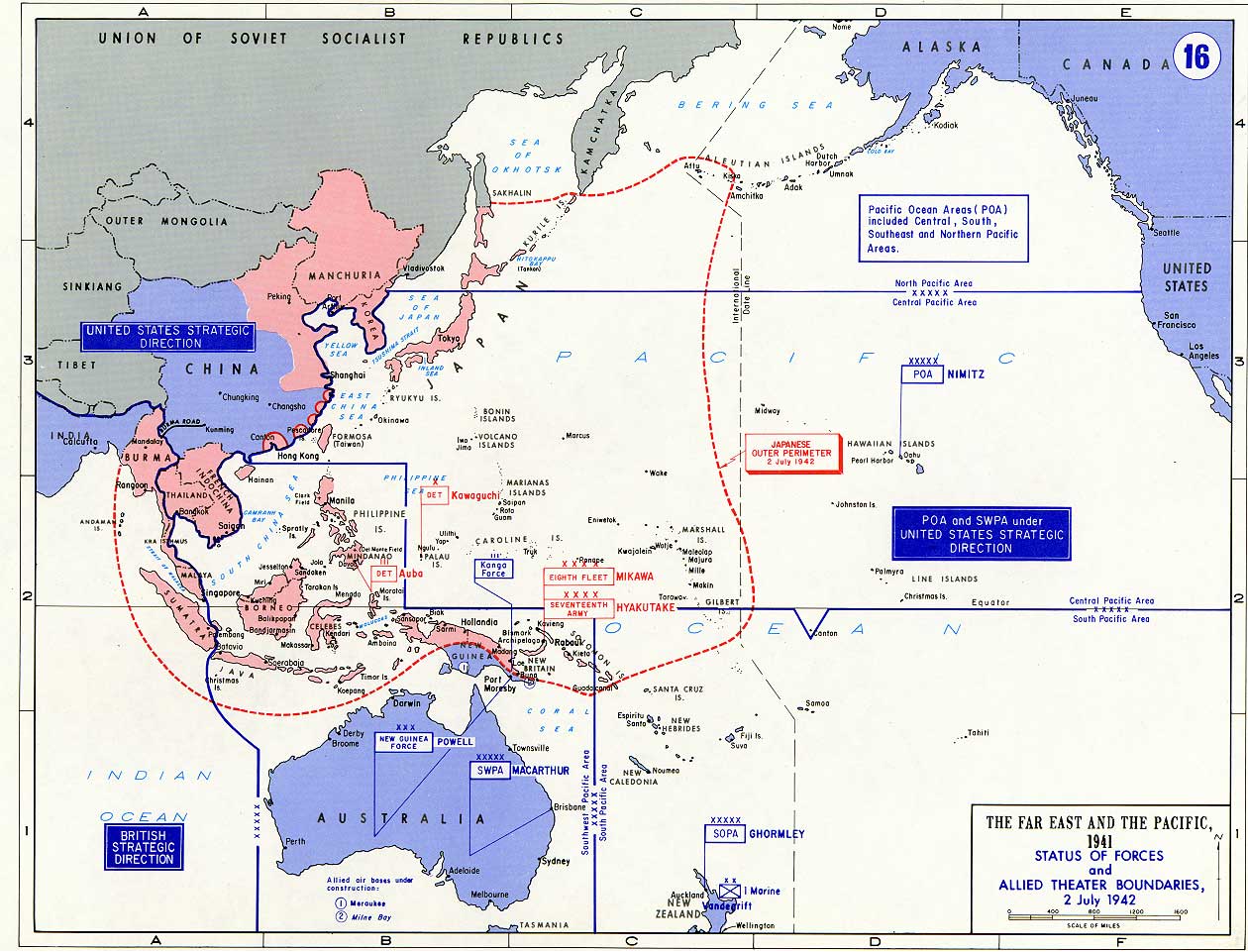
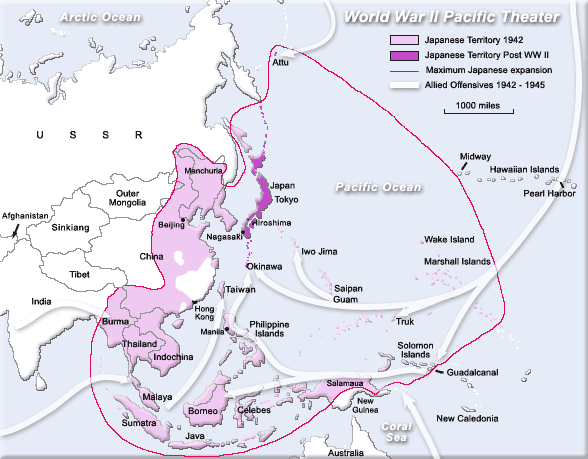
The Japanese strategy focused on establishing a defensive perimeter around their conquered territories and inflicting heavy casualties on any invading force. They relied on heavily fortified island garrisons and a willingness to fight to the death. However, their strategy was ultimately unsustainable, as their resources dwindled and their defensive perimeter was breached by the relentless Allied advance.
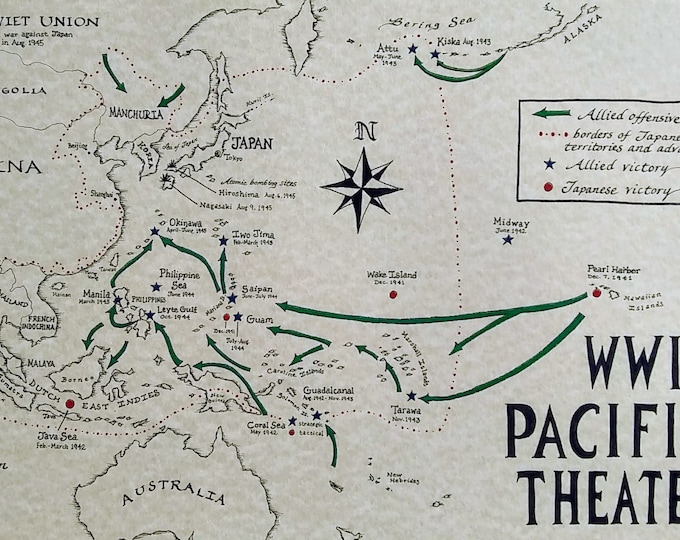
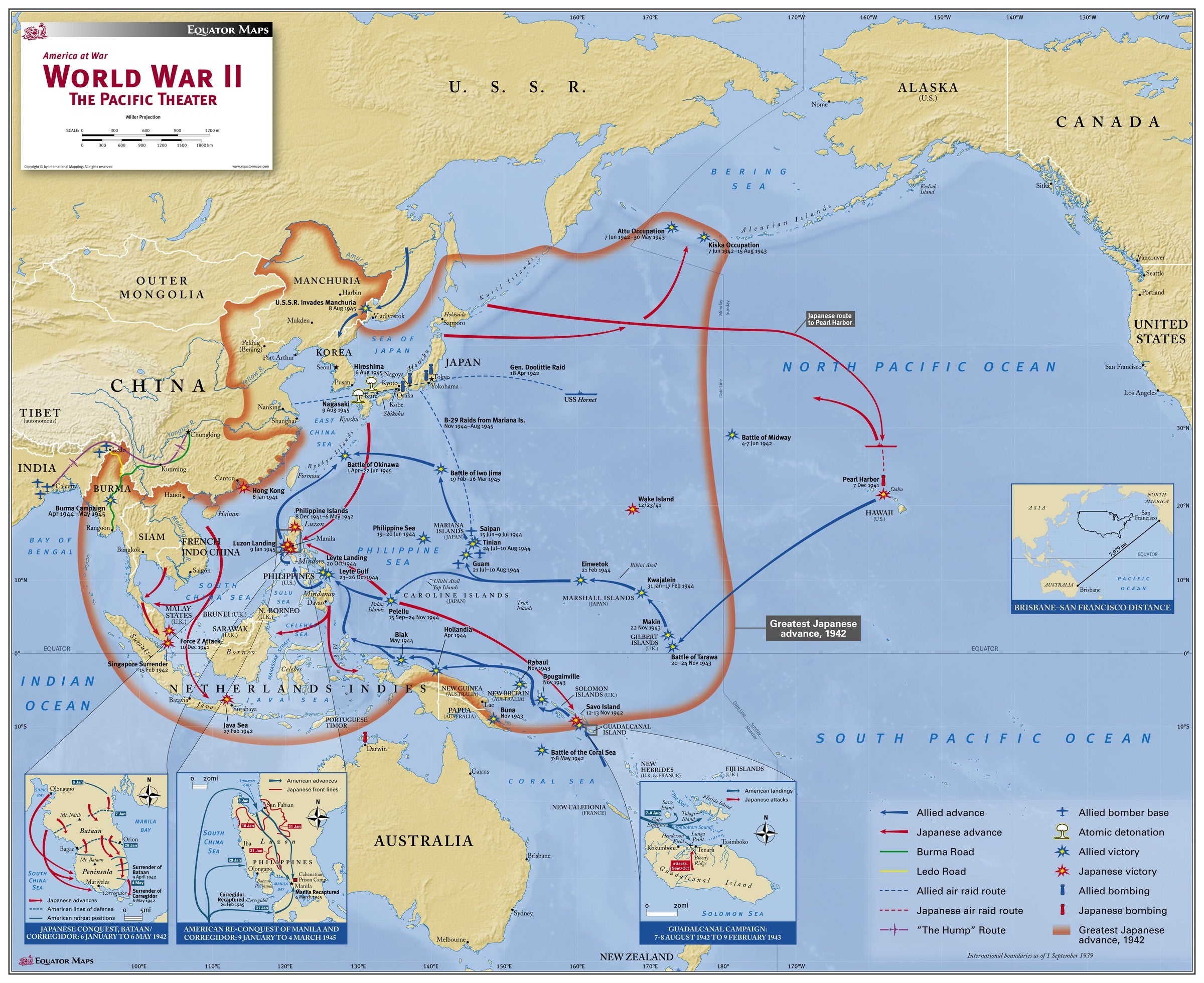
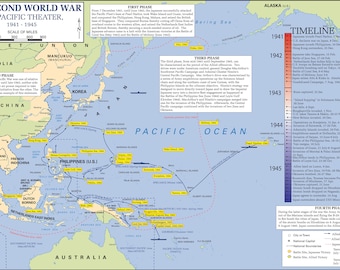
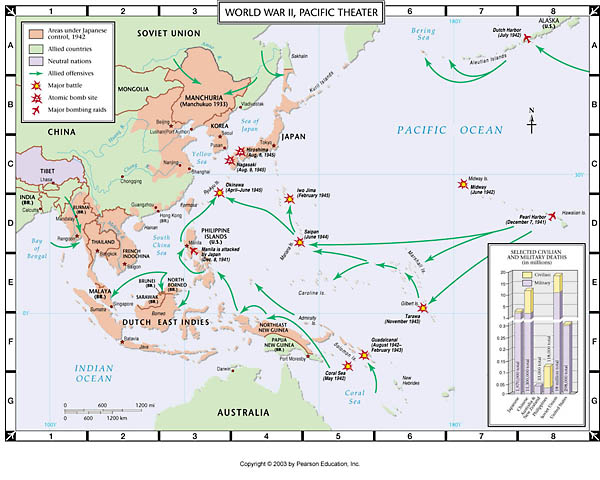
The WWII Pacific map is more than just a geographical representation of the region; it’s a historical document that tells the story of a brutal and transformative conflict. The map reveals the strategic importance of various locations, the challenges of fighting in a vast and diverse environment, and the innovative strategies employed by both sides. By studying the map, we can gain a deeper understanding of the Pacific War and its lasting impact on the world.
What were the main geographical challenges in the Pacific Theater?
The vast distances, scattered islands, dense jungles, and tropical climate presented significant logistical and operational challenges.
Why was island-hopping such an effective strategy?
It allowed the Allies to bypass heavily fortified positions, conserve resources, and gradually advance towards Japan.
What made certain locations like Midway and Guadalcanal so strategically important?
Midway protected Hawaii and the U.S. West Coast, while Guadalcanal was a key stepping stone in the Solomon Islands.
How did the geography of the Pacific influence naval operations?
Naval operations were influenced by water depth, currents, and the availability of anchorages. The vast distances required innovative logistical support.
In conclusion, the WWII Pacific map is an essential tool for understanding the complexities of the Pacific Theater. From the attack on Pearl Harbor to the final battles on Iwo Jima and Okinawa, the geography of the Pacific shaped the course of the war and influenced its ultimate outcome. By studying the map and understanding its strategic implications, we can gain a deeper appreciation for the sacrifices made by those who fought in this vast and challenging theater of war. The lessons learned from the Pacific War continue to resonate today, reminding us of the importance of strategic planning, logistical support, and adaptability in the face of adversity.
Exploring the WWII Pacific map also allows us to appreciate the human element of the conflict. Each island, each battle, represents the experiences of countless soldiers, sailors, and civilians who endured unimaginable hardships. Understanding the geography helps us to contextualize their stories and to honor their sacrifices. The Pacific War was not just a series of strategic maneuvers; it was a human drama played out on a grand scale, with the fate of nations hanging in the balance.
Furthermore, the study of the WWII Pacific map provides valuable insights into the evolution of military strategy and technology. The war in the Pacific saw the development of new amphibious warfare techniques, the rise of naval aviation, and the use of innovative logistical methods. These advancements had a profound impact on the way wars were fought and continue to influence military doctrine today.
Finally, understanding the WWII Pacific map is essential for preserving the memory of the war and ensuring that its lessons are not forgotten. By studying the map, we can gain a deeper understanding of the sacrifices made by those who fought in the Pacific and the importance of preventing future conflicts. The map serves as a reminder of the human cost of war and the need for continued efforts to promote peace and understanding.
The legacy of the Pacific Theater endures in the geopolitical landscape of the region. The war reshaped alliances, led to the independence of former colonies, and laid the foundation for the economic and political development of many nations. The scars of war are still visible on some islands, serving as a reminder of the destructive power of conflict and the resilience of the human spirit.
In summary, the WWII Pacific map is a multifaceted resource that offers insights into military strategy, logistical challenges, human experiences, and the lasting legacy of the war. Its study allows us to gain a deeper understanding of this pivotal period in history and to appreciate the sacrifices made by those who fought in the Pacific Theater. By continuing to explore and analyze the map, we can ensure that the lessons of the Pacific War are not forgotten and that its memory continues to inform our efforts to build a more peaceful and just world.
The Pacific War involved numerous naval battles, each strategically positioned on the map. These battles, such as the Coral Sea, Leyte Gulf, and the aforementioned Midway, were critical in shifting the balance of power. Understanding their locations on the map helps visualize the ebb and flow of the conflict and the strategic importance of controlling sea lanes.
Air power played a crucial role in the Pacific Theater. Key airfields on islands like Guadalcanal, Iwo Jima, and Okinawa were vital for launching bombing raids and providing air support for ground troops. The map highlights the strategic importance of these airfields and the intense fighting that often took place to control them.
The island-hopping campaign was a defining feature of the Allied strategy. The map vividly illustrates the progression of this campaign, showing how the Allies gradually advanced across the Pacific, seizing key islands and establishing bases for further operations. Each island captured represented a hard-fought victory and a step closer to Japan.
The map also reveals the logistical challenges faced by both sides. Supplying troops and maintaining equipment across vast distances required a complex network of ships, airfields, and supply depots. The map highlights the strategic importance of these logistical hubs and the efforts made to protect or disrupt them.
The WWII Pacific map is a valuable resource for students, historians, and anyone interested in learning more about this pivotal period in history. By studying the map, we can gain a deeper understanding of the strategic, logistical, and human dimensions of the Pacific War and its lasting impact on the world.