What Are Congressional Districts?
At its core, a congressional district is a territorial division of a state from which a member of the United States House of Representatives is elected. The U.S. Constitution mandates a nationwide census every ten years to count the population. The results of this census are used for apportionment—the process of determining how many of the 435 seats in the House each state receives. States that gain or lose population relative to others may see their number of districts change.
Following the 2020 Census, Ohio’s population growth did not keep pace with other states, resulting in the loss of one congressional seat. This reduced its delegation from 16 to 15 representatives, triggering a complex and highly scrutinized redistricting process to draw a new map for these 15 districts.
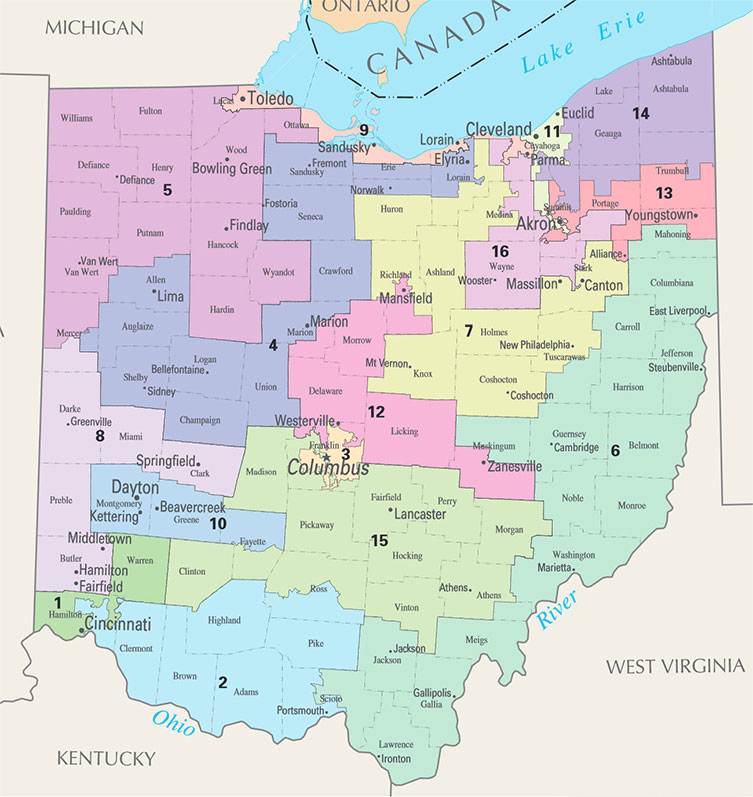
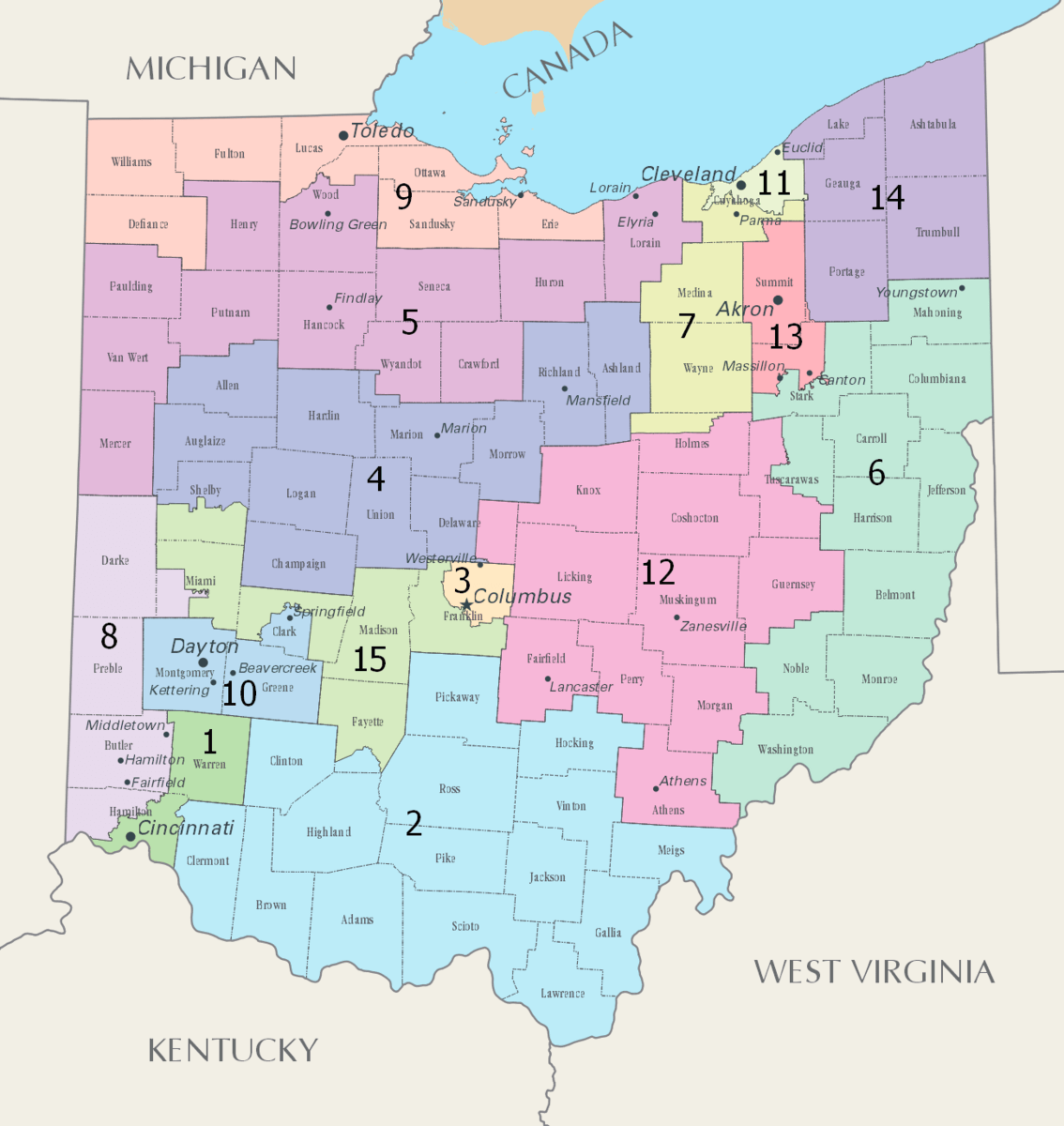
The Current Ohio Congressional District Map: An Overview
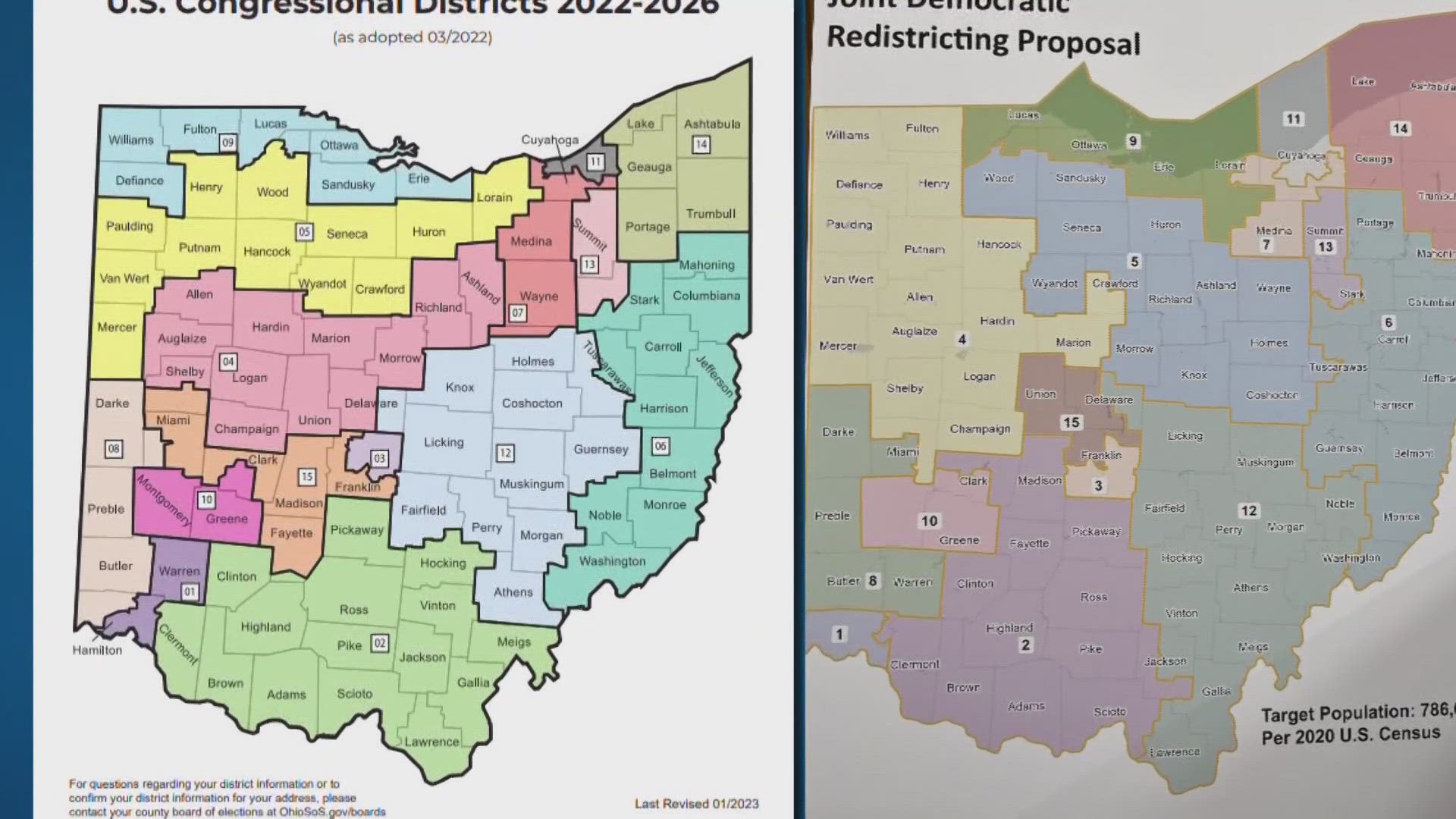
The map currently in use for Ohio’s congressional elections is a direct result of a protracted political and legal battle following the 2020 census. After multiple map proposals drawn by the Ohio Redistricting Commission were struck down by the Ohio Supreme Court for failing to meet anti-gerrymandering provisions in the state constitution, a federal court ultimately intervened. The court ordered the implementation of one of the commission’s previously invalidated maps for the 2022 and 2024 elections to ensure electoral certainty.
This map, while legally in use, has been criticized for maintaining a significant partisan lean that does not reflect Ohio’s overall political makeup. As it stands, the map heavily favors the Republican party, creating a majority of ‘safe’ districts and leaving very few competitive seats.
Ohio’s 15 Congressional Districts and Representatives
- District 1: Represents Cincinnati and western Hamilton County. Currently represented by Greg Landsman (D).
- District 2: Covers a large swath of southern Ohio counties. Currently represented by Brad Wenstrup (R).
- District 3: Encompasses most of Columbus and Franklin County. Currently represented by Joyce Beatty (D).
- District 4: A sprawling district in west-central and north-central Ohio. Currently represented by Jim Jordan (R).
- District 5: Spans across northwest Ohio. Currently represented by Bob Latta (R).
- District 6: Covers eastern and southeastern Ohio along the Ohio River. Currently represented by Michael Rulli (R).
- District 7: Includes areas south and west of Cleveland. Currently represented by Max Miller (R).
- District 8: Located in western Ohio, bordering Indiana. Currently represented by Warren Davidson (R).
- District 9: Stretches along the Lake Erie shoreline, including Toledo. Currently represented by Marcy Kaptur (D).
- District 10: Centered around Dayton and Montgomery County. Currently represented by Mike Turner (R).
- District 11: Includes much of Cleveland and eastern Cuyahoga County. Currently represented by Shontel Brown (D).
- District 12: Covers suburban and rural areas east and north of Columbus. Currently represented by Troy Balderson (R).
- District 13: A competitive district centered on Akron and Summit County. Currently represented by Emilia Sykes (D).
- District 14: Located in the northeastern corner of Ohio. Currently represented by David Joyce (R).
- District 15: Includes suburban areas west of Columbus and stretches south. Currently represented by Mike Carey (R).
The Contentious History of Redistricting and Gerrymandering in Ohio
The story of Ohio’s congressional map is inseparable from the concept of gerrymandering—the practice of drawing district lines to give one political party an unfair advantage. For decades, Ohio has been a focal point in the national debate over fair maps.
In response to public outcry over heavily gerrymandered maps from the previous decade, Ohio voters overwhelmingly approved constitutional amendments in 2018. These reforms were designed to create a more bipartisan, transparent, and fair redistricting process. They established new rules against favoring one party over another and set proportionality goals, aiming for a map that generally reflected the statewide voting preferences of Ohioans (roughly 54% Republican to 46% Democrat in recent elections).
The Ohio Redistricting Commission and Court Battles
The responsibility for drawing the new map fell to the seven-member Ohio Redistricting Commission. However, the commission, with a Republican majority, repeatedly passed maps along party lines. The League of Women Voters of Ohio and other voting rights groups challenged these maps, leading to a series of landmark rulings.
The Ohio Supreme Court, in a bipartisan majority, struck down five different legislative and congressional map proposals, finding that they were unconstitutional partisan gerrymanders that violated the newly passed reforms. The court repeatedly sent the maps back to the commission with orders to draw fair lines, but the commission failed to produce a constitutionally compliant map.
This stalemate ultimately led a panel of federal judges to intervene, selecting one of the previously invalidated maps to be used for the 2022 and 2024 election cycles. This decision provided a temporary solution but left the core constitutional issues unresolved, setting the stage for future conflicts.
How to Find Your Congressional District
With districts often winding through cities and counties in complex ways, it’s not always obvious which one you live in. Fortunately, finding your specific congressional district and representative is a straightforward process.
The most reliable method is to use the official Ohio Secretary of State website. Their ‘Find My Legislator’ tool allows you to enter your home address and instantly retrieve information about your specific district.
- Visit the official website of the Ohio Secretary of State.
- Navigate to the ‘Elections & Voting’ section.
- Look for a tool labeled ‘Find My District,’ ‘Voter Toolkit,’ or something similar.
- Enter your street address, city, and zip code into the provided fields.
- The system will display your U.S. Congressional District number, along with your State Senate and State House districts.
Once you have your district number, you can easily look up your current representative on the official U.S. House of Representatives website or other non-partisan political information sites.
The Impact of the District Map on Ohio Voters
The way congressional district lines are drawn has profound consequences that extend far beyond election day. The design of the Ohio map directly impacts the nature of political representation and the accountability of elected officials.
Representation and Competitiveness
A primary effect of the current map is the creation of numerous ‘safe’ districts, where the outcome of the general election is all but guaranteed for one party. This can lead to a sense of disenfranchisement among voters of the minority party within that district, as their votes have little chance of affecting the outcome.
Furthermore, a lack of competitive districts means that the most significant electoral contest often occurs during the primary election. This can push candidates toward more extreme ideological positions to appeal to their party’s base, contributing to political polarization and making bipartisan compromise in Washington more difficult.
Accountability and Governance
When representatives are in safe seats, they face less pressure to be responsive to the needs of all their constituents. Their primary concern becomes avoiding a challenge from within their own party, rather than appealing to a broad electorate. This can diminish accountability and lead to governance that serves partisan interests over the public good.
The map also influences which communities have a strong voice in Congress. ‘Cracking’ and ‘packing’ are two common gerrymandering techniques. ‘Cracking’ involves splitting a community or voting bloc among several districts to dilute their voting power. ‘Packing’ concentrates a voting bloc into a single district to reduce its influence in surrounding areas.
Looking Ahead: The Future of Ohio’s Congressional Map
The map currently in use is a temporary measure. The Ohio Redistricting Commission is still constitutionally obligated to draw a new, compliant map that will be in effect for the 2026 through 2030 elections. The process to create this new map is expected to reignite the political and legal debates that characterized the post-2020 cycle.
Advocacy groups like the League of Women Voters and Common Cause Ohio continue to push for adherence to the constitutional amendments and are prepared for further legal action if necessary. The future composition of both the Ohio Redistricting Commission and the Ohio Supreme Court will play a pivotal role in determining the final outcome.
The ultimate goal for reformers is a map that is compact, keeps communities of interest together, and produces a congressional delegation that accurately reflects the political diversity of the state of Ohio.
Conclusion: Why the Map Matters
The Ohio congressional district map is more than just a collection of lines; it is the blueprint for our democracy at the federal level. It dictates the fairness of our elections, the nature of our representation, and the accountability of our leaders. While the recent history of redistricting in Ohio has been marked by conflict and controversy, it has also elevated public awareness about the critical importance of fair maps.
As an Ohio voter, understanding your district, your representative, and the process by which these maps are created is a vital part of civic engagement. By staying informed and advocating for a transparent and fair process, Ohioans can help shape a more representative and effective government for years to come.