Navigating the patchwork of state, local, and federal firearm regulations can be daunting. A single wrong turn into a jurisdiction with strict gun control laws can turn a law-abiding citizen into an unwitting felon. This is where understanding reciprocity—and utilizing reliable tools to track it—becomes a critical aspect of self-defense lifestyle planning.
In this comprehensive guide, we will explore how to effectively use the USCCA Reciprocity Map, understand the nuances of interstate concealed carry, and ensure you remain on the right side of the law while exercising your Second Amendment rights.
What is Concealed Carry Reciprocity?
Before diving into the mechanics of the map, it is vital to understand the concept of reciprocity. In the context of firearms, reciprocity refers to an agreement between two states to recognize each other’s concealed carry permits (CCW). If State A has a reciprocity agreement with State B, a permit holder from State A can legally carry a concealed firearm in State B, provided they follow State B’s laws.
However, reciprocity is not binary. It is highly specific and subject to change. Some states have unrestricted reciprocity, honoring permits from any jurisdiction. Others require a formal written agreement, while a significant number of states are ‘constitutional carry’ states that do not require a permit at all for eligible residents and non-residents.
Conversely, there are states with no reciprocity. In these jurisdictions, your out-of-state permit is invalid, and carrying a concealed firearm is generally illegal without a specific permit issued by that state. This variance underscores why a static list of laws is insufficient and why a dynamic tool like the USCCA map is necessary.
How the USCCA Reciprocity Map Works
The United States Concealed Carry Association (USCCA) has developed what is widely considered the gold standard for visual reciprocity data. The map is an interactive tool designed to provide instant clarity on where your permit is valid. It functions by aggregating current legislation from all 50 states and cross-referencing it with specific permit types.
The Reciprocity Builder
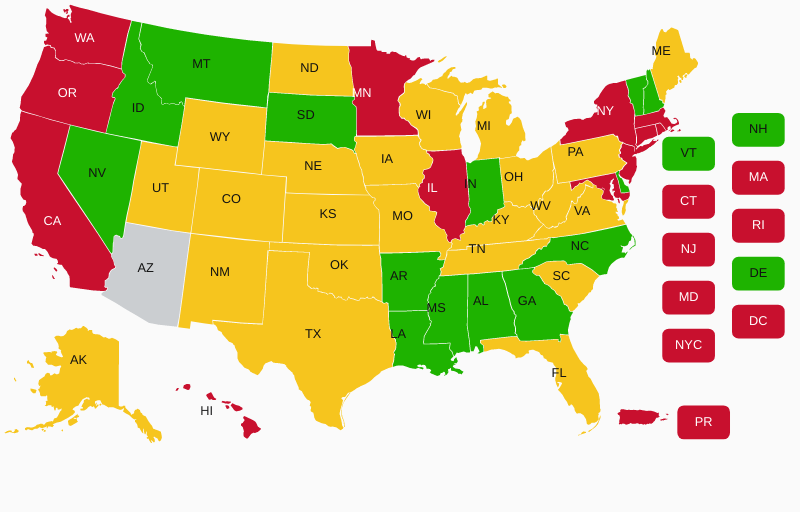
The core feature of the USCCA tool is the ‘Reciprocity Builder.’ Rather than showing a generic map, this feature allows users to input their specific variables. You begin by selecting your state of residence and the specific permit(s) you hold. This distinction is crucial because some states issue both resident and non-resident permits, and reciprocity agreements often differ between the two.
- Green: States where your permit is honored or no permit is required.
- Red: States where your permit is NOT recognized.
- Yellow: States with specific restrictions or conditions (often requiring a resident permit).
Detailed State Summaries
Beyond the visual map, clicking on any specific state reveals a treasure trove of legal data. The USCCA provides summaries on magazine capacity limits, duty to inform law enforcement, ‘Stand Your Ground’ laws, and specific locations where carrying is prohibited (such as schools, bars, or government buildings).
Constitutional Carry vs. Permit Reciprocity
A growing trend in the United States is ‘Constitutional Carry’ (also known as permitless carry). As of 2024, more than half of the U.S. states allow eligible individuals to carry a concealed firearm without a permit. When using the USCCA Reciprocity Map, you will notice these states often appear green regardless of which permit you hold.
However, a common misconception is that permits are obsolete in these states. This is false. Obtaining a permit is still highly recommended for travelers. Why? Because of reciprocity leverage. While you may not need a permit to carry in your home state of Florida (a permitless carry state), having a Florida CWL allows you to carry in other states that do require a permit but recognize Florida’s license.
The USCCA map helps visualize this advantage. By toggling between ‘Permitless’ and ‘With Permit’ views, users can see how their travel options expand significantly when they possess a physical license.
Planning a Road Trip: The ‘Safe Passage’ Provision
One of the most frequent questions regarding the USCCA Reciprocity Map is how to handle ‘Red States’—jurisdictions that do not honor your permit. If you are driving from Pennsylvania to Maine, you may have to pass through New York and New Jersey, both of which have historically strict gun laws and do not recognize outside permits.
- The journey must be continuous (no extended stops).
- You must be legally allowed to possess the firearm in both the origin and destination states.
- The firearm must be unloaded and locked in a container not accessible from the passenger compartment (usually the trunk).
- Ammunition must be stored separately.
The USCCA website often provides supplementary guides on FOPA alongside their map, helping users distinguish between states where they can carry on their person versus states where the gun must be locked away.
The Importance of ‘Duty to Inform’
Another critical data point provided by the USCCA resources is the ‘Duty to Inform’ status of each state. This legal requirement dictates how a concealed carrier must interact with law enforcement during a traffic stop.
In ‘Immediate Duty to Inform’ states, you must disclose that you are carrying a firearm the moment an officer approaches you. in other states, you are only required to disclose if asked. Failing to adhere to these procedural laws can lead to permit revocation or arrest, even if the firearm itself is legal. The USCCA map typically highlights these requirements in the state-specific breakdown.
Why You Cannot Rely on Memory
Gun laws are not static; they are living legislation. Reciprocity agreements can be severed overnight due to political shifts. For example, a state Attorney General might decide to rescind recognition of another state’s permit due to differing training standards.
Because of this volatility, relying on a map you checked six months ago is dangerous. The USCCA updates their reciprocity map frequently to reflect real-time legal changes. Before every trip involving firearms, a fresh consultation of the map is a mandatory safety step.
Magazine Capacity and Prohibited Weapons
Reciprocity only covers the license to carry, not necessarily the hardware itself. This is a nuance often missed by travelers. You might have a permit that is valid in a specific state, but if you are carrying a 15-round magazine in a state with a 10-round limit, you are committing a crime.
The USCCA state summaries linked to the map are invaluable for identifying these hardware restrictions. They detail bans on specific ammunition types (like hollow points in New Jersey) or magazine capacity limits (like in California, Colorado, or Massachusetts).
Conclusion: Education is Your Best Defense
Carrying a firearm for self-defense is a grave responsibility that extends beyond marksmanship. It requires a commitment to legal education and situational awareness. The USCCA Reciprocity Map is more than just a graphic; it is a vital planning tool that keeps gun owners compliant and safe.
By utilizing this tool to plan your routes, understanding the difference between resident and non-resident reciprocity, and staying updated on the ever-changing legal landscape, you can travel with confidence.
Disclaimer: The information provided in this article is for educational purposes only and does not constitute legal advice. Gun laws change frequently. Always consult the official USCCA Reciprocity Map and local law enforcement resources before traveling with a firearm.