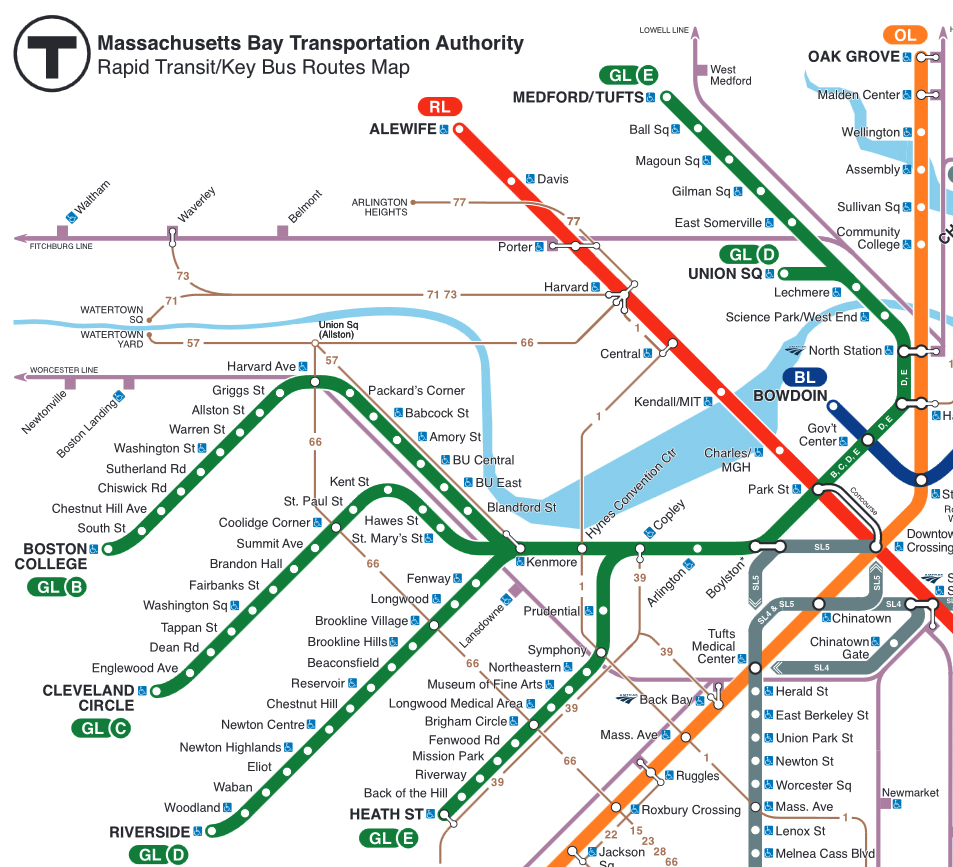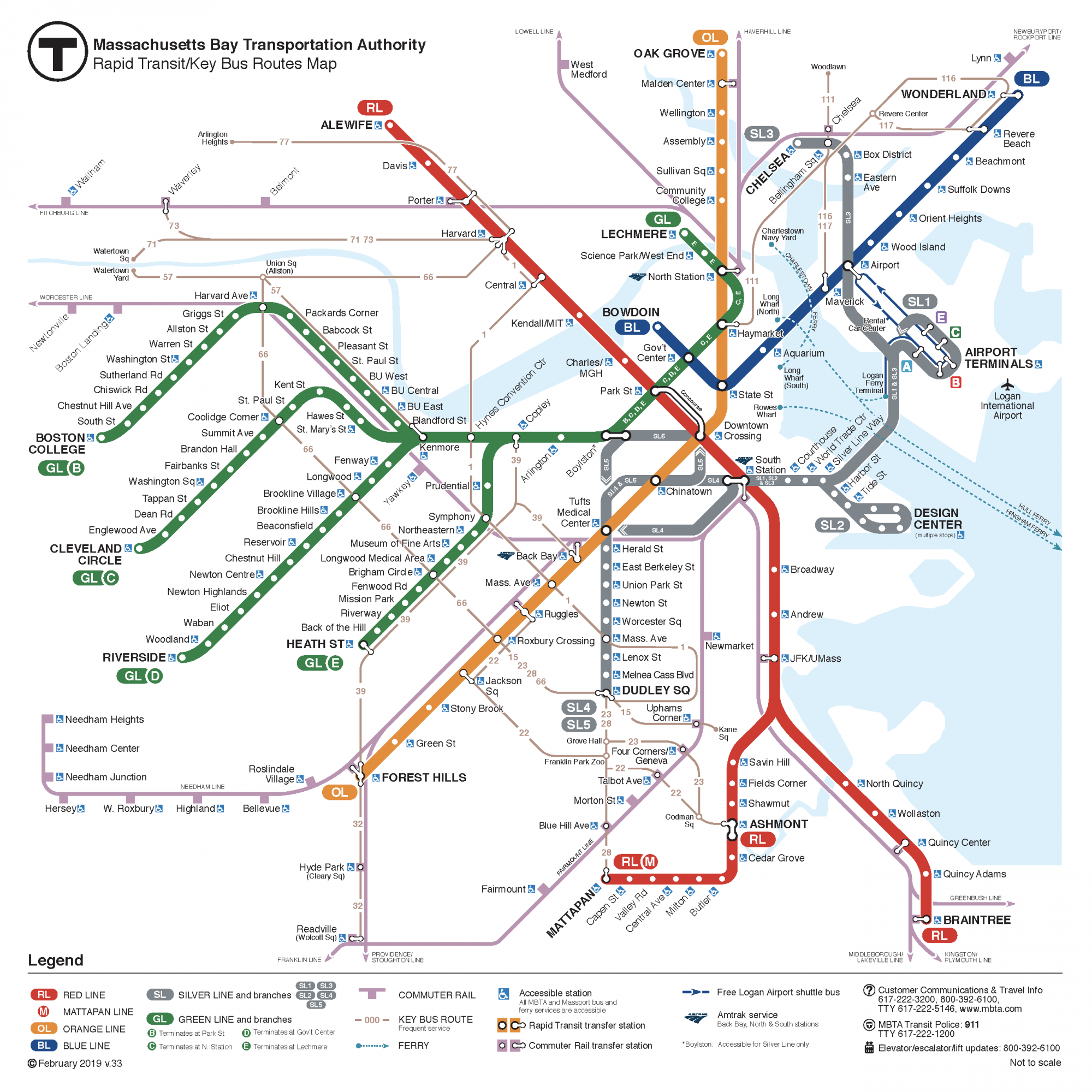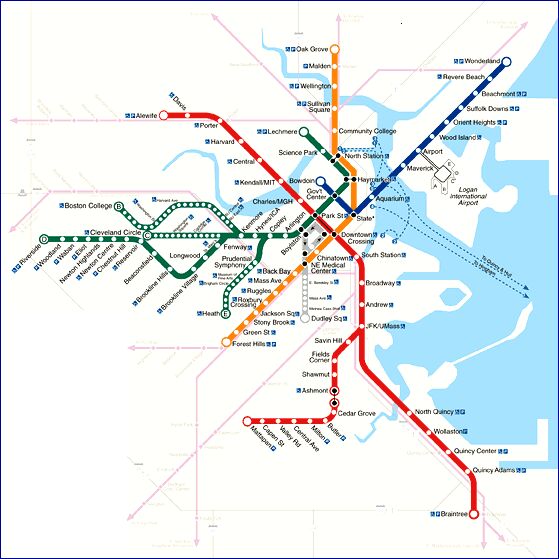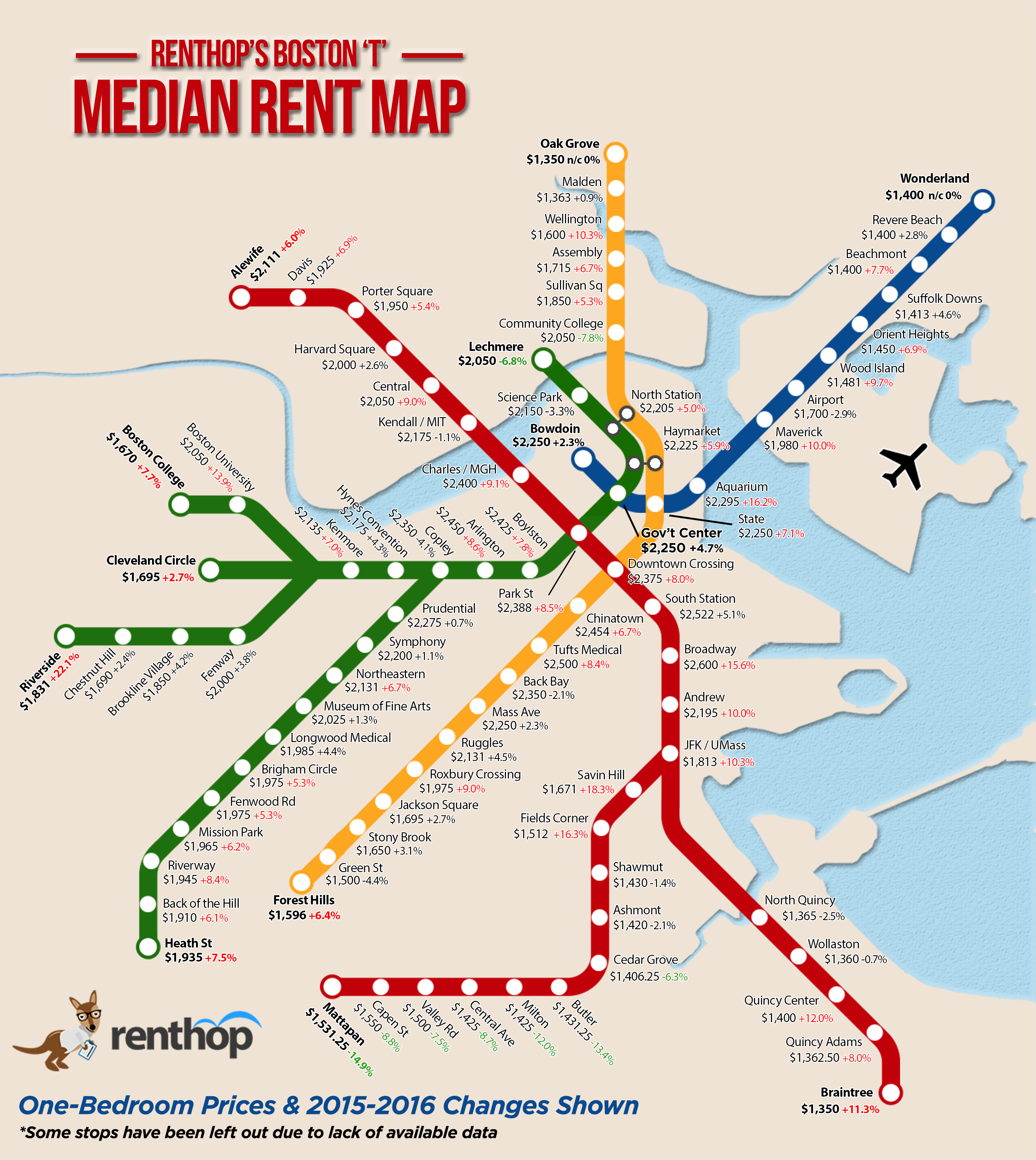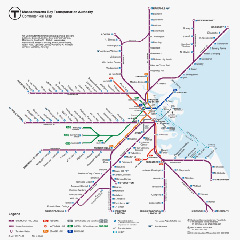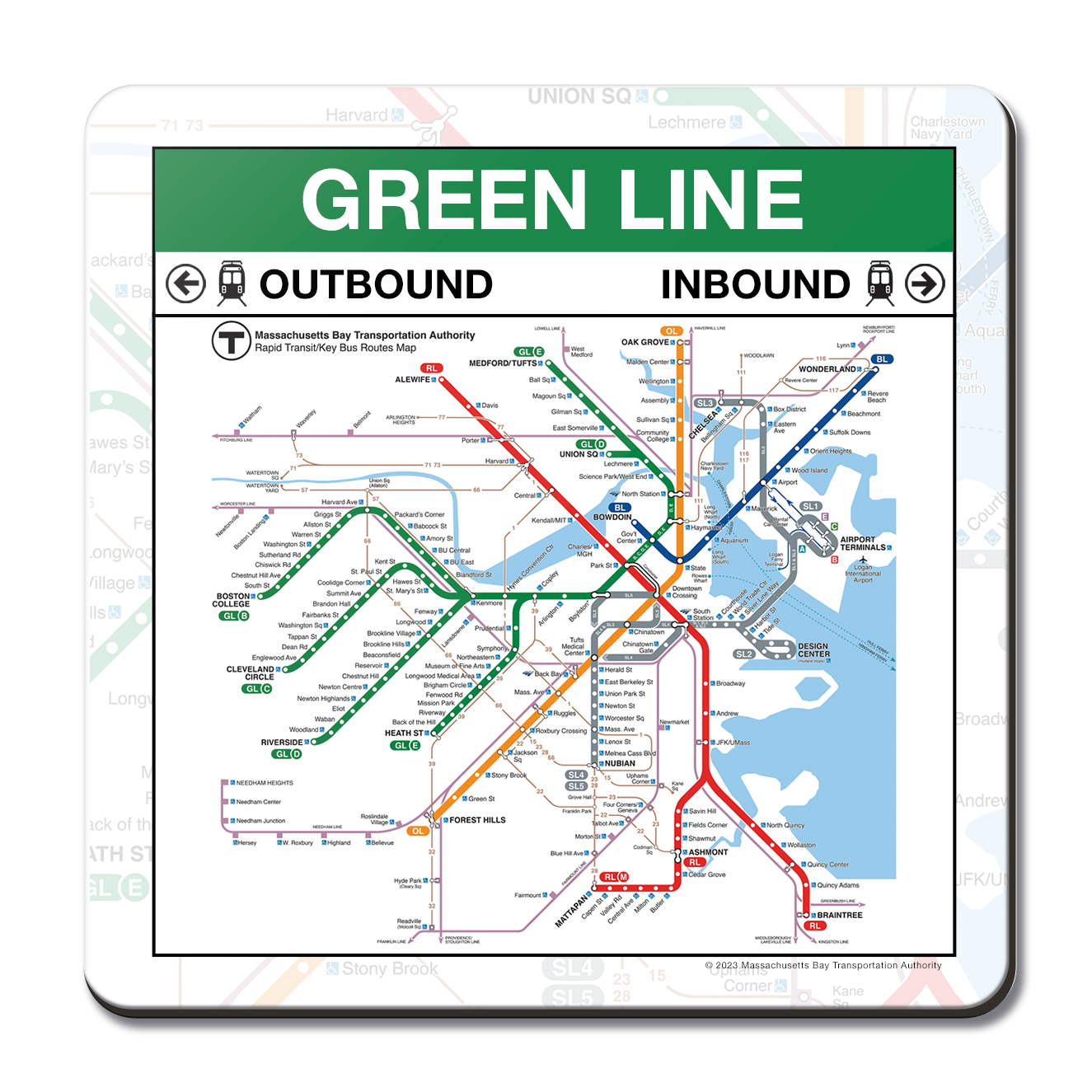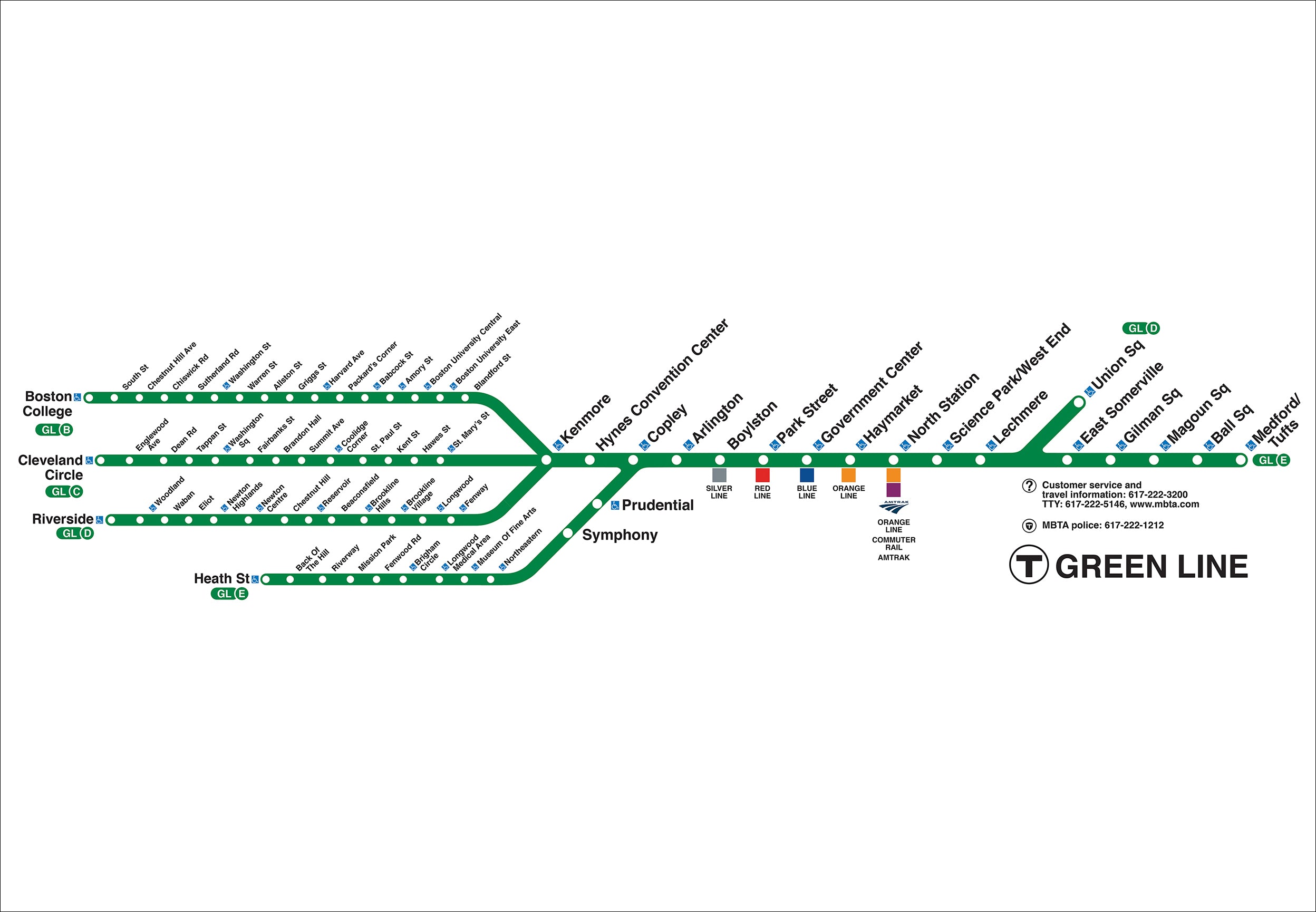
Understanding the MBTA Green Line map is fundamental to unlocking Boston’s diverse offerings. Unlike the other heavy rail lines (Red, Orange, Blue), the Green Line operates as a light rail system, with portions running underground and others above ground, often sharing space with street traffic. This unique characteristic makes it both incredibly versatile and, at times, a bit complex to master.
This comprehensive guide aims to demystify the Green Line, providing you with all the essential information needed to travel confidently. From its distinct branches to key transfer points, fare information, and accessibility notes, we’ll cover everything you need to know to make your journey smooth and efficient.
The Green Line is not a single, continuous route but rather a collection of four main branches that converge in the downtown core before diverging again. Each branch serves different areas of the city and its surrounding communities, making the full Green Line subway map an intricate web.
Understanding these branches – designated B, C, D, and E – is the first step to becoming a Green Line expert. While they all share a common tunnel through the downtown area, their destinations are vastly different. Let’s delve into each one.
Understanding the Green Line Map: The Four Branches
The Green Line’s unique structure means that when you board a train, it’s crucial to know its destination. All inbound trains heading towards downtown Boston will eventually reach stations like Park Street and Government Center, but where they originated from, and where outbound trains are going, depends entirely on the branch.
The B Branch: Boston College. The B branch, often referred to as the Commonwealth Avenue line, runs along Commonwealth Avenue through Boston University and Boston College. It’s heavily used by students and connects to areas like Allston and Brighton. Key stops include Boston University Central, Packard’s Corner, and its terminus at Boston College.
The C Branch: Cleveland Circle. The C branch traverses Beacon Street, serving neighborhoods like Coolidge Corner and Cleveland Circle. This line is known for its charming, tree-lined residential areas and local businesses. Stops such as Coolidge Corner and Cleveland Circle are popular destinations along this route.
The D Branch: Riverside. The D branch, also known as the Highland Branch, offers a more suburban experience, extending into Newton. It’s characterized by its longer station spacing and faster speeds compared to the B and C branches. Its terminus is Riverside, and it provides access to the Longwood Medical Area via the Heath Street E branch transfer or directly via Longwood station.
The E Branch: Heath Street. The E branch is arguably the most complex. It runs from Heath Street through the Longwood Medical Area and Northeastern University, then joins the main Green Line tunnel. However, some E branch trains terminate at Brigham Circle, while others continue to Heath Street. This line is vital for accessing major hospitals and educational institutions.
Key Transfer Points and Connections
The Green Line’s central role in the MBTA system is underscored by its numerous transfer points, allowing riders to seamlessly connect to other subway lines and even the Commuter Rail. These connections are essential for navigating the broader Boston area.
- Park Street (Red Line): A major interchange, offering connections to the Red Line, which serves Cambridge (Harvard, MIT) and South Station (Commuter Rail, Amtrak).
- Government Center (Blue Line): Provides access to the Blue Line, leading to Logan International Airport and East Boston.
- Copley (Orange Line, Commuter Rail): While not a direct transfer, Copley is a short walk from Back Bay Station, where you can catch the Orange Line and Commuter Rail services.
- North Station (Orange Line, Commuter Rail): A significant hub, offering direct transfers to the Orange Line and multiple Commuter Rail lines serving northern suburbs.
- Kenmore (Bus Connections): A vital hub for numerous bus routes, particularly useful for accessing Fenway Park and other nearby attractions.
Navigating the Green Line: Fares, Tickets, and CharlieCard
Riding the Green Line, like all MBTA services, requires a fare. The most convenient and cost-effective way to pay is with a CharlieCard, a reusable plastic card that offers discounted fares compared to single-use CharlieTickets.
You can purchase and load value onto a CharlieCard at most subway stations. Simply tap your card at the turnstile or fare box when entering the station or boarding a surface-level train. Cash is accepted on surface-level trolleys, but exact change is preferred.
Fares are typically fixed per ride, with transfers between subway lines generally free within a two-hour window. For current fare information, it’s always best to consult the official MBTA website or station signage.
Accessibility on the Green Line
The MBTA is committed to providing accessible transportation for all riders. Many Green Line stations are equipped with elevators or ramps, and newer stations, particularly those on the Green Line Extension, are built with full accessibility in mind.
However, due to the Green Line’s historic nature, some older stations may still pose challenges. Look for the international symbol of access on the MBTA Green Line map or consult the MBTA’s accessibility section online for detailed station information.
Trains are equipped with priority seating and space for wheelchairs. If you require assistance, station attendants or train operators are usually available to help.
Service Alerts, Delays, and Real-Time Information
Like any urban transit system, the Green Line can experience service disruptions due to maintenance, weather, or unexpected incidents. Staying informed is key to a smooth journey.
The MBTA provides real-time service alerts through various channels:
- MBTA Website: Check the ‘Service Alerts’ section.
- Twitter: Follow @MBTA and specific line accounts for immediate updates.
- MBTA Transit App: Many third-party apps also provide real-time tracking and alerts.
- Station Announcements and Digital Displays: Information is often broadcasted at stations.
It’s advisable to check for alerts before you travel, especially during peak hours or inclement weather, to avoid delays.
The Green Line Extension (GLX): A Look at Recent Developments
A significant development for the Green Line has been the Green Line Extension (GLX) project. This ambitious project expanded service from Lechmere into Somerville and Medford, adding new stations and significantly improving public transit access for thousands of residents.
The GLX introduced two new branches: the Union Square Branch (part of the D Line) and the Medford/Tufts Branch (part of the E Line). These extensions have transformed commuting patterns and fostered new economic development in the areas they serve.
This expansion has fundamentally altered the Green Line map, making it even more comprehensive and critical to the region’s transportation network. Riders can now directly access Tufts University and the vibrant Union Square area.
Tips for Riding the Green Line Like a Local
- Know Your Branch: Always confirm the branch (B, C, D, or E) of your desired train, especially when traveling outbound from downtown.
- Peak Hour Crowds: Expect significant crowds during morning and evening rush hours (7-9 AM, 4-6 PM). Be patient and allow extra travel time.
- Surface Stops: Remember that on surface sections, the Green Line operates more like a streetcar, stopping frequently and often sharing traffic lanes.
- Mind the Gap: Pay attention to the gap between the train and the platform, especially at older stations.
- Download an App: A good transit app can provide real-time train locations and help you plan your journey more effectively.
Common Questions About the Green Line (FAQs)
What’s the difference between the Green Line branches? Each branch (B, C, D, E) serves a different geographic area of Boston and its suburbs, converging in the downtown tunnel. Always check the train’s destination sign.
How do I pay for the Green Line? The best way is with a reusable CharlieCard, offering lower fares. CharlieTickets (paper tickets) are also available, and cash is accepted on surface-level trains (exact change).
Is the Green Line accessible? Many stations are accessible, especially newer ones and those that have been upgraded. Check the MBTA’s accessibility information for specific station details.
What are the operating hours? The Green Line generally operates from early morning (around 5 AM) until late night (around 1 AM), though specific times can vary. Always check the MBTA schedule for precise times.
How can I get to Fenway Park on the Green Line? Take the B, C, or D branch to Kenmore Station. From there, it’s a short walk to the ballpark. The E branch also has a stop at Boylston, which is a longer walk.
Conclusion
The MBTA Green Line is more than just a means of transport; it’s an integral part of Boston’s identity, connecting its vibrant neighborhoods, world-class institutions, and historical sites. While its multi-branch structure can seem daunting at first, with this guide, you’re now equipped to navigate its complexities with confidence.
By understanding the MBTA Green Line map, its distinct branches, key transfer points, and operational nuances, you can unlock the full potential of Boston’s public transit system. Whether you’re a daily commuter, a student, or a tourist, mastering the Green Line will significantly enhance your experience of this incredible city. Happy travels on the T!
Remember to always stay updated with the latest MBTA information, especially regarding service changes or disruptions, to ensure a smooth and efficient journey.