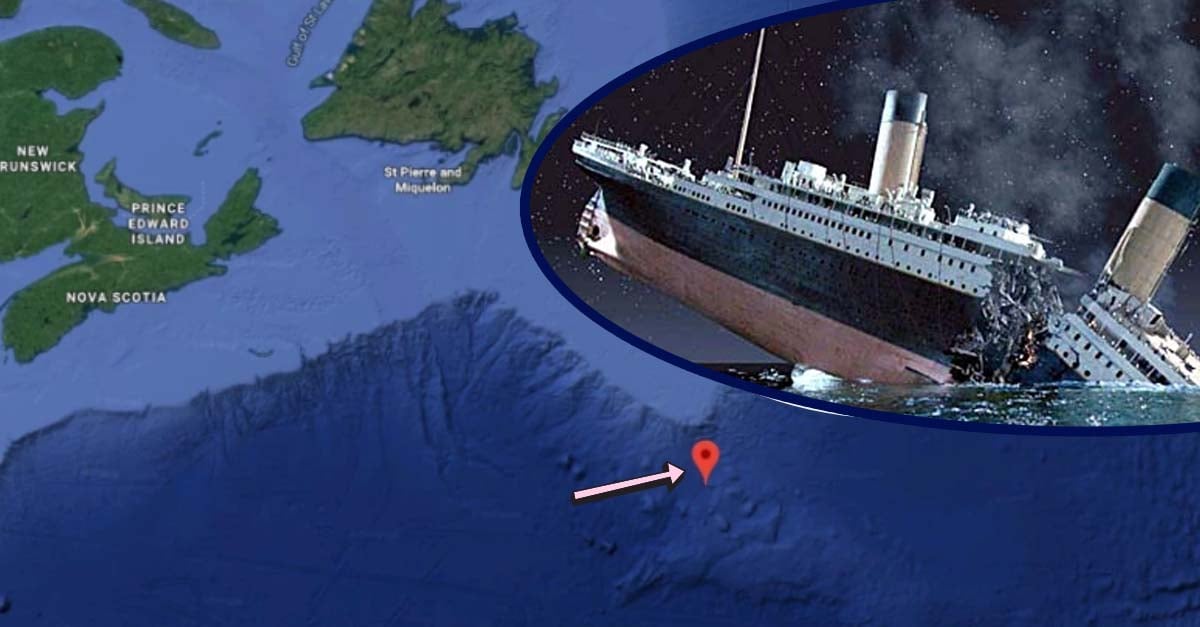
The story of the Titanic is not just a tale of tragedy; it’s a complex narrative of human ambition, technological hubris, and the unforgiving power of nature. By tracing the Titanic on a map, we gain a deeper appreciation for the scale of the disaster and the challenges faced by those involved.
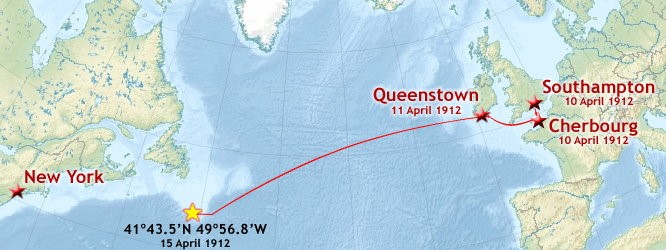
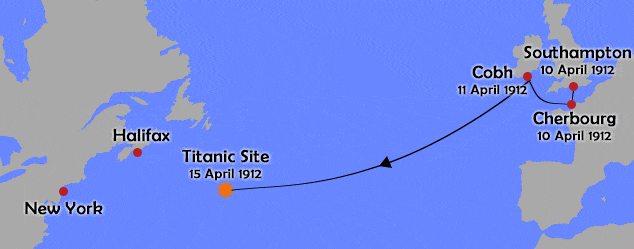
The RMS Titanic began its ill-fated voyage from Southampton, England, on April 10, 1912. Its destination was New York City, a bustling hub of immigration and opportunity in the early 20th century. The planned route was a fairly standard transatlantic crossing for the time, designed to take advantage of prevailing currents and weather patterns.
The initial stages of the journey were uneventful. The Titanic made stops in Cherbourg, France, and Queenstown (now Cobh), Ireland, to pick up additional passengers and mail. From Queenstown, the Titanic set out into the vast expanse of the Atlantic Ocean, heading west towards its ultimate destination.
The intended route was to follow a ‘great circle’ course, a navigation technique that minimizes the distance traveled on a sphere. This route would have taken the Titanic southwest from Ireland, then gradually curving westward as it approached North America. However, due to reports of icebergs in the area, Captain Edward Smith made a slight alteration to the course, directing the ship further south.
Despite these precautions, tragedy struck on the night of April 14, 1912. At 11:40 PM ship’s time, a lookout spotted an iceberg directly in the Titanic‘s path. Despite evasive maneuvers, the ship collided with the iceberg on its starboard side.
The impact caused significant damage below the waterline, breaching several compartments. The Titanic was designed to stay afloat with four compartments flooded, but the damage extended beyond this threshold. As water poured in, the ship’s fate was sealed.
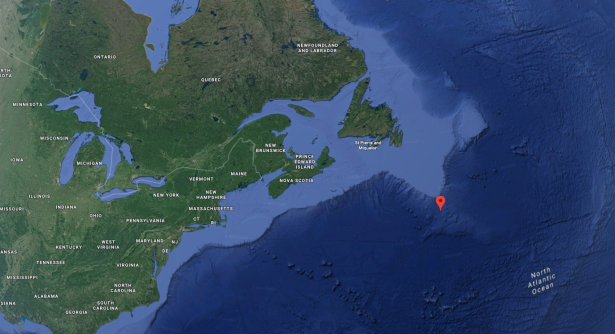
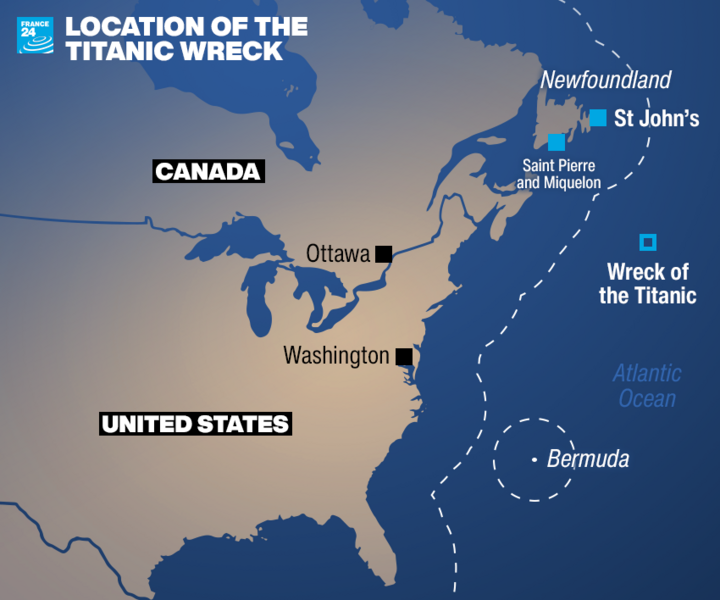
The Titanic sank in the North Atlantic Ocean, approximately 400 miles south of Newfoundland, Canada. The exact coordinates of the shipwreck are 41°43′57″N 49°56′49″W. This location is in international waters, far from any landmass.
The discovery of the Titanic‘s wreck site in 1985 was a monumental achievement. A joint French-American expedition, led by Jean-Louis Michel and Dr. Robert Ballard, used advanced sonar technology to locate the debris field on the ocean floor. The discovery confirmed the accuracy of historical accounts and provided valuable insights into the ship’s final moments.
The depth of the Titanic wreck site is approximately 12,500 feet (3,800 meters). At this depth, the pressure is immense, and the conditions are extremely challenging for exploration. Submersibles and remotely operated vehicles (ROVs) are required to reach the wreck.
The discovery of the Titanic‘s location sparked renewed interest in the disaster and led to numerous expeditions to the site. These expeditions have allowed researchers to study the wreck in detail, recover artifacts, and create detailed maps of the debris field.
The wreck of the Titanic is not a single, intact structure. The ship broke apart on the surface and the bow and stern sections came to rest about 600 meters apart. The area between these main sections is scattered with debris, including furniture, personal belongings, and parts of the ship’s structure.
The Titanic‘s location is significant for several reasons. First, it marks the spot where over 1,500 people lost their lives. The site serves as a memorial to the victims and a reminder of the human cost of the disaster. Second, the location provides valuable information about the events leading up to the sinking. The distribution of debris and the condition of the wreck offer clues about the ship’s final moments.
The Titanic‘s location also raises important legal and ethical questions. The wreck is considered a maritime memorial, and there are ongoing debates about how best to protect and preserve it. Salvage operations have been controversial, with some arguing that they desecrate the site, while others believe they are necessary to recover artifacts and learn more about the ship.
Numerous factors contributed to the sinking of the Titanic. Excessive speed in icy waters, inadequate lifeboat capacity, and a lack of effective communication all played a role. The disaster led to significant changes in maritime safety regulations, including mandatory lifeboat drills and the establishment of the International Ice Patrol.
The Titanic disaster had a profound impact on society, shaping attitudes towards technology, class, and disaster preparedness. The story of the Titanic continues to be told in books, movies, and documentaries, ensuring that the lessons of the disaster are not forgotten.
The Titanic‘s legacy extends beyond the historical record. The ship has become a symbol of human tragedy, technological hubris, and the enduring power of the sea. Its story continues to resonate with people around the world, reminding us of the importance of safety, preparedness, and respect for the forces of nature.
The question ‘Where did the Titanic sink on the map?’ is frequently asked by those curious about the disaster. The answer, as stated earlier, is approximately 400 miles south of Newfoundland, Canada, at coordinates 41°43′57″N 49°56′49″W. This location is in a remote part of the North Atlantic, far from any major shipping lanes.
Another common question is ‘How deep is the Titanic wreck?’ The wreck lies at a depth of approximately 12,500 feet (3,800 meters). This depth presents significant challenges for exploration and salvage operations. The extreme pressure and cold temperatures make it difficult for submersibles and ROVs to operate.
Many people also wonder ‘Why did the Titanic sink?’ The primary cause of the sinking was the collision with an iceberg. However, a combination of factors contributed to the disaster, including excessive speed, inadequate lifeboat capacity, and a lack of effective communication. The disaster highlighted the need for improved maritime safety regulations.
The Titanic‘s location on the map is more than just a set of coordinates; it’s a point of convergence for history, tragedy, and human endeavor. By understanding the ship’s journey and its final resting place, we can gain a deeper appreciation for the events of that fateful night in April 1912.
The wreck site serves as a poignant reminder of the lives lost and the lessons learned. It’s a place of both sorrow and scientific discovery, a testament to the enduring power of the Titanic story.
In conclusion, the Titanic‘s location on the map, 41°43′57″N 49°56′49″W in the North Atlantic, marks the end of its tragic journey. The discovery of the wreck has provided invaluable insights into the disaster and its aftermath, reminding us of the importance of maritime safety and the enduring human cost of tragedy. The story of the Titanic continues to captivate and inform, ensuring that its lessons are never forgotten.
Understanding the Titanic‘s position on a map allows us to contextualize the disaster, appreciate the challenges of exploration, and remember the lives lost. It is a geographical marker of a pivotal moment in history.