This comprehensive guide will serve as your digital map, leading you through the lush valleys and dramatic gorges that comprise Oregon’s wine country. We’ll explore the major regions, dive deep into the sub-AVAs that give the state its complexity, and provide practical tips for planning your own unforgettable wine-tasting adventure.
Why an Oregon Wine Map is Essential for Your Trip
Imagine trying to explore a major city without a map. You might stumble upon a few famous landmarks, but you’d miss the hidden alleys, local favorites, and the true character of the place. The same logic applies to Oregon’s wine country. The state’s wine regions are vast and geographically diverse, with wineries often tucked away on winding country roads. An accurate map helps you visualize the landscape, plan an efficient route, and, most importantly, discover wineries you might have otherwise missed.
A good wine map also provides crucial context. It helps you understand the concept of terroir—the unique combination of soil, climate, and topography that influences a wine’s character. By seeing the proximity of the Eola-Amity Hills to the Van Duzer Corridor’s cooling winds, or the unique cobblestone soils of The Rocks District, you begin to understand why the wines taste the way they do.
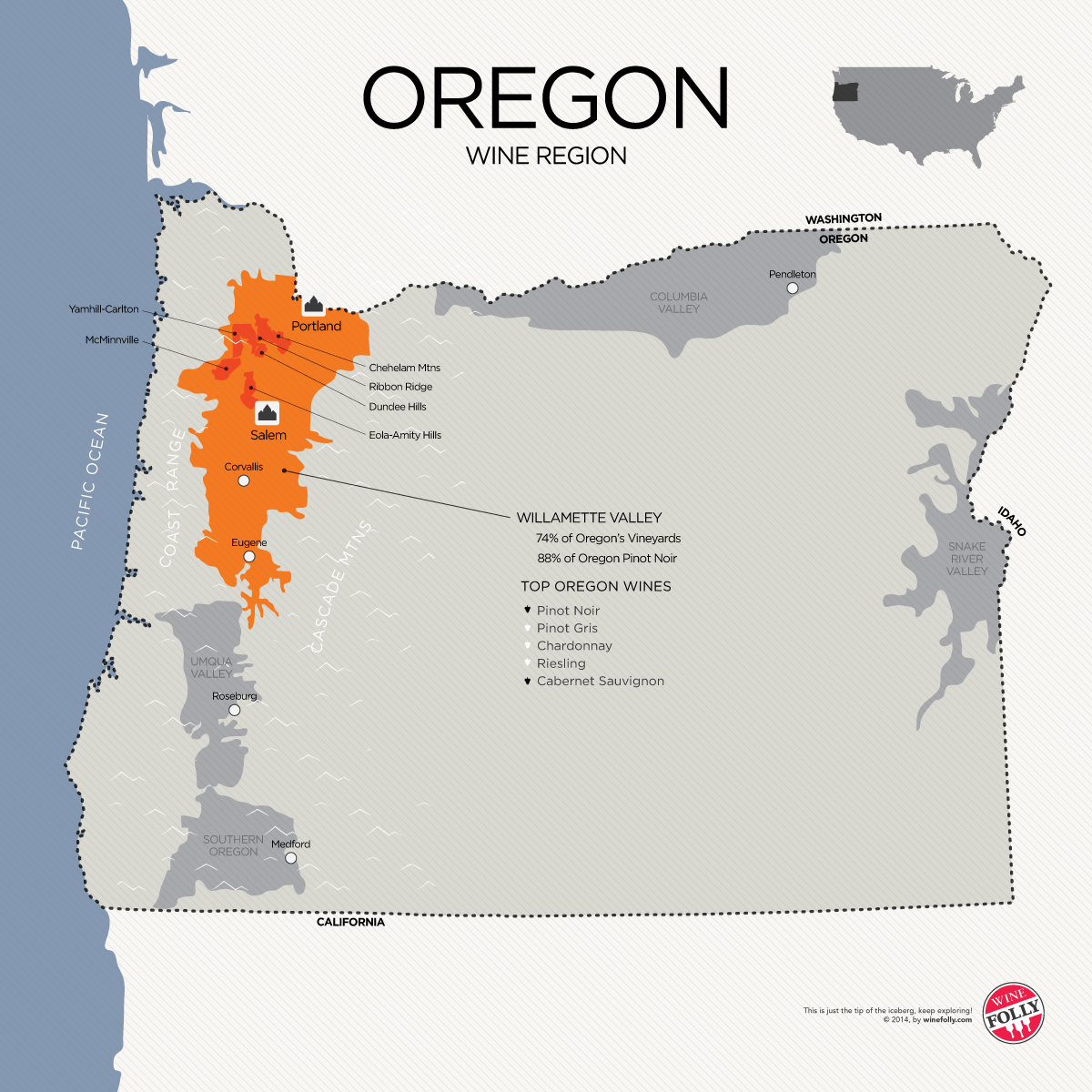
A High-Level Overview of Oregon’s Wine Regions
- Willamette Valley: The most famous and largest region, located in the northern part of the state. It’s a cool-climate paradise renowned for its Burgundian varietals, especially Pinot Noir and Chardonnay.
- Southern Oregon: A warmer and more diverse region encompassing the Umpqua and Rogue Valleys. Here, you’ll find everything from Pinot Noir to Cabernet Sauvignon, Tempranillo, and Albariño.
- Columbia Gorge & Columbia Valley: Straddling the border with Washington, this area is defined by the dramatic Columbia River. It features a remarkable transition from cool, wet conditions in the west to a hot, dry desert climate in the east, allowing a vast array of grapes to thrive.
Deep Dive: The Willamette Valley Wine Map
The Willamette Valley is the heart of Oregon wine country. Its global reputation is built on world-class Pinot Noir, a grape that perfectly expresses the nuances of this region’s volcanic and marine sedimentary soils. The valley is not a monolith; it’s a mosaic of smaller, nested AVAs, each with a unique microclimate and soil profile.
The Dundee Hills AVA
Often called the birthplace of Oregon Pinot Noir, the Dundee Hills are defined by their rich, red volcanic Jory soil. This soil drains well and imparts a signature cherry, raspberry, and earthy, truffle-like complexity to the wines. This is home to many of Oregon’s founding and most iconic wineries.
The Chehalem Mountains AVA
This is one of the larger AVAs in the Willamette Valley, characterized by its diversity of soils, including volcanic, marine sedimentary, and loess (wind-blown silt). This geological variety, combined with a wide range of elevations and aspects, results in a broad spectrum of wine styles.
Ribbon Ridge AVA
Nestled within the Chehalem Mountains, Ribbon Ridge is the smallest AVA in the Willamette Valley. It is distinguished by its uniform, ocean-derived sedimentary soils. Wines from Ribbon Ridge, particularly Pinot Noir, are often noted for their concentrated dark fruit, spice, and fine-grained tannins.
The Yamhill-Carlton AVA
Protected by surrounding mountains, this horseshoe-shaped region is known for its ancient marine sedimentary soils. These quick-draining soils encourage deep root growth, producing Pinot Noirs that are typically powerful and structured, with notes of black cherry, blackberry, and tobacco.
The Eola-Amity Hills AVA
The defining feature of this AVA is the Van Duzer Corridor, a gap in the Coast Range that allows cool Pacific Ocean winds to flow into the valley each afternoon. This daily cooling effect helps grapes retain their acidity, resulting in vibrant, fresh wines with bright fruit flavors and elegant structure.
The Van Duzer Corridor AVA
As the westernmost AVA in the Willamette Valley, this region is most directly impacted by the marine winds funneling through the gap in the Coast Range. The persistent wind leads to thicker grape skins, which in turn creates wines with deeper color, more robust tannins, and complex floral and spicy notes.
McMinnville AVA
The McMinnville AVA is known for its shallow, weathered basalt soils and slightly warmer, drier conditions compared to its neighbors. The wines, particularly Pinot Noir, tend to be more robust and full-bodied, with dark fruit flavors, earthy undertones, and significant aging potential.
Tualatin Hills & Laurelwood District AVAs
These are two of the newest AVAs in the Willamette Valley. The Tualatin Hills are defined by their Laurelwood soil, a specific type of loess. This soil profile contributes to Pinot Noirs with notes of cedar, spice, and dark cherry, alongside aromatic white wines.
Exploring the Southern Oregon Wine Map
Venture south from the Willamette Valley, and you’ll discover a completely different wine world. Southern Oregon is a warm, sunny, and incredibly diverse region capable of ripening a wide array of grape varieties. It’s a frontier of experimentation and discovery.
The Umpqua Valley AVA
Known as the ‘valley of a hundred valleys,’ the Umpqua is a convergence of three mountain ranges, creating numerous microclimates. This allows for the successful cultivation of both cool-climate grapes like Pinot Noir and Grüner Veltliner and warm-climate varieties like Tempranillo and Syrah. It contains the sub-AVA of Elkton Oregon, a particularly cool spot ideal for Riesling and Pinot Noir.
The Rogue Valley AVA
As Oregon’s southernmost wine region, the Rogue Valley is also its warmest and driest. It’s a prime location for growing heat-loving Bordeaux varietals (Cabernet Sauvignon, Merlot), Rhône varietals (Syrah, Viognier), and Spanish grapes (Tempranillo, Albariño). Its sub-AVA, the Applegate Valley, has its own unique microclimate, slightly cooler and wetter, ideal for Merlot and Cabernet Franc.
The Columbia Gorge & Columbia Valley Wine Map
This region offers one of the most dramatic viticultural transitions on the planet. The shared terroir between Oregon and Washington creates a unique and dynamic wine-growing area.
The Columbia Gorge AVA
Dubbed ‘a world of wine in 80 miles,’ the Columbia Gorge AVA is remarkable. In the west, near the Cascade Mountains, the climate is cool and rainy, perfect for Pinot Noir and Chardonnay. Travel east, and it rapidly transforms into a high-desert environment where Zinfandel, Syrah, and Barbera thrive. The constant wind through the gorge is a defining feature, reducing disease pressure and adding character to the grapes.
The Rocks District of Milton-Freewater AVA
Located within the larger Walla Walla Valley (which is itself part of the Columbia Valley), The Rocks District is entirely within Oregon. Its terroir is globally unique, defined by a landscape of large, river-worn cobblestones called basalt freestones. The stones absorb the sun’s heat and radiate it back onto the vines, accelerating ripening. This produces incredibly distinctive, savory, and complex wines, especially Syrah, known for notes of olive tapenade, cured meat, and umami.
How to Use an Oregon Wine Map to Plan Your Tour
Now that you understand the regions, it’s time to plan your trip. A map is your best friend in this process.
Step 1: Choose Your Base of Operations. For the Willamette Valley, towns like Newberg, Dundee, or McMinnville are excellent hubs. If you’re exploring Southern Oregon, consider basing yourself in Ashland, Jacksonville, or Roseburg.
Step 2: Focus Your Efforts. Don’t try to visit wineries in the Dundee Hills and the Eola-Amity Hills on the same afternoon. Use your map to pick one or two neighboring AVAs for each day. This minimizes driving and maximizes tasting time.
Step 3: Research and Reserve. Once you’ve chosen an area, use your map to identify a cluster of wineries. Visit their websites or call ahead. Many Oregon wineries, especially smaller, boutique producers, now require reservations for tastings. This ensures a more personal and enjoyable experience.
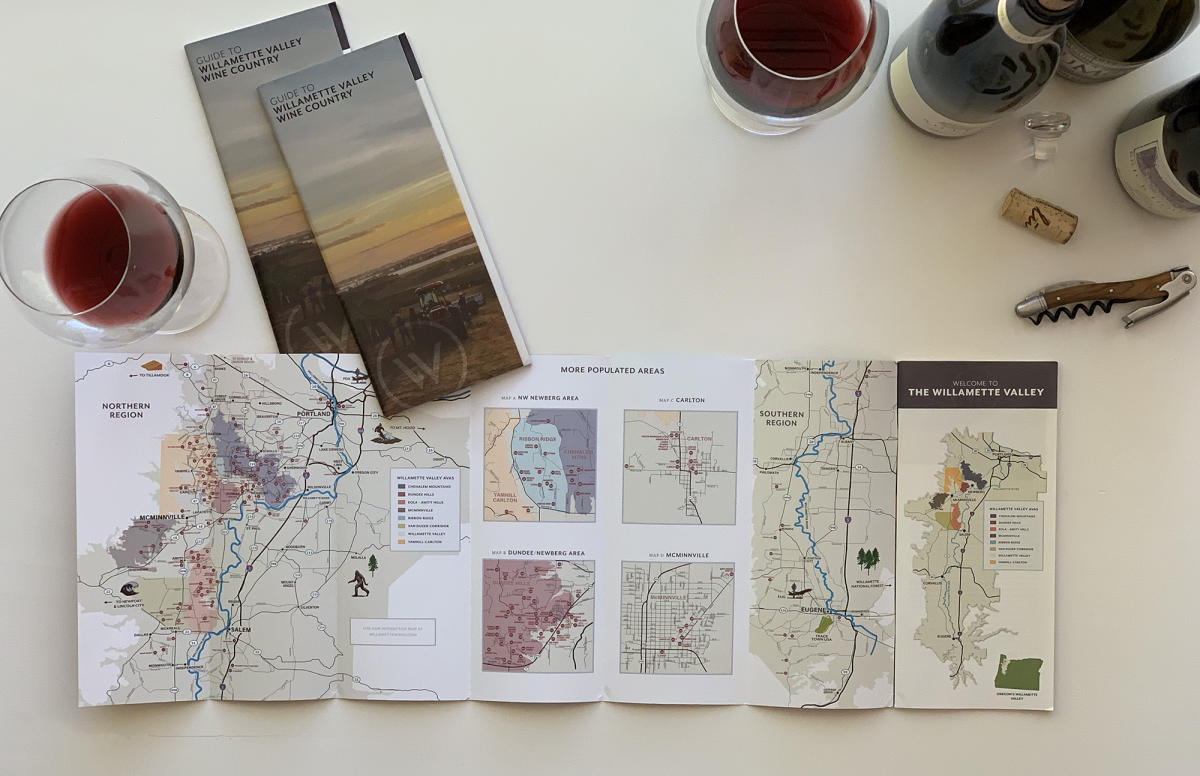
Step 4: Map Your Route. Use a digital tool like Google Maps to create an itinerary, but always have a physical map as a backup. Cell service can be spotty in rural areas. Plan a logical route that doesn’t involve backtracking.
Step 5: Arrange Safe Transportation. The most important step. If you’re tasting, you should not be driving. Designate a driver, hire a private car service, or book a spot on a guided wine tour. It’s the safest and most relaxing way to experience wine country.
Frequently Asked Questions About Oregon Wine
Here are answers to some common questions that arise when planning a trip.
What is the main wine region in Oregon?
The Willamette Valley is the largest, most densely populated, and most famous wine region in Oregon. It contains about 70% of the state’s wineries and vineyards and is the primary destination for wine tourism.
What wine is Oregon best known for?
Oregon is globally renowned for its Pinot Noir. However, the state also produces exceptional Chardonnay, Pinot Gris, Riesling, Syrah, and Cabernet Sauvignon, among many others.
How many AVAs are in Oregon?
As of 2023, Oregon has 23 American Viticultural Areas (AVAs), with several more proposed. This number reflects the incredible diversity of the state’s growing conditions.
Do I need reservations for wine tasting in Oregon?
It is highly recommended. While some larger wineries may accept walk-ins, the trend is toward reservation-based tastings. Reservations guarantee you a spot and often provide a more curated, in-depth experience.
What is the best time of year to visit Oregon wine country?
The most popular time is from late spring through fall (May to October). Summer offers beautiful weather, while fall allows you to witness the excitement of harvest. A spring visit offers lush green landscapes and fewer crowds.
Your Adventure Awaits
An Oregon wine map is more than a navigational aid; it’s a guide to the heart and soul of the state’s wine industry. It reveals the intricate tapestry of climates, soils, and passionate people that make these wines so special. Whether you’re a seasoned connoisseur tracing the origins of a single-vineyard Pinot Noir or a curious newcomer eager to explore, a map will empower you to taste, learn, and discover. So grab a map, pick a region, and begin your unforgettable journey through the vines of Oregon.